
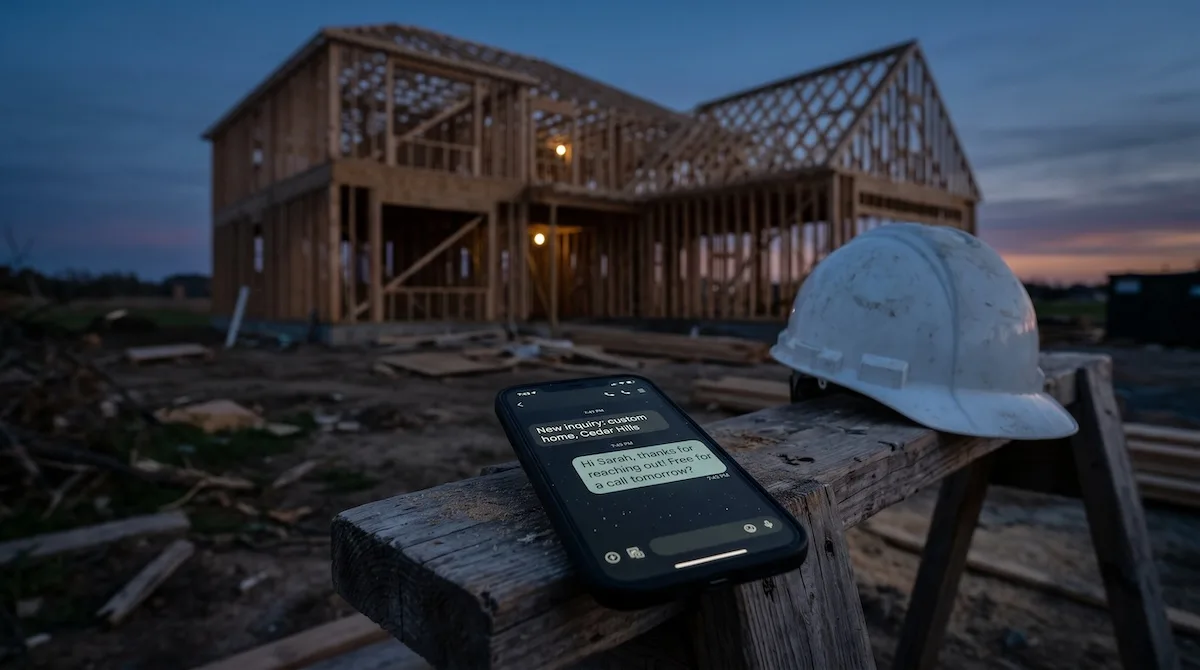

A homeowner fills out a form on your website at 7:40 on a Tuesday evening. They have been thinking about a custom home for two years, and tonight they finally reached out to three builders. One builder texts back at 7:42 and books a call for Thursday. You see the inquiry at 9:15 the next morning, between site visits, and call at lunch. The homeowner tells you they already have a meeting set up.
That gap is what speed to lead measures. It is the time between a prospect raising their hand and your business making real contact. For builders and remodelers, it is often the difference between a signed contract and a lost lead you paid good money to generate.
What the Research Says About Lead Response Time
The case for responding fast is not a hunch. Two well-known studies led by researcher James Oldroyd shaped how sales teams think about response time.
The first was a 2011 Harvard Business Review study, “The Short Life of Online Sales Leads,” which analyzed about 1.25 million leads. It found that firms contacting a prospect within an hour were nearly 7 times more likely to have a qualifying conversation than firms that waited one more hour, and more than 60 times more likely than firms that waited 24 hours or longer.
The second was the Lead Response Management study, run with InsideSales.com across more than 15,000 leads and over 100,000 call attempts. It found the odds of qualifying a lead were 21 times greater when contact happened within 5 minutes compared to 30 minutes.
These studies were not limited to construction, and buyer behavior has changed since then. But the pattern holds for builders today. Interest is highest in the first few minutes after someone reaches out, and it drops quickly after that.
Why Speed Matters Even More for Builders
Homeowners Contact Several Builders at Once
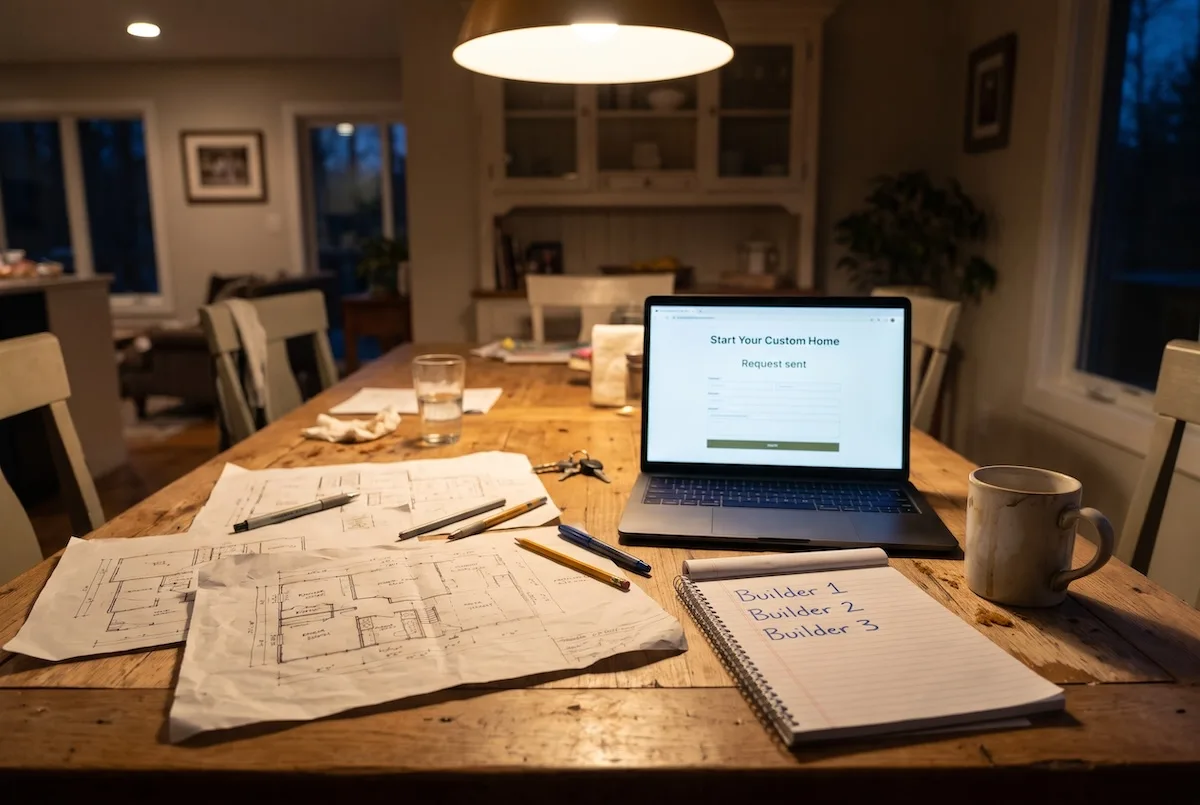
People planning a new home or a large remodel rarely reach out to just one company. They submit forms to three or four builders on the same night. The first builder to start a real conversation usually earns the first meeting and becomes the standard the others are measured against.
Your Leads Are Expensive
If you pay $100 to $250 for a custom home lead through Google or Meta, a slow response wastes that money. A lead that goes cold because nobody called for a day costs the same as one that turned into a $900,000 build. Improving speed to lead is one of the cheapest ways to get more from an ad budget you are already spending.
You Are on a Job Site, Not at a Desk
This is the real problem. Most builders and remodelers spend the day running crews and meeting inspectors. Nobody is sitting by the inbox. Calls go to voicemail, and forms sit unread until the evening. The fix is not to work harder. It is to build a system that responds while you are busy.
How to Measure Your Current Speed to Lead
Before you fix anything, find out where you stand.
Look at your last 20 web form submissions and note the time each came in. Then check your phone or CRM for the time of your first meaningful reply. An automatic “thanks for your submission” email does not count. A personal text or call does.
Next, call your own business after hours and during a busy workday. See what happens. Does the call go to a full voicemail box? Does anyone call back? Then fill out your own contact form and time the response.
Most builders who run this test are surprised. Average response times of several hours are common, and many leads never get a second follow-up attempt at all.
How to Respond to Every Lead in Under 5 Minutes
You do not need a full-time receptionist to hit a five-minute response time. You need automation that handles the first touch and alerts you when a real conversation is needed.
Send an Instant Personal Text
When someone submits a form, your system should send a text within seconds that sounds like it came from a person. For example: “Hi Sarah, this is Mike from Ridgeline Homes. Thanks for reaching out about building in Cedar Hills. Are you free for a quick call tomorrow, or would you prefer to pick a time on my calendar?” Include a booking link so they can schedule without waiting for you.
Text messages are opened and answered far faster than email, which makes them the best first touch for most homeowners.
Set Up Missed Call Text Back
When you miss a call because you are on a roof or in a meeting, a missed call text back automation sends an immediate text to the caller. Something like: “Sorry I missed you, this is Mike from Ridgeline Homes. I am on a job site right now. What project are you planning?” This keeps the conversation alive and stops the homeowner from dialing the next builder on their list.
Add a Self-Booking Calendar
Let qualified leads book a consultation directly on your calendar. Block out the times you are available for calls, and let the system fill them. Many homeowners prefer this to waiting for a callback, especially when they are reaching out after work.
Alert the Right Person Immediately
Every new lead should trigger an instant notification to whoever handles sales, by text and through the CRM app. If you have a salesperson or office manager, route leads to them first. If they do not respond within a set time, escalate to the owner.
Follow Up Until You Get an Answer
Speed to lead is about the first response, but most homeowners will not answer on the first try. A strong follow-up sequence mixes calls and texts over the following two weeks, with email as a backup. Many leads book on the fourth or fifth touch, long after a slower builder would have given up.
Common Speed to Lead Mistakes
The most common mistake is treating an automatic email as a response. A generic “we received your message” email does nothing to start a conversation, and it often lands in a promotions folder.
Another mistake is sending leads to a shared inbox that nobody owns. When everyone is responsible, nobody is.
Some builders also pre-qualify too hard before responding. A homeowner whose budget looks low on a form may be sitting on a paid-off lot and a large down payment. Respond to everyone quickly, then qualify during the conversation.
Finally, many builders do not track response time at all. If you do not measure it, it will drift. Review response times once a week the same way you review job schedules.
The Tools That Make It Possible
A CRM built for this kind of automation is the backbone of a fast response system. It captures every form and call in one place and sends the instant texts and follow-ups for you. If you are still managing inquiries through email and a notebook, our article on the benefits of a CRM for home builders explains what changes when everything lives in one system.
Our lead nurture automation service sets up instant text replies, missed call text back, self-booking calendars, and multi-week follow-up sequences written for builders. We connect it to your website forms and your phone line, so every lead gets a response within minutes, day or night. For builders who also want email campaigns and pipeline tracking, our email and CRM automation service handles the full system.
Frequently Asked Questions
What is speed to lead?
Speed to lead is the time between a prospect submitting an inquiry, such as a web form or a phone call, and your business making meaningful contact with them. For home builders, a fast speed to lead means responding within five minutes with a personal call or text.
What is a good lead response time for contractors?
A good lead response time for contractors is under five minutes. Research from the Lead Response Management study found that the odds of qualifying a lead were 21 times greater at five minutes than at 30 minutes.
How can I respond to leads fast when I am on a job site?
Use automation. Instant text replies and missed call text back let homeowners start a conversation and schedule a call even when you cannot answer. A CRM can alert you or your office manager when a lead needs a personal response.
Does responding faster really increase sales for builders?
Yes. Homeowners usually contact several builders at once, and the first one to start a real conversation often gets the first meeting. Faster responses increase the share of paid leads that turn into consultations, which lowers your cost per signed project.
Stop Losing Leads You Already Paid For
Every slow response is a lead you paid to generate and then handed to a competitor. Book a free Growth Audit and we will review how fast your business responds today and map out the automation that closes the gap.
Book Your Free Growth Audit or call (888) 778-9917.