


Every builder who stays in business long enough gets a bad review. Maybe a project ran three weeks late, or a homeowner expected a finish you never quoted. Sometimes the review is fair, and sometimes it is not.
Either way, the review itself matters less than what you write underneath it. Future clients will read your reply and judge how you handle problems, which is exactly what they are worried about before signing a six-figure contract. This guide shows how to respond to negative reviews as a contractor, with templates for the complaints builders see most often.
Why Your Reply Matters More Than the Review
A homeowner comparing builders knows that construction projects rarely go perfectly. What they want to know is what happens when something goes wrong. Your reply is the clearest public answer to that question.
BrightLocal’s 2026 Local Consumer Review Survey found that 77% of consumers are put off by negative reviews. The same survey found that 80% are more likely to use a business that replies to all of its reviews. A calm, specific reply can soften the damage of a bad review and show that you take responsibility.
The survey also found that 50% of consumers are put off by generic or templated replies. That is an important warning for anyone using the templates in this article. Treat them as a structure, then rewrite each one with real details from the project.
The Rules for Responding to a Bad Review
Respond Within 48 Hours
A fast reply shows you pay attention. A review left unanswered for weeks suggests the complaint was accurate and you did not care. Set up review alerts on Google and Houzz so you see new reviews the same day.
Don’t Reply While You’re Angry
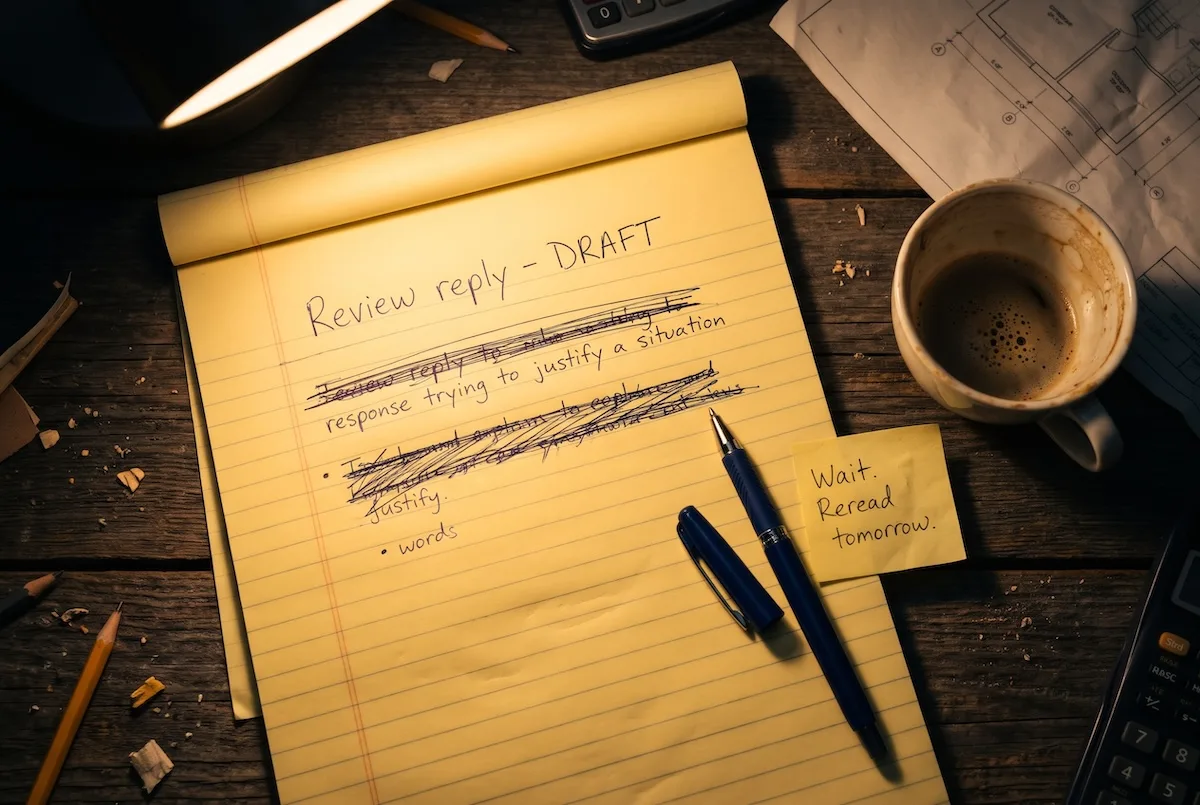
Read the review, then wait a few hours. Write a draft, and have someone who was not involved in the project read it before you post it. Defensive replies almost always make the builder look worse than the original review did.
Write for the Next Client, Not the Reviewer
The person who wrote the review may never change their mind. Your real audience is the homeowner reading it six months from now. Every sentence should make that future client more confident in hiring you.
Keep Private Details Private
Never share contract amounts or personal information about the client in a public reply. Beyond being unprofessional, it can create legal problems. Acknowledge the issue in general terms and move the details offline.
Take the Conversation Offline
End every reply with a direct way to reach a real person, ideally the owner or project manager by name. This shows you want to fix the problem and stops a long public back-and-forth.
The Four-Part Reply Structure
Every strong reply follows the same basic pattern. First, thank the reviewer and use their name if it is visible. Second, acknowledge the specific issue without arguing. Third, explain briefly what you have done or will do about it. Fourth, give a direct contact for follow-up.
Keep replies short. Four to six sentences is enough. A long reply looks like you are building a legal case.
Reply Templates for Common Builder Complaints
Rewrite each of these with details from the actual project. Specific replies read as genuine, while generic ones read as copied.
Complaint: The Project Ran Late
Hi [Name], thank you for taking the time to share this. You’re right that your [project type] finished [X weeks] later than our original schedule, and we understand how disruptive that was for your family. [Brief, factual cause, e.g., “The window delivery was delayed twice by the manufacturer.”] We’ve since changed how we order long-lead items so schedules have more buffer. I’d like to talk with you directly. Please call me at [phone]. [Owner name], [Company]
Complaint: Poor Communication
Hi [Name], thank you for this feedback. Clear communication is something we promise every client, and we fell short on your project. You should not have had to chase us for updates. We’ve since moved every project to weekly written updates with photos, so this doesn’t happen again. I’d appreciate the chance to talk with you about how we can make this right. You can reach me directly at [phone or email]. [Owner name]
Complaint: Quality or Workmanship Issue
Hi [Name], I’m sorry to hear about the issue with the [specific item, e.g., “tile in the primary shower”]. Our work is backed by a [X-year] workmanship warranty, and this is exactly what it’s for. I’ve asked our project manager, [Name], to contact you this week to schedule an inspection. If you’d like to reach us sooner, please call [phone]. [Owner name], [Company]
Complaint: The Final Cost Was Higher Than Expected
Hi [Name], thank you for sharing your experience. I understand how frustrating it is when a final cost comes in higher than you planned. We want every client to understand their budget clearly, including how changes affect it. I’d like to sit down with you and walk through the project costs together. Please contact me at [phone]. [Owner name]
Complaint: Problem With a Subcontractor
Hi [Name], thank you for letting us know. Everyone working on your home represents our company, including our trade partners, and what you described does not meet our standards. We’ve addressed it directly with the team involved. I’d like to hear more about your experience. Please reach me at [phone]. [Owner name], [Company]
Review With No Details at All
Hi [Name], we’re sorry to see this rating. We take every review seriously, but we weren’t able to match this to a project in our records. If you worked with us, please call me at [phone] so I can understand what happened and help resolve it. [Owner name]
What to Do When a Review Is Fake or Unfair
Sometimes a review comes from a competitor or from someone who never hired you. Google’s policies prohibit fake reviews and reviews with a conflict of interest, and you can flag reviews that break those rules.
To flag a review on Google, open your Business Profile, find the review, and choose the option to report it. Select the reason that matches the policy violation. If the first report does not work, you can use Google’s review management tool to check its status and request a further look.
Even if you report a review, reply to it publicly. Removal can take time, and some reviews will not be removed. A short, calm reply that says you have no record of the project protects you in the meantime.
A review that is simply negative or unfair is not a policy violation. Google will not remove a real client’s honest opinion, even if you disagree with it. In that case, your reply is your best tool.
Mistakes That Make a Bad Review Worse
The worst mistake is arguing in public. Replies that list everything the client did wrong or quote contract clauses almost always cost more future business than the review itself.
Another mistake is offering refunds or discounts publicly. It can invite others to post complaints, and it puts terms in writing before you understand the full situation.
Some builders ignore negative reviews in the hope they will be buried by newer ones. Silence reads as agreement. Even an older review deserves a reply.
Finally, never ask friends or employees to post reviews to offset a bad one. Google treats this as review manipulation, and it can lead to removed reviews or a suspended profile.
The Best Defense Is a Steady Flow of Good Reviews
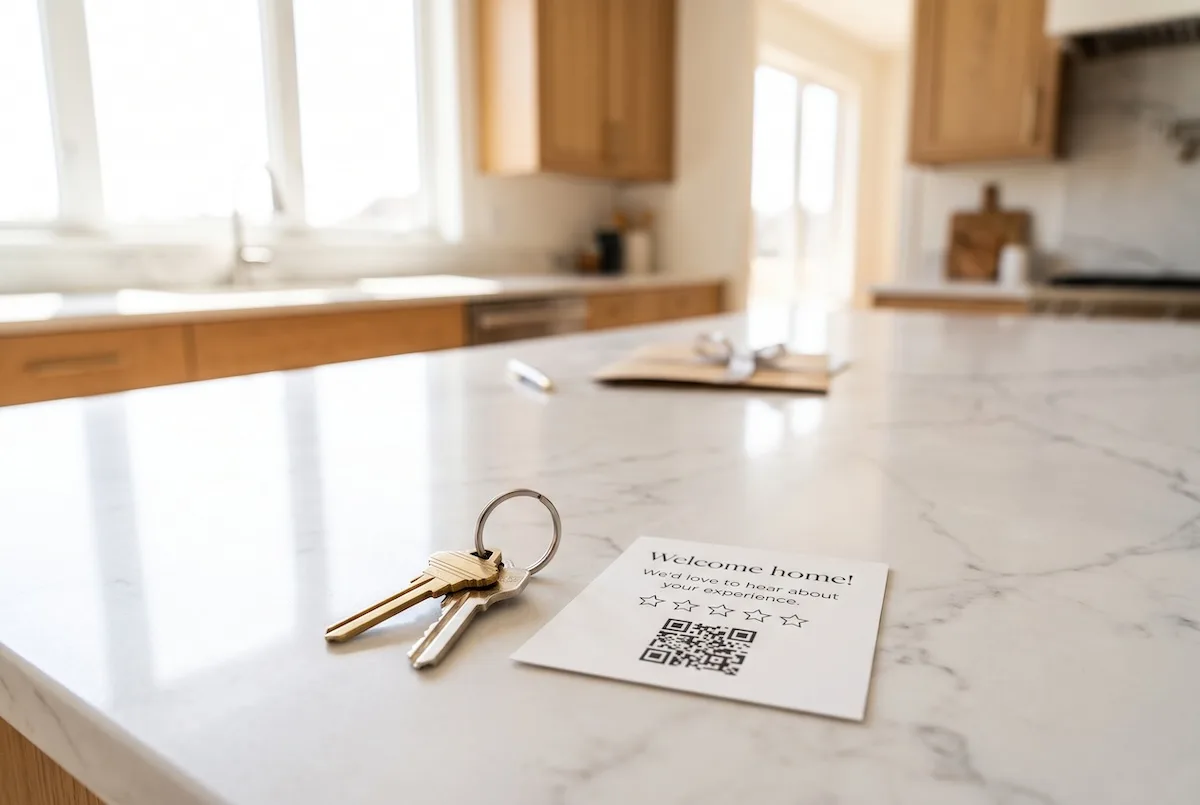
One negative review stands out when you only have 15 reviews total. It barely registers when you have 150 recent ones. BrightLocal’s 2026 survey found that 74% of consumers look for reviews written in the last three months, so a steady stream of fresh reviews matters more than a large number of old ones.
Build review requests into your process at moments when clients are happiest, like the day you hand over the keys or finish the final walkthrough. Our guide on how to get more 5-star reviews for home builders covers the timing and wording that work best.
How We Help Builders Manage Their Reputation
Our reputation management service for home builders sets up automated review requests after key project milestones, monitors new reviews across Google, Houzz, and Facebook, and alerts you the moment a negative review appears. We help you write replies that sound like you and fit the situation, so future clients see a builder who stands behind the work.
Frequently Asked Questions
How should a contractor respond to a negative review?
Respond within 48 hours with a short, calm reply that thanks the reviewer, acknowledges the specific issue, explains what you are doing about it, and gives a direct phone number or email to continue the conversation privately. Write for future clients, not to win the argument.
Should I respond to every bad review?
Yes. Replying to every review, including negative ones, shows future clients that you take feedback seriously. BrightLocal’s 2026 survey found that 80% of consumers are more likely to use a business that replies to all of its reviews.
Can I get a negative Google review removed?
Google will only remove reviews that break its policies, such as fake reviews or reviews posted by competitors and former employees. You can flag these from your Business Profile. Honest negative reviews from real clients will not be removed.
Is it okay to use templates to reply to reviews?
Templates are useful as a structure, but you should rewrite each reply with specific project details. BrightLocal’s 2026 survey found that 50% of consumers are put off by generic or templated replies, so a copied response can do more harm than good.
Protect the Reputation You’ve Built
Your reviews are often the first thing a homeowner reads about your company. Book a free Growth Audit and we will review your current ratings and show how your reputation compares to other builders in your market.
Book Your Free Growth Audit or call (888) 778-9917.