Consider this: 76% of homebuyers start their search online before ever picking up the phone (according to the National Association of Realtors). But here’s the part that keeps most custom builders up at night: their website isn’t actually selling. It’s just sitting there, waiting for someone motivated enough to figure out how to contact them.
Your website should be your best salesperson. Instead, most builder sites are digital brochures. They look good. They have nice photos. And then they do almost nothing to move a prospect from curious to committed. A real home builder lead generation website does something completely different.
If your website isn’t generating qualified leads on autopilot, you’re leaving money on the table, and your competitors are picking it up. The difference between a static website and a 24/7 lead machine isn’t complicated, and it doesn’t require a complete rebuild. It’s about strategic design and psychology applied to every section of your site. Learn how our website design services turn builder sites into lead machines.
Walk through your own website the way a stranger would. When they land on your homepage, what’s the first thing they learn about you? Most builders lead with aesthetics: “Custom home builder serving [area] since [year].” True, but not compelling. It doesn’t address why someone should choose you over the five other builders down the road.
A home builder’s lead generation website opens with a clear value proposition. Something like: “We build custom homes that match your vision, stay on budget, and finish on schedule, so you can stop worrying and start enjoying.” That’s a promise, not a description. It speaks directly to what your prospect fears most.
And then, this is the key part: everything on that page is designed to move them toward the next step. Not to educate them endlessly. Not to tell your entire story. To move them forward.
Your prospects are comparing you to other builders. Most of those comparisons happen online in the first 30 seconds of visiting your website. What do you show them in those 30 seconds?
If you show them the same things every builder shows, photos, tagline, portfolio, they have no reason to choose you. You become interchangeable. And interchangeable means they compare you on price, which means you lose.
A value proposition cuts through the noise. It answers the question your prospect is actually asking: “What’s different about this builder, and why should I trust them?”
Here’s what makes it stick: be specific. Instead of “Quality Builds,” say “We use sustainable materials and energy-efficient systems so your monthly bills stay 30% lower than comparable homes.” That’s specific. That’s believable. And it gives a prospect a reason to keep reading instead of bouncing to your competitor.
Your value proposition should appear in three places: your headline, your About section, and once more on any service or portfolio page. Not because it’s repetitive, but because visitors enter at different pages, and you need to make your case everywhere.

Here’s a number that should concern you: research consistently shows that well over 90% of people who visit your website will never contact you on the first visit. They’re not bad leads. They’re just not ready yet. They’re shopping, comparing, building confidence. If your website only has one way to contact you, a single form at the bottom, you’re losing nearly everyone who visits.
A lead machine has multiple ways to capture interest without demanding a full commitment. At different points on your site, a visitor should see different CTAs:
After your value proposition: “Get our free custom home building checklist.” Low commitment, high value. Captures an email.
After portfolio examples: “Schedule a 30-minute consultation to see how we’d approach your project.” More specific. For people further along.
After testimonials: “Talk to us about your vision.” Simple. Trust-based.
Bottom of the page: Full contact form for prospects ready to go deep.
The magic of a real lead machine is this: you’re capturing leads at every stage of the buying journey, not just at the end. Someone who downloads your checklist is still a lead. You nurture them. And six months later, when they’re ready to build, whose email is at the top of their inbox?
This is where home builder lead generation website design becomes a system, not just a site. Every element is placed to move people forward at the pace they’re comfortable with.
Your reputation is your greatest asset. But most builders hide it. They might have a testimonials page, but that’s it. Your social proof, reviews, ratings, before-and-afters, and award badges should be visible across multiple pages, especially high-traffic pages.
And here’s the critical part: it has to be specific. Not “Great builder, would recommend!” That could be anyone. But this works: “Delivered 8 weeks early and came in $45,000 under budget. They listened to every concern and managed the team with professionalism I’ve never seen before.”
Why? Because it’s specific to what your prospects actually fear: timeline and cost overruns. A testimonial that addresses those fears moves people from skeptical to interested.
Video testimonials outperform written ones 3-to-1 for lead conversion. If you have five happy clients willing to spend five minutes on camera talking about their experience, that’s worth more than a website redesign. Place one near your CTA. Let people hear directly from past clients why you’re worth the investment.
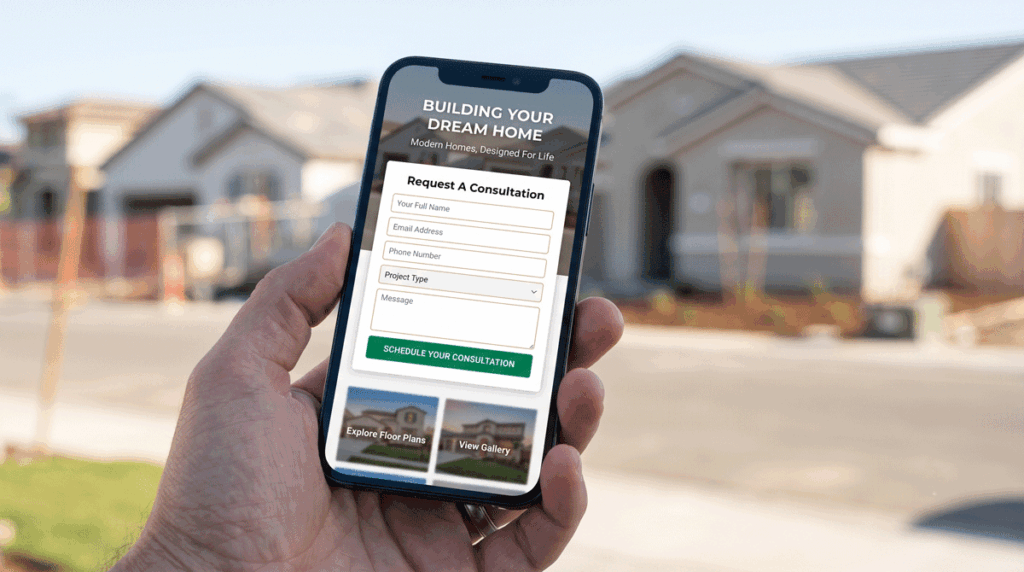
Here’s a fact that destroys leads in real time: 53% of mobile visitors leave a website if it takes longer than three seconds to load (according to Google’s own research). Three seconds.
Your website might look beautiful on a desktop in your office. But if it takes six seconds to load on an iPhone on a 4G network, which is how your prospects are actually accessing you, they’re gone before they read a word. And Google knows it. Slow sites rank lower, which means fewer people even find you in the first place.
A real lead machine is fast. Optimized images, clean code, a content delivery network, and caching. These aren’t sexy features, but they’re conversion engines.
Test your site on Google PageSpeed Insights right now. If you’re scoring below 80 on mobile, your site is costing you leads. This is something a specialized web design team will optimize as a baseline. But if your current site is sluggish, it’s a fix that should be urgent.
Heat map studies show that visitors spend 88% of their attention on the top half of your page. So if your value proposition, social proof, and primary CTA are all below the fold, they require scrolling to see, you’re playing on hard mode.
A lead machine puts everything that converts in the top real estate. The bottom half can be a portfolio, detailed testimonials, or additional information. But the top section is sacred. It exists solely to move someone from “curious” to “interested.”
When builders implement these changes together, they see a 40-70% increase in qualified leads within 90 days. Same traffic. Higher conversion. That math changes everything about your pipeline.
Picture this: you’re sitting in your kitchen at 8 AM on a Friday. You check your email and see three new lead inquiries from people who visited your website, read your testimonials, and already know they want to work with you. None of them are price-shopping. All of them are serious.
Your pipeline is full. You’re choosing which projects to take on based on what excites you, not what pays the bills this month. You’re hiring skilled subcontractors because you have the volume and margins to afford quality. Your team knows they can count on steady work. The chaos of feast-or-famine building is gone.
You’re no longer the person chasing leads. You’re the person deciding which leads are worth your time. And that shift, from desperation to selection, changes everything about how you show up in your business. You can be selective about clients, creative about designs, and confident about your pricing. Your website did that.
Audit your website using the four elements above. Do you have a clear value proposition in your top section? Can someone find at least three different ways to contact you without scrolling too far? Are your best testimonials visible on your homepage or hidden on a separate page? Does your site load fast on mobile?
If you answered no to any of those, you’re leaving leads on the table. Book a 20-minute consultation with Home Builder Marketers and let’s build a specific action plan to turn your website into the lead machine it should be. We’ll audit your site, identify exactly which elements are broken, and provide a clear roadmap to fix them.
Home Builder Marketers is a full-service digital marketing agency exclusively serving residential construction companies, including custom home builders, remodelers, and contractors across North America. We specialize in building websites that convert, ranking them in search results, and running ads that attract qualified buyers ready to build. Our focus is simple: help builders generate more leads, fill their pipelines, and stop leaving money on the table.
If you’re a custom home builder spending thousands on marketing every month but struggling to see consistent returns, you’re not alone. The problem isn’t that marketing doesn’t work, it’s that most home builder marketing strategies target the wrong prospects at the wrong stage of their journey.
Today, we’re breaking down the customer buying journey in a way that will transform how you allocate your marketing budget. Understanding where your potential clients are in their decision-making process is the difference between a 2% conversion rate and a 20% conversion rate.
We’ve created a visual marketing funnel that maps out exactly where your future clients are mentally before they ever contact you. Let’s dive into each stage of the custom home buyer’s journey and, more importantly, where you should be investing your home builder marketing budget for maximum ROI.
What’s happening in their head: “We’ve outgrown this house. The kitchen is outdated. We need more space for the kids. Maybe it’s time for something new.”
At this stage, homeowners know they’re unhappy with their current situation, but they haven’t started actively researching solutions. They’re scrolling through Facebook, checking Instagram, living their daily lives and they’re not yet thinking “custom home builder” when they see a problem.
Why this matters: These people aren’t searching for you on Google. They’re not typing “custom home builders near me” into a search bar. They’re simply living with a problem, and your job is to interrupt that scroll and plant a seed.
Best Marketing Channel for Problem-Aware Prospects: Meta Ads (Facebook & Instagram)
This is where Meta advertising shines for home builder lead generation. Meta’s strength is in broad reach and interruption marketing perfect for top-of-funnel marketing. You’re putting beautiful images of custom homes, lifestyle content, and problem-agitating posts right in front of people who match your demographic profile but haven’t started searching for builders yet.
Your ad might show a stunning kitchen remodel with copy like: “Tired of your cramped, outdated kitchen? Imagine cooking in a space designed exactly for how you live.”
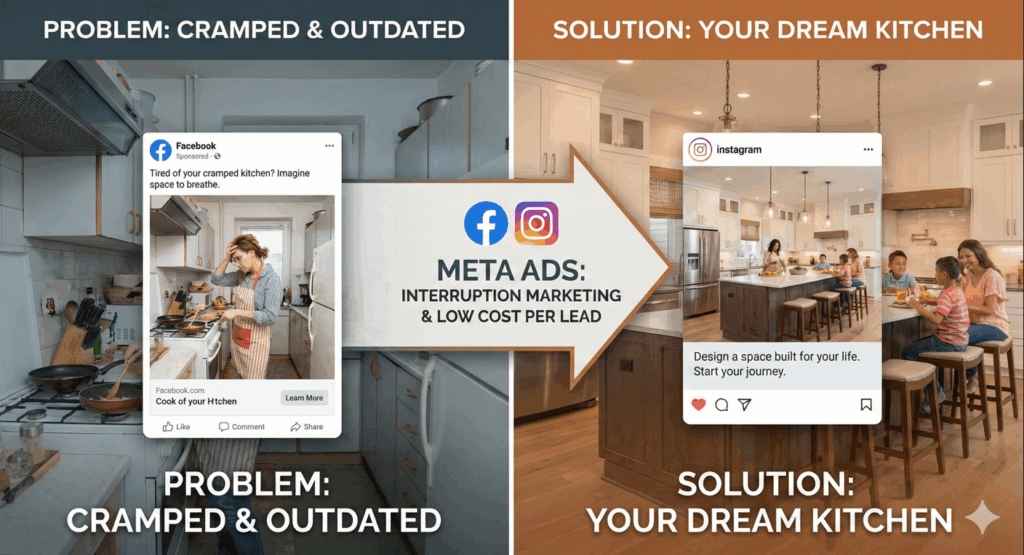
The advantage: This is your least expensive stage to capture leads. You’re getting in front of people before your competitors even know they exist. Cost per lead at this stage is typically the lowest because you’re casting a wider net and building brand awareness that will pay dividends later.
What’s happening in their head: “Okay, we’re doing this. We’re building a new home. Now, where do we even start? What’s the process? How long does it take? What do we need to know?”
The decision has been made to build them. Now they’re in research mode, hungry for information. They’re Googling everything: “how to build a custom home,” “custom home building process,” “best home builders in [location],” “custom home timeline.”
Why this matters: These are high-intent prospects. They’re not just dreaming anymore; they’re actively seeking solutions. They’re comparing their options (renovate vs. build new vs. buy existing), learning about the process, and starting to form preferences.
Best Marketing Channels for High-Intent Prospects: Google Ads & Organic SEO
This is where Google Ads and SEO for home builders become essential. When someone types “custom home builders in [your city]” into Google, you want to be there either at the top of the paid results or dominating the organic search rankings.
Your home builder SEO content strategy should include comprehensive guides to the building process, blog posts answering common questions, location-specific pages, case studies and project galleries, and educational resources about costs, timelines, and what to expect.
Your Google Ads should target high-intent keywords like “custom home builder [city],” “build custom home [area],” and “luxury home builder near me.”
The reality check: Here’s where your costs start climbing. Google Ads in the home building space can get expensive, think $10-50+ per click in competitive markets. Your organic SEO requires consistent investment in quality content, technical optimization, and link building. But the leads you get here are warmer and closer to making a decision.
What’s happening in their head: “I know what I want. I’ve got a vision for my home. Now, which builder is the right fit? Who has the best reputation? What’s the price difference? Who really understands my style?”
These prospects have done their homework. They understand the building process, they know roughly what they want, and now they’re in evaluation mode. They’re visiting websites, reading reviews, looking at portfolios, and probably reaching out to 3-5 builders for consultations.
Why this matters: This is the stage where your reputation, differentiation, and sales process become critical. They’re not just looking for any builder – they’re looking for the RIGHT builder.
Best Marketing Channels: This Is Where It Gets Expensive
At this stage, your marketing costs compound. You’re spending on retargeting ads to stay top-of-mind with people who’ve already visited your site. You’re investing in reputation management reviews, testimonials, and case studies. You need premium content like high-quality video tours, detailed portfolio pages, and client testimonials. And your most expensive resource comes into play: sales team time spent in consultations, site visits, and proposals.
The hard truth: Cost per lead increases dramatically here because competition is fierce for these prospects, they’re clicking on multiple ads from multiple builders, they require more touchpoints before converting, and the sales cycle lengthens as they deliberate.
But here’s the opportunity: If you’ve done your job in Stages 1 and 2, many of these comparing shoppers are already familiar with your brand. They saw your Meta ad months ago. They read your blog post about the building process. They’ve been on your email list. That familiarity gives you a massive advantage.
What’s happening in their head: “This is the one. This is our builder. Let’s do this.”
They’ve made their choice. Now it’s about getting the contract signed and the project started.
Why this matters: This is where everything comes together. All your earlier marketing, all your relationship building, all your reputation management it either pays off or it doesn’t.
Best Practice: The builders who win at this stage aren’t necessarily the cheapest or even the best. They’re the ones who’ve built trust throughout the entire journey. They’re the ones who showed up in the Problem Aware stage, educated in the Information Search stage, and differentiated themselves in the Comparing stage.
Here’s what most home builders get wrong: They spend 90% of their budget on Stage 2 and 3 (Google Ads and retargeting), fighting for scraps with every other builder in town, paying premium prices for prospects who are already shopping around.
The smarter approach:
Invest heavily in Stage 1 (Meta Ads) – Build a constant pipeline of problem-aware prospects. Yes, they won’t convert immediately, but you’re getting inexpensive leads who aren’t talking to your competitors yet.
Dominate Stage 2 (SEO + Google Ads) – Be the authority. When they start searching, you should be everywhere. This requires consistent content creation and a solid SEO strategy.
Optimize Stage 3 (Differentiation + Sales Process) – By this point, you can’t out-spend the competition, so you need to out-position them. What makes you different? Why should they choose you?
Nurture Between Stages – Use email marketing, retargeting, and content to stay relevant as prospects move down the funnel. Someone in Stage 1 today might be in Stage 3 in six months. Will they remember you?
Industry standards suggest 5-10% of gross revenue for established home builders, with new builders potentially investing 10-15% to build market presence. The key is allocating your budget across all funnel stages. We recommend 40% on top-of-funnel (Meta), 40% on middle-of-funnel (Google/SEO), and 20% on bottom-of-funnel (retargeting/reputation).
There’s no single best channel; it depends on where your prospects are in their buying journey. Meta ads (Facebook & Instagram) are best for reaching problem-aware prospects at the top of the funnel, while Google Ads and SEO are essential for capturing high-intent searches in the middle of the funnel.
Industry standards suggest 5-10% of gross revenue for established home builders, with new builders potentially investing 10-15% to build market presence. The key is allocating your budget across all funnel stages we recommend 40% on top-of-funnel (Meta), 40% on middle-of-funnel (Google/SEO), and 20% on bottom-of-funnel (retargeting/reputation).
Google Ads costs increase as you move down the funnel because competition intensifies. In Stage 2 (information search), prospects are actively researching and clicking on multiple ads. In competitive markets, cost-per-click can reach $10-50+ because every builder is competing for the same high-intent keywords like “custom home builder near me.”
The typical custom home buyer’s journey takes 6-18 months from initial problem awareness to signing a contract. This is why early-stage marketing (Meta ads) is so valuable you’re building relationships before prospects enter the expensive, competitive stages where every builder is fighting for attention.
Meta ads (Facebook/Instagram) excel at interruption marketing reaching people who aren’t actively searching but match your ideal customer profile. Google Ads capture intent-based searches when prospects are actively looking for builders. Meta is typically cheaper for lead generation but requires longer nurturing, while Google delivers warmer leads at a higher cost.
Focus on top-of-funnel marketing with Meta ads to capture problem-aware prospects before they start searching Google. These leads cost 60-80% less than Google Ads leads ($20-50 vs $100-300+). Combine this with strong SEO content to capture organic traffic, and implement email nurture sequences to convert early-stage leads over time.
Educational content that answers prospect questions performs best: comprehensive building process guides, cost breakdowns, timeline expectations, location-specific pages, and detailed case studies. Long-form content (2,000+ words) targeting specific search queries like “how long does it take to build a custom home” ranks well and establishes authority.
The home buyer’s journey isn’t linear, and it’s not quick. But understanding where your prospects are in their decision-making process and meeting them there with the right message and the right marketing channel is how you build a predictable, profitable home builder marketing system.
Stop fighting for scraps in Stage 3 with expensive bottom-of-funnel tactics. Start building your pipeline in Stage 1 with cost-effective Meta advertising. Your future self (and your bank account) will thank you.
Want to see how your current marketing efforts map to the buyer’s journey? Our team specializes in home builder marketing and lead generation strategies that reduce cost per acquisition while increasing lead quality.
We’ll show you where you’re overspending on late-stage prospects, how to capture early-stage leads at 60-80% lower cost, your complete customer journey optimization roadmap, and exactly where you’re leaving money on the table.
Schedule Your Free Marketing Funnel Audit | Download Our Complete Home Builder Marketing Guide
Is your construction business struggling with customer engagement? Builder-specific email marketing automation tools can help streamline your sales process and improve communication. In this article, readers will discover how to identify common sales challenges, select the right email tools, and implement a step-by-step plan to maximize results. By addressing issues such as high risks of lost leads and inadequate customer support, this content will equip builders with actionable strategies to enhance their sales approach and foster stronger relationships with clients.

Identifying the sales challenges in the construction industry is crucial for improving brand awareness and client loyalty. Communication bottlenecks with clients and subcontractors can hinder progress, while inefficiencies in manual sales processes often lead to lost opportunities. Additionally, delayed follow-ups can negatively impact a builder’s database, ultimately affecting consumer relationships. Each of these points will be explored in detail to provide actionable insights.
Communication bottlenecks with clients and subcontractors often disrupt the flow of projects in the construction sector. These challenges can reduce the credibility of a builder’s brand, as clients may feel sidelined or undervalued. Marketing emails that aim to improve engagement can serve as a solution by providing timely updates and clear information, enhancing the overall user experience and allowing for a more efficient project management process.
Moreover, ineffective communication can lead to missed opportunities, ultimately impacting return on investment. Builders can address these issues by utilizing builder-specific email tools to streamline communication. Well-crafted marketing emails can reconnect teams, clarify expectations, and foster stronger relationships, ensuring that everyone involved in the project remains informed and aligned.
Inefficiencies in manual sales processes can severely hinder a construction business’s scalability and overall revenue. Builders often find themselves buried in administrative tasks, leading to delays in responding to leads and opportunities. By implementing email marketing software that automates these processes, construction companies can streamline their operations, allowing for quicker follow-ups and increased engagement with potential clients. This automation not only saves time but enhances the effectiveness of marketing campaigns by ensuring timely communication.
Furthermore, construction businesses can leverage analytics within email marketing software to track performance and optimize their sales strategies. By analyzing open rates and click-through rates, builders can refine their marketing campaigns to better align with client needs. This data-driven approach allows for informed decision-making, resulting in improved client relationships and higher conversion rates. Emphasizing these efficiencies leads to stronger brand loyalty and promotes a more robust sales process overall.
Lost opportunities due to delayed follow-ups significantly impact the construction industry. Builders often struggle with maintaining high open rates on their communications, which can fall below industry standards of 20% to 25%. This drop in engagement may stem from a lack of timely responses, causing potential clients to seek alternatives. Developing a clear follow-up policy can help builders stay on top of client inquiries, fostering stronger brand collaboration and ensuring that leads remain engaged throughout the sales process.
To combat the issue of delayed follow-ups, construction companies can implement builder-specific email tools that automate reminders and streamline communication. Such tools enhance the efficiency of the sales process by keeping open rates high and allowing businesses to respond promptly to leads. By prioritizing quick and effective follow-ups, builders not only increase their conversion percentages but also enhance brand loyalty, ultimately improving the overall experience for potential clients.
Sales challenges in construction can feel heavy, but solutions lie just ahead. Enter builder-specific email automation tools designed to simplify and enhance communication with clients.

Builder-specific email automation tools offer unique features designed for construction businesses, enhancing customer service and engagement. Unlike generic email platforms, these specialized tools streamline communication and automate follow-up processes, improving sales efficiency. By implementing a well-crafted marketing strategy that incorporates these tools, builders can capture attention and gather testimonials, ultimately boosting their search engine optimization efforts.
Builder-specific email automation tools offer unique features that resonate with the target market in the construction industry. These tools enable builders to create tailored landing pages that emphasize their value proposition, fostering better engagement with potential clients. With capabilities such as keyword research and analytics, construction businesses can refine their messaging to enhance relevance, ensuring that communications align closely with the interests and needs of their audience.
Additionally, these specialized tools provide functionalities that simplify the management of client relationships. For instance, builders can automate follow-up emails based on specific triggers, ensuring timely communication that keeps leads engaged. This efficiency not only supports improved response rates but also builds trust in the builder’s brand, ultimately enhancing client loyalty and facilitating a smoother sales process.
When comparing generic email platforms, such as Constant Contact, with specialized tools tailored for the construction industry, the differences become clear. Generic platforms may provide basic features for effective email marketing, but they often lack the specific capabilities needed for construction professionals. Specialized email automation tools offer targeted functions, enhancing marketing automation through customized templates that resonate with clients’ needs, ultimately streamlining communication and improving sales processes.
Moreover, while an email marketing agency might help with general strategies, using builder-specific tools allows construction businesses to maximize their engagement potential. These tools can automatically manage email addresses and follow-ups, ensuring timely communication that keeps potential clients informed. By leveraging these specialized solutions, builders can improve their outreach efforts, remain competitive, and strengthen client relationships in a crowded marketplace.
Automation significantly enhances sales efficiency for construction businesses by streamlining communication with clients. Builder-specific email tools facilitate the creation and management of newsletters that resonate with the target audience, ensuring timely updates and information dissemination. These platforms provide a user-friendly interface that allows builders to segment their clients and tailor their messaging, increasing the likelihood of engagement and positive responses.
Furthermore, a solid email marketing strategy built around automation helps construction companies maintain consistent communication with potential clients. By automating follow-up emails and reminders, builders can ensure that no lead is overlooked, fostering stronger relationships and enhancing the overall customer experience. This systematic approach to managing client interactions not only reduces delays but also boosts conversion rates, making it an invaluable asset in the competitive construction market.
Email automation can transform how builders connect with clients. With these tools, it’s time to rethink the sales process and make it work harder for you.

Streamlining lead management and nurturing is essential for construction businesses looking to increase efficiency. Builder-specific email tools facilitate this process by personalizing client communication at scale, ensuring tailored interactions that resonate with each prospect. Additionally, automating follow-ups and meeting reminders enhances responsiveness, maximizing engagement. Each of these strategies contributes significantly to effective content marketing and social media marketing efforts, ultimately boosting business performance.
Streamlining lead management and nurturing within the construction business is essential for enhancing customer satisfaction and driving growth. By utilizing builder-specific email tools, construction companies can automate lead generation processes, ensuring timely communication with potential clients. This automation allows businesses to efficiently track user interactions based on their IP address, ensuring compliance with regulations while providing a personalized experience that resonates with leads.
Moreover, effective lead nurturing through automated follow-ups can significantly improve conversion rates. An expert in the construction industry understands that consistent communication not only builds trust but also keeps leads engaged throughout the decision-making process. By leveraging email automation, builders can maintain organized records of client interactions, optimize their approach based on feedback, and ultimately boost their sales performance.
Personalization is a key factor in enhancing the customer experience for construction businesses. By utilizing builder-specific email automation tools, companies can tailor communications to meet the unique needs of each client. For instance, sending targeted newsletters based on previous interactions allows builders to provide relevant content, demonstrating their understanding of customer preferences. Research indicates that personalized marketing messages can lead to higher engagement rates, positively influencing the overall success of online advertising efforts.
Furthermore, automation resources enable construction businesses to maintain consistent follow-ups, ensuring that no client feels overlooked. Builders can segment their audience based on project interests, budget, or location, allowing for more meaningful interactions. This level of personalization not only fosters loyalty but also builds trust with potential clients, ultimately driving higher conversion rates. By prioritizing personalization throughout their communication strategy, construction companies can significantly enhance the customer experience, leading to successful project outcomes and repeat business:
| Personalization Strategy | Impact on Customer Experience |
|---|---|
| Targeted Email Campaigns | Increased engagement through relevant content |
| Automated Follow-ups | Reduced chances of client neglect |
| Client Segmentation | More meaningful interactions based on interests |
Automating follow-ups and meeting reminders is essential for improving efficiency in construction sales processes. By utilizing builder-specific email tools, construction companies can ensure that their email list remains engaged and that no lead is neglected. For instance, reminders triggered by client behavior – such as recent inquiries or interactions – can be sent automatically, prompting timely follow-ups that enhance the chances of conversion.
Additionally, incorporating chatbots into email marketing campaigns can streamline communication, allowing clients to receive immediate responses even outside of business hours. This automation not only saves time for construction professionals but also fosters a more responsive environment for potential clients. As a result, builders can nurture relationships more effectively, ultimately leading to higher engagement rates and improved overall client satisfaction.
Automation streamlines communication, making it easier to connect with clients. Next, it is crucial to choose the right email tools for your construction business to maximize these benefits.

When selecting the right email tools for construction businesses, it is essential to consider key factors such as sales automation capabilities, market segmentation options, and overall user experience for the team. A thorough assessment of how well the platform integrates with existing systems will further enhance its utility. Targeted emails can greatly benefit from a strong foundation of knowledge, ensuring that builders communicate effectively with clients.
Each of these elements contributes significantly to optimizing the sales process. Understanding these factors helps construction companies make informed decisions that align with their business goals and improve engagement with potential clients.
When selecting email marketing tools for a construction business, it is vital to assess their ability to improve key performance metrics, such as reducing bounce rates. A platform that optimizes deliverability ensures that emails reach intended recipients, which is crucial for effective direct marketing. By utilizing tools designed for construction-specific needs, builders can enhance their outreach and maintain higher engagement rates with cold email campaigns.
Another critical factor is the integration capabilities of the email marketing platform with existing software systems. Seamless integration allows for smoother data flow and targeted communication through various marketing channels. A platform that supports streamlined workflows enables construction businesses to engage clients meaningfully, ultimately improving their sales process and boosting client retention.
Assessing the integration of marketing automation software with existing systems is crucial for construction businesses seeking to enhance their email campaigns. A seamless connection between the email tools and a construction CRM, for example, allows for efficient data transfer and management. This integration can significantly boost productivity by ensuring that client information is updated in real-time, enabling builders to target their advertising campaigns more effectively.
Furthermore, companies should evaluate how well the email marketing platform interacts with their current software infrastructure. Proper alignment between tools can streamline workflows, facilitating a more cohesive approach to managing prospects. For instance, when email automation aligns with scheduling tools and project management systems, contractors can maintain consistent communication with clients throughout the project lifecycle, thereby fostering stronger relationships and ensuring overall project success.
Evaluating user experience when selecting email tools is critical for construction businesses aiming to boost their sales process. A user-friendly interface can significantly enhance the efficiency of email marketing campaigns, enabling teams to navigate the software easily. When team members are comfortable using the platform, it supports timely communication with customers, positively influencing the builder’s reputation in the industry.
Automation features that prioritize user experience ensure that tasks such as follow-ups and reminders are seamlessly managed. This not only reduces manual workload but also ensures that no client is overlooked, contributing to higher engagement rates. By providing a positive user experience, construction businesses can leverage their email tools more effectively, fostering stronger connections with customers and enhancing overall sales performance.
| Factor | Impact on Sales Process |
|---|---|
| User-Friendly Interface | Enhances team efficiency and communication |
| Automation Features | Streamlines tasks and improves client follow-up |
| Timely Communication | Strengthens customer relationships and boosts reputation |
Having chosen the right email tools, the time has come to put them to work. A clear plan for implementing email automation awaits, ready to bring efficiency and ease to your construction business.

Implementing email automation can transform a construction business’s sales process. This article outlines essential steps, starting with mapping out the current sales workflow to identify areas for improvement. Next, it addresses setting up automated email sequences using user-friendly drag and drop features, training the team for optimal use, and emphasizing the importance of monitoring and adjusting the strategy for continued success with tools like ActiveCampaign.
Mapping out a construction business’s current sales workflow is a critical first step in implementing email automation. By identifying existing processes, builders can pinpoint strengths and weaknesses, which allows for a more strategic approach to enhancing communication and client engagement. For instance, recognizing bottlenecks in follow-up processes could reveal why leads are slipping through the cracks and where builder-specific email tools could make a significant impact.
To map the sales workflow effectively, construction businesses should document each step from initial contact to project completion. This exercise not only highlights areas for improvement but also facilitates the integration of automated solutions that enhance efficiency. By understanding their workflow, builders can create a targeted email automation strategy that directly addresses pain points, ensuring smoother operations and improved client satisfaction through increased responsiveness and timely communication.
Setting up automated email sequences allows construction businesses to nurture leads effectively while reducing manual effort. Initially, builders can identify key touchpoints in their sales process, such as welcome emails, project updates, and follow-up reminders. By creating tailored sequences that resonate with potential clients’ interests, construction companies can keep their audience engaged and informed, ultimately enhancing their chances of conversion.
Furthermore, using builder-specific email automation tools, construction businesses can utilize drag-and-drop features to easily design and schedule their email sequences. For example, a automated sequence that sends immediate information after a client inquiry ensures that no lead is overlooked. This proactive approach not only streamlines communication but also builds a foundation of trust, significantly improving the overall client experience and solidifying brand loyalty in a competitive marketplace.
Training the team on how to utilize builder-specific email tools effectively is vital for maximizing the benefits of email automation in the construction business. Providing hands-on training sessions that showcase the platform’s features, such as automated follow-ups and client segmentation, allows team members to become familiar with the software. This knowledge enables them to communicate efficiently with potential clients and significantly enhance engagement rates.
Additionally, ongoing support and resources, such as user guides and video tutorials, can facilitate the learning process. Incorporating regular feedback sessions helps identify any challenges the team may encounter, ensuring continuous improvement. By equipping the team with the necessary skills and tools, construction businesses can optimize their sales process and improve client relationships through effective email marketing:
| Training Components | Benefits |
|---|---|
| Hands-On Training Sessions | Enhances familiarity with email tool features |
| User Guides and Video Tutorials | Supports ongoing learning and accessibility |
| Regular Feedback Sessions | Facilitates continuous improvement |
Monitoring and adjusting email automation strategies is essential for construction businesses to maximize their sales potential. By regularly reviewing performance metrics such as open rates and click-through rates, builders can identify which aspects of their campaigns are effective and which need improvement. This data-driven approach allows companies to make informed adjustments, enhancing client engagement and overall marketing effectiveness.
Additionally, employing builder-specific email tools enables construction firms to easily adapt their strategies based on client feedback and changing market conditions. For instance, if an automated follow-up sequence is underperforming, builders can revise their messaging or timing to better align with client preferences. Continuous optimization of the email strategy directly contributes to a more efficient sales process, fostering stronger client relationships and driving growth.
Now that the steps for email automation are clear, it’s time to focus on achieving the best results. In the next section, discover essential practices that can elevate your email strategy beyond the ordinary.

Crafting engaging and relevant email content is essential for attracting and retaining clients in the construction industry. Segmenting the audience for targeted messaging helps builders communicate effectively and personalize interactions. Analyzing performance metrics drives continuous improvements, while ensuring compliance with industry regulations safeguards the business. These best practices lay a strong foundation for maximizing the effectiveness of builder-specific email tools.
By focusing on these key areas, construction businesses can enhance their email marketing strategies and achieve better results in their sales processes.
Crafting engaging and relevant email content is vital for construction businesses looking to improve client engagement and conversions. Builders should focus on delivering value through their emails by including informative content, such as project updates, industry news, and helpful tips tailored to their audience’s interests. By aligning the messaging with client needs, construction firms can foster relationships and keep their brand top-of-mind.
In addition to relevance, it is essential for builders to personalize email content to enhance engagement further. Using segmentation strategies, companies can target specific groups within their audience, such as first-time buyers or repeat clients, tailoring messages to each segment’s unique preferences. This targeted approach not only increases the likelihood of email opens and clicks but also contributes to a stronger connection between the builder and their clients:
Segmenting the audience for targeted messaging is essential for construction businesses seeking to enhance their email marketing efforts. By categorizing clients based on various criteria – such as project type, budget, or geographical location – builders can craft messages that resonate with each specific group. For instance, a builder may send customized emails featuring new home designs to first-time buyers while offering renovation tips to existing homeowners, increasing engagement and improving the likelihood of conversion.
Utilizing builder-specific email tools allows construction companies to implement effective audience segmentation seamlessly. These platforms enable companies to automate the process of categorizing clients, ensuring that messages remain relevant and timely. By delivering relevant content tailored to distinct segments, builders not only increase open and click-through rates but also build stronger relationships with their clients, addressing their unique needs and preferences effectively.
Analyzing performance metrics is vital for construction businesses striving to enhance their email marketing efforts. By closely monitoring important indicators such as open rates, click-through rates, and conversion rates, builders can gain valuable insights into client engagement and preferences. For example, if open rates are low, it may indicate that email subject lines need to be revised to capture more attention, while particular segments of the audience may require additional targeting for better engagement.
Furthermore, utilizing builder-specific email tools allows construction firms to gather data and perform A/B testing to refine their messaging continually. This hands-on approach enables teams to understand which content resonates most with their clients, leading to actionable changes in their sales strategies. By effectively analyzing these performance metrics, construction businesses can adapt and improve their email campaigns, ultimately leading to increased engagement and more successful client relationships.
Ensuring compliance with industry regulations is crucial for construction businesses utilizing builder-specific email tools. These regulations often encompass data protection laws, such as the General Data Protection Regulation (GDPR), which mandate how businesses handle personal information. By leveraging email tools designed specifically for the construction industry, businesses can automate compliance processes, ensuring that their client communications align with legal requirements and safeguarding their reputation.
Construction firms should implement regular audits and training sessions to maintain compliance with industry regulations while using email marketing. By staying informed on the latest legal updates and utilizing features within specialized email tools – such as consent tracking and easy opt-out options – builders can protect themselves from potential penalties. This proactive approach not only minimizes legal risks but also fosters trust with clients, demonstrating a commitment to ethical business practices.
Boosting a construction business hinges on leveraging builder-specific email tools to revamp the sales process. These specialized tools streamline communication, enhance lead management, and automate follow-ups, allowing builders to effectively engage with clients and avoid missed opportunities. By adopting tailored strategies, professionals can personalize interactions, analyze performance metrics, and ensure compliance, driving growth and building trust. Emphasizing these practices is essential for staying competitive and achieving lasting success in the construction industry.
Are you struggling to connect with your target audience in the local real estate market? Research shows that personalized email content can increase engagement by up to 45%. This blog post will explore the impact of personalized emails in real estate marketing, guide you in building a high-quality email list, and provide strategies for crafting compelling content. By implementing these strategies, you will enhance your marketing efforts, drive interest in your listings, and create lasting relationships with potential clients. Let’s dive into how to maximize your real estate marketing with personalized email content.

Personalized email content plays a significant role in client engagement for real estate professionals. By tailoring email marketing campaigns, real estate agents can boost email open rates and enhance lead conversion. Additionally, customized emails foster trust through personal communication, making it vital for professionals in the industry to understand these dynamics to maximize their marketing efforts.
Personalization in email marketing significantly enhances client engagement in real estate. By analyzing an email list to understand the unique preferences and behaviors of each recipient, real estate professionals can tailor their messages effectively. This targeted approach not only boosts usability but also increases lead generation, as clients feel valued and recognized through customized communications.
Additionally, algorithms that determine email delivery and success benefit from personalized content. When emails resonate with clients’ interests, they are more likely to convert, leading to better relationships between agents and potential buyers. For real estate professionals, leveraging personalized email serves as a critical resource, effectively addressing client needs while driving conversion rates higher.
Customized emails significantly enhance conversion rates in real estate marketing by creating a tailored customer experience. By understanding the unique needs and preferences of clients, real estate professionals can craft messages that capture attention and resonate with their audience. For instance, if a client has previously shown interest in family homes, sending listings that highlight nearby schools and parks increases engagement and encourages quicker decision-making.
Additionally, leveraging mobile marketing strategies within personalized emails ensures that the content adapts to the preferences of on-the-go clients. Incorporating visual elements and clear calls to action aligned with marketing benchmarks can improve click-through rates and drive prospects toward desired actions. By focusing on understanding client behavior through analytics, real estate agents can further enhance their email campaigns, ultimately leading to higher conversion rates and a stronger client-agent relationship.
Building trust through tailored communication is essential for real estate professionals aiming to foster lasting relationships with clients. Personalization in emails greatly enhances this connection by addressing the specific needs and preferences of each recipient, thereby reducing bounce rates. Research indicates that when clients receive messages relevant to them, they are more likely to engage and respond positively, which helps create a sense of familiarity and reliability in the agent-client relationship.
Moreover, incorporating elements of social proof in personalized emails can further solidify trust. This can include testimonials from satisfied clients or metrics that demonstrate the agent’s success in helping buyers find their dream homes. For instance, a cold email that includes success stories related to a client’s interests can significantly increase the likelihood of engagement and conversion. By ensuring communication resonates with the audience’s needs, real estate agents can enhance credibility and ultimately foster stronger client loyalty.
| Strategy | Impact |
|---|---|
| Personalization in Emails | Enhances client engagement and reduces bounce rates. |
| Incorporating Social Proof | Builds trust by showcasing testimonials and success stories. |
| Understanding Client Preferences | Enables tailored communication that resonates with clients. |
Personalized emails draw in potential buyers, but a strong list sets the stage for success. To build that list, one must know where to find the right people and how to keep them engaged.

Growing a high-quality email list is essential for effective content marketing in real estate. Strategies for expanding your subscriber base, segmenting your audience for targeted outreach, and maintaining an up-to-date contact list will be discussed. These elements not only improve marketing tools‘ efficiency but also enhance return on investment and bolster your reputation, leading to actionable results through clear calls to action.
To grow a high-quality subscriber base, real estate agents should leverage online advertising strategies that target specific demographics interested in property buying. By using social media platforms and search engine ads, agents can reach potential clients in their local market. Incorporating effective call-to-action elements in these ads can encourage users to sign up for newsletters, allowing agents to expand their email database with engaged prospects.
Additionally, implementing a chatbot on the agency’s website can streamline the subscriber acquisition process. A well-designed chatbot can engage visitors in real-time, collecting essential information and guiding them toward subscribing for further updates. This approach not only builds a robust email list but also creates a personalized experience, enhancing the overall connection between real estate agents and their audience.
Segmenting the audience is essential for real estate professionals aiming to enhance their effective email marketing strategies. By conducting market analysis, agents can identify specific consumer groups based on factors such as location, budget, and buying interests. This tailored approach allows for the creation of targeted email subject lines that resonate with each segment, increasing the likelihood of engagement and conversion.
Using an advanced email platform, real estate agents can automate the segmentation process to deliver relevant content directly to each consumer. For example, a segmented email campaign targeting first-time homebuyers can focus on affordable listings and resources for navigating the buying process. By addressing the unique needs of each group, agents can maximize their outreach efforts and build stronger connections with their audience.
Maintaining an up-to-date contact list is crucial for real estate professionals looking to maximize their email marketing efforts. Regularly reviewing and pruning the subscriber list ensures that the contacts included are genuinely interested in receiving real estate content, which can have a significant impact on email open rates. By utilizing email marketing tools that assist in managing contact details, real estate agents can easily identify inactive subscribers and remove them, enhancing the overall effectiveness of their campaigns.
Moreover, integrating a mobile app can simplify the process of collecting and updating contact information. Real estate agents can prompt clients to provide their details during property showings or open houses, ensuring that the list reflects the most current information available. This proactive approach not only streamlines communication but also fosters a strong connection with clients, leading to more meaningful engagements and a higher likelihood of successful transactions.
An email list is just the start. Now, the real work begins: creating messages that speak directly to each reader’s heart.

Effective personalized email content begins with writing subject lines that capture attention and encourage opens. It is essential for real estate professionals to employ personalization techniques in the body of the email, while also incorporating client preferences and behaviors. Utilizing multimedia elements not only enhances engagement but also supports the sharing of valuable content like market segmentation insights and real estate trends. Together, these strategies can significantly improve the effectiveness of newsletters and overall email marketing efforts.
Writing subject lines that capture attention is crucial for effective email marketing in real estate. Real estate professionals must be strategic, using concise and compelling phrases that encourage recipients to open their emails. Incorporating specific keywords, such as “mortgage options” or “exclusive listings,” can make the content more relevant and engaging for potential clients looking for real estate services. This approach maximizes the efficiency of email marketing software by improving open rates and driving client engagement.
A practical example involves segmenting an email list using a real estate CRM to tailor subject lines based on user preferences. For instance, agents can create personalized subject lines that mention the specific neighborhoods or property types a client has shown interest in, such as “Your Next Home Awaits in Downtown – Check Mortgage Options Now!” This method ensures that the email address reached is well-received, positioning agents as attentive to their clients’ needs and enhancing overall marketing effectiveness.
To enhance email marketing efforts, real estate professionals should employ targeted personalization techniques within the email body content. By integrating the customer’s name and relevant property details, agents can create a more engaging experience. For example, referencing recent interactions or specific property preferences shows clients that their needs are recognized, aligning with email marketing benchmarks for increased engagement and response rates.
Moreover, incorporating local market insights and tailored recommendations can significantly elevate the effectiveness of email real estate campaigns. By sharing information about nearby schools, market trends, and neighborhood amenities, real estate professionals can add value to their communication. This not only strengthens the brand’s connection with potential clients but also serves to build trust, thereby enhancing long-term relationships between clients and agents within the competitive landscape of email marketing.
Incorporating client preferences and behaviors into email marketing workflows significantly enhances customer service in the real estate sector. By understanding how clients interact with previous campaigns, agents can craft tailored messages that resonate more effectively, ultimately improving email open rates. For example, including hyperlinks to relevant social media posts or listings based on a client’s past interests can create a seamless and engaging experience that invites further exploration.
Real estate professionals should prioritize analyzing client data to personalize content that reflects individual behaviors and preferences. This approach allows agents to send targeted emails that showcase properties or services most aligned with each recipient’s needs. By focusing on personalized communication strategies, agents can foster stronger relationships with clients, resulting in increased engagement and higher conversion rates.
Utilizing multimedia within personalized email content can significantly boost engagement rates for real estate marketing. Real estate professionals should consider including video testimonials from satisfied clients, as these elements can enhance credibility and trust. Additionally, integrating visuals or links to a dedicated landing page featuring attractive property listings ensures that recipients can easily access relevant information, ultimately reducing unsubscribe rates and increasing the potential for conversions.
Moreover, as many clients access emails on mobile devices, incorporating responsive multimedia elements is crucial for maintaining engagement. Through data analysis, agents can determine which types of multimedia resonate best with their audience. For instance, including high-quality images or engaging infographics not only captures attention but also encourages recipients to interact with the content, leading to a more effective marketing strategy overall.
Creating personalized email content is just the beginning. Next, learn how to automate your campaigns to reach more people with less effort and save time.

Automating personalized email campaigns enhances efficiency and effectiveness for real estate professionals. This section will cover setting up drip campaigns tailored for different client segments, leveraging CRM tools to facilitate seamless communication, and timing emails to achieve maximum response rates. Each strategy serves as a valuable marketing idea, supporting brand awareness and improving overall copywriting efforts in email marketing.
Setting up drip campaigns tailored for different client segments enhances the effectiveness of any email marketing strategy for real estate brokers. By automating communication based on client behavior, agents can engage potential buyers and sellers with relevant information at the right time. For instance, a broker can create a specific drip campaign for first-time homebuyers, providing them with a series of emails that cover essential topics, from mortgage options to neighborhood insights, which can directly improve open rates.
Automation allows brokers to maintain consistent engagement without sacrificing personalization. By analyzing how clients interact with previous communications, agents can adjust their messages to better align with specific interests and behaviors. This level of targeted communication not only bolsters relationships but also increases the likelihood of conversion, as tailored content effectively meets the unique needs of each client segment in the competitive real estate market.
Leveraging CRM tools for efficient communication allows estate agents to optimize their personalized email campaigns significantly. By using these platforms, agents can analyze statistics on client interactions, which aids in audience segmentation. This targeted approach enables the creation of tailored content that resonates with specific client interests, ultimately improving engagement rates and driving conversions.
Furthermore, integrating RSS feeds into the CRM can automate the delivery of fresh content, keeping clients informed without requiring constant manual updates. Statistics show that personalized emails can increase open rates by up to 29%, reinforcing the importance of relevant communication. By focusing on audience segmentation and automation, estate agents can enhance their marketing strategies and ensure a high percentage of success in their email outreach efforts:
Timing plays a crucial role in the success of any email marketing campaign, and understanding when to send emails can significantly enhance email marketing performance. Real estate professionals should leverage analytics to determine the optimal times for reaching their audience based on open rates and engagement metrics. By sending emails when clients are most likely to check their inboxes, agents can improve response rates and engagement, ultimately leading to more meaningful interactions.
Additionally, incorporating knowledge from previous campaigns can guide future strategies. For example, if data shows that emails sent on Wednesday mornings yield higher open rates, agents can adjust their schedules accordingly. By continuously monitoring email performance and adapting sending times, real estate professionals can maximize the effectiveness of their personalized email content, fostering stronger connections with potential clients and increasing the likelihood of conversion.
You have set up your automated campaigns. Now, it’s time to see how well they perform. Understanding the results will help you refine your approach and grow stronger.

Measuring and optimizing email marketing performance is essential for maximizing real estate marketing results. Key metrics, such as open and click-through rates, serve as indicators of success. A/B testing different email elements allows professionals to refine their email content effectively. Additionally, analyzing data insights enables agents to adjust strategies based on market value and client preferences, ensuring more impactful campaigns.
For real estate agents, monitoring key metrics such as open rates and click-through rates is essential to evaluating the effectiveness of their real estate email marketing strategy. Open rates indicate how well the subject lines resonate, while click-through rates reveal the content’s ability to engage recipients and prompt them to explore property listings or additional information. By consistently tracking these metrics, agents can gain valuable insights into client preferences, allowing them to tailor future campaigns for maximum impact.
Another critical metric in real estate marketing is the conversion rate, which measures the percentage of email recipients who take desired actions, such as requesting more information or scheduling a property viewing. By analyzing conversion rates, real estate professionals can assess how effectively their emails are driving prospects toward actionable steps. This data not only informs adjustments to email content but also enhances overall marketing strategies, ultimately leading to improved engagement and success in closing sales.
Analyzing open and click-through rates is critical for real estate professionals looking to optimize their marketing automation strategies. High open rates indicate that the subject lines and personalization tactics are capturing clients’ attention effectively. In contrast, low click-through rates signal that the email content may not be resonating with recipients. Agents can use this data to iterate on their email content, ensuring that it aligns more closely with client interests and needs.
To maximize the effectiveness of email campaigns, real estate agents should utilize marketing automation tools that provide insights into open and click-through rates. For instance, if a particular property listing consistently attracts clicks, agents can employ similar strategies for future emails or adjust their segmentation to focus more on clients interested in comparable properties. This targeted approach not only enhances email marketing performance but also fosters stronger client relationships through relevant and engaging content.
A/B testing different email elements is essential for real estate agents aiming to enhance their email marketing performance. By comparing two variations of subject lines, content layouts, or call-to-action buttons, agents can identify which elements resonate more effectively with their target audience. For instance, an agent might test two subject lines for an email campaign about new property listings, discovering that a more specific subject line significantly improves open rates and engages potential buyers.
Adjusting strategies based on data insights is crucial for real estate professionals looking to enhance their personalized email marketing. By regularly analyzing campaign performance metrics such as open rates and click-through rates, agents can identify which content resonates most with their audience. For example, if specific property listings receive higher engagement, the agent can focus future emails on similar properties to meet client interests more effectively.
Moreover, adapting the timing of email sends can also lead to improved engagement. If data indicates that clients respond better to emails sent during specific times of the day, real estate agents can adjust their scheduling to align with these insights. By continuously refining their approach based on actionable data, agents can maximize the effectiveness of their marketing efforts, resulting in stronger client relationships and higher conversion rates.
You have measured your results and seen what works. Now, it’s time to explore the best practices that can help avoid common mistakes and take your email marketing further.

To maximize real estate marketing with personalized email content, professionals must implement essential best practices while avoiding common pitfalls. Ensuring compliance with email marketing regulations is critical to maintaining credibility. Proper formatting helps avoid spam filters, increasing the chances of emails reaching clients. Providing valuable content prevents unsubscribes, while encouraging feedback enhances future campaigns. These strategies collectively foster stronger connections with clients.
Ensuring compliance with email marketing regulations is essential for real estate professionals looking to maintain credibility and avoid severe penalties. Regulations, such as the CAN-SPAM Act, require that emails include a clear unsubscribe option and truthful subject lines. By adhering to these legal requirements, real estate agents not only enhance their marketing efforts but also build trust with clients, showcasing their commitment to ethical practices.
Moreover, real estate agents should regularly review their email lists to confirm that all subscribers have opted in to receive communications. This practice aids in maintaining a high deliverability rate and helps avoid being marked as spam. By implementing double opt-in strategies, agents can further ensure that their email marketing campaigns operate within legal boundaries, ultimately leading to stronger client relationships and improved engagement rates.
Avoiding spam filters is crucial for real estate professionals who want their personalized email content to reach clients effectively. To achieve this, maintaining proper formatting is essential. This includes using a balanced text-to-image ratio and avoiding excessive use of all caps or spam trigger words. Real estate agents should aim for clean layouts with clear headings and concise text that makes their emails easy to read, which can lead to higher engagement rates.
Additionally, including a clear unsubscribe link and ensuring that all email elements reflect accurate information enhances deliverability. Taking the time to personalize subject lines and email content also helps build trust with recipients. By focusing on these formatting best practices, real estate agents can minimize the risk of their emails being flagged as spam and enhance overall client communication.
Providing value in email communications is essential for real estate professionals aiming to reduce unsubscribe rates. By sharing relevant market insights, neighborhood trends, and personalized property recommendations, agents can create content that resonates with their audience. For example, sending a monthly newsletter that includes data on property values or local events not only keeps clients informed but also positions agents as trusted sources, making clients less likely to opt out of future communications.
Moreover, consistently offering valuable content encourages client engagement and fosters loyalty. Real estate professionals can enhance their emails by incorporating helpful tips for homebuyers, such as staging advice or financing options. By addressing client needs and interests through genuinely useful information, agents can build lasting relationships, ultimately leading to a lower likelihood of unsubscribes and a more robust email marketing strategy.
Encouraging feedback from clients is essential for enhancing future email marketing campaigns in the real estate sector. By actively seeking input regarding content, frequency, and overall satisfaction, real estate agents can gain valuable insights that directly inform their marketing strategies. For instance, incorporating a simple feedback form at the end of email newsletters can provide immediate data, allowing agents to refine messaging and improve engagement rates based on client preferences.
Additionally, real estate professionals can leverage feedback to identify gaps in their services or offerings. When clients share their experiences and suggestions, it presents an opportunity to address specific needs that may not have been previously recognized. This direct communication not only strengthens client relationships but also positions the agent as attentive and responsive, enhancing overall trust and satisfaction in the process of transforming feedback into actionable improvements.
Maximizing real estate marketing with personalized email content is essential for engaging clients and driving conversions. By tailoring communications to specific client preferences and behaviors, real estate professionals can foster trust and enhance relationships. Implementing strategies such as segmentation, automation, and valuable content sharing effectively improves overall email performance and customer loyalty. As the market evolves, personalized email campaigns stand out as a crucial tool for success in the competitive real estate landscape.
Many home builders struggle to connect with potential buyers effectively. Did you know that targeted email campaigns can significantly improve lead conversion rates? This article will explore crucial strategies for maximizing home builder email campaigns, such as building a high-quality email list, creating engaging content, and personalizing your outreach. By implementing these tactics, builders can reduce bounce rates and better meet the preferences of their audience, ultimately driving marketing success. If improving your email marketing automation and engagement is a challenge, this content will provide practical solutions to elevate your efforts.

Email marketing is crucial for home builders, offering benefits that extend beyond simple communication. By recognizing the advantages, such as improved open rates and engagement, builders can influence buyer decisions through targeted campaigns tailored to specific personas. Additionally, comparing email marketing to other strategies highlights its unique propositions and effectiveness. Addressing common challenges and setting clear goals can drive campaign success.
Home builders can significantly benefit from the ability to send marketing emails that engage potential buyers effectively. By utilizing tools like Constant Contact, builders can create informative newsletters that keep their audience informed about new developments, offers, and community events. This consistent communication not only fosters relationships but also positions the builder as a trusted resource in the home-buying journey.
Another advantage of email marketing is its accessibility and potential for targeted outreach. A well-maintained mailing list allows builders to segment their audience based on preferences and behaviors, ensuring that the right message reaches the right people. By understanding the demographics and needs of their prospects, builders can tailor their content to address specific pain points, ultimately enhancing the buyer’s experience and increasing conversion rates.
Targeted emails serve as a powerful asset in a home builder’s marketing strategy by allowing organizations to connect with potential buyers on a more personal level. By analyzing data from previous campaigns, home builders can gain valuable insights into customer preferences, enabling them to craft tailored messages that grab attention and resonate with their audience. This customization not only increases the likelihood of engagement but also establishes a relationship where prospects feel valued and informed.
Moreover, effective email marketing can help builders guide buyer decisions by providing timely information that answers questions and addresses concerns. For instance, a well-timed email featuring new developments, financing options, or upcoming open houses acts as a bookmark in a buyer’s journey, helping to remind them of the builder’s offerings when they are ready to make a decision. By positioning themselves as reliable sources of information, home builders can significantly influence the buying process and foster trust, ultimately leading to increased conversion rates.
Email marketing stands out compared to other marketing strategies, particularly due to its high return on investment (ROI). Studies indicate that for every dollar spent on email marketing, it can generate an average return of $42, showcasing its effectiveness in enhancing customer satisfaction. This results in a stronger reputation for home builders, as they can frequently engage with their audience while providing valuable information tailored to buyer behavior.
In contrast to social media or direct mail campaigns, which can be less targeted, email marketing benefits from advanced marketing automation tools. These tools enable home builders to segment their audience based on behavior and preferences, allowing for personalized communications that resonate with potential buyers. By utilizing data-driven insights, builders can enhance their marketing efforts, ensuring their messages are not only timely but also relevant, ultimately leading to improved conversion rates and buyer loyalty.
Effective email marketing in the home building industry faces challenges such as maintaining an updated database and ensuring compliance with privacy policies. Builders often struggle with keeping their contact lists current, which can lead to low engagement rates and diminished credibility. To overcome this, home builders should implement regular database cleaning practices, removing inactive contacts and verifying existing information. This proactive approach not only enhances the quality of communications but also positively influences the overall customer experience.
Another challenge stems from delivering relevant content that resonates with the audience. Builders may find it difficult to tailor their messaging to different segments of their database, potentially resulting in lower engagement. To address this issue, home builders can invest in data analytics tools that track customer interactions and preferences. By understanding buyer behaviors and adjusting email content accordingly, builders can create more relevant, personalized campaigns that improve customer satisfaction and bolster the builder’s credibility in the market.
Setting clear goals is essential for a successful email marketing campaign in the home building industry. Builders should define specific objectives such as increasing brand awareness, boosting lead generation, or growing their email subscriber list. By having these goals in mind, builders can tailor their email content and strategies to meet those targets, ultimately leading to a more focused approach that enhances user experience and fosters engagement.
For example, a home builder aiming to increase brand awareness might create a series of informative emails showcasing their latest projects and community features. By tracking metrics related to open rates and click-throughs, builders can assess the effectiveness of their campaigns and refine their messaging accordingly. This data-driven approach ensures that builders not only reach their goals but also create a positive user experience that resonates with their audience.
Email marketing matters. Now, it’s time to focus on building a strong list of potential buyers who are eager to hear from you.

Attracting leads is essential for successful email marketing campaigns in the home building industry. Employ effective strategies, including sign-up forms and landing pages, to encourage potential buyers to join the subscriber list. Segmenting the list enables targeted outreach, while growing and maintaining your subscriber base ensures consistent engagement. Additionally, compliance with email marketing regulations is critical to protect both the builder’s reputation and the audience’s trust.
To attract leads effectively, home builders must implement strategic methods that initiate customer engagement. Utilizing sign-up forms on their websites and landing pages can significantly enhance consent and interest from potential buyers. By offering valuable resources, such as eBooks on home buying tips or exclusive updates on new projects, builders encourage visitors to subscribe, thereby feeding the top of the marketing funnel with qualified leads eager for information.
Another key approach involves utilizing social media channels to drive traffic to the email subscription sign-up. Home builders can run targeted advertising campaigns that highlight the benefits of joining their email list, ultimately improving return on investment. Engaging content on platforms like Facebook or Instagram can create meaningful interactions, fostering relationships that prompt prospective buyers to enter the funnel and stay connected, resulting in a responsive and high-quality email database.
Utilizing sign-up forms and landing pages is essential for home builders looking to build a high-quality email list of potential buyers. By strategically placing these forms on their websites, builders can capture interest from visitors who are eager to receive updates about new projects and industry insights. These forms should clearly communicate the builder’s value proposition, enticing users to subscribe by highlighting the benefits they will receive, such as exclusive content or early access to promotions. This approach not only increases engagement but also ensures that the contact information collected aligns with the target market.
Furthermore, compliance with email marketing regulation is critical when implementing sign-up forms. Home builders must reassure potential subscribers that their information will be protected and used responsibly. Incorporating clear privacy policies and consent statements builds trust and encourages more visitors to join the mailing list. By combining well-designed landing pages that offer compelling offers and sign-up forms that foster transparency, home builders can effectively enhance their marketing campaigns and create a solid foundation for future engagement with prospective buyers.
Segmenting the email list is a vital step for home builders aiming to enhance their email marketing efforts. By organizing contacts based on demographics and behaviors, builders can focus on their unique selling proposition. This targeted outreach improves engagement, as prospects receive content that directly addresses their needs, ultimately leading to higher conversion rates. Statistics show that segmented campaigns achieve 14% higher open rates and 10% better click-through rates, emphasizing the importance of understanding the audience.
Utilizing landing pages to capture specific information can streamline the list-building process significantly. Home builders might consider creating landing pages tailored for various audience segments, offering targeted promotions or resources that align with their preferences. By efficiently gathering relevant data during the sign-up process, builders can enhance their email marketing strategies, ensuring the right message reaches the right potential buyers at the right time. This approach not only strengthens connections but also fosters trust in the builder’s brand.
To grow and maintain a subscriber base, home builders should focus on creating value-driven incentives that act as magnets for potential customers. Strategies such as offering exclusive insights into new construction projects, financing options, or industry news can entice users to sign up for email campaigns. This approach not only increases the quantity of subscribers but also enhances loyalty among existing customers.
Regularly engaging with subscribers through targeted email campaigns can significantly boost retention rates. Builders can segment their lists based on customer preferences and behaviors, ensuring that communications feel personal and relevant. By consistently providing valuable content and tailored offerings, home builders can foster stronger relationships with their audience and turn potential buyers into loyal customers:
Complying with email marketing regulations is essential for home builders to maintain their credibility and protect their reputation. Adhering to laws such as the CAN-SPAM Act ensures that email marketing campaigns not only respect consumer privacy but also increase the likelihood of engagement. For instance, builders can enhance their data collection processes by implementing questionnaires that provide insights into customer preferences while ensuring participants are aware of how their information will be used.
Additionally, understanding regulations related to mobile marketing is crucial for optimizing email campaigns on various platforms. By integrating analytics tools, builders can measure the impact of their email marketing efforts and adjust their strategies accordingly. A focus on compliance not only helps avoid legal penalties but also fosters trust with potential buyers, leading to more effective email communication and long-term relationships.
A solid list of potential buyers is just the beginning. Next, it’s time to craft emails that not only capture attention but also drive action.

Crafting engaging emails is essential for home builders aiming to inspire action and maximize marketing success. This section will cover key strategies such as creating compelling subject lines that capture attention, writing persuasive and relevant content that resonates with consumers, and incorporating visuals that enhance engagement. Clear calls-to-action and mobile optimization will also be discussed, ensuring that emails deliver brand messages effectively across various email clients, while leveraging social proof and innovation to build trust.
Crafting compelling subject lines is critical for home builders seeking to increase the effectiveness of their email marketing campaigns. A well-designed subject line serves as the first impression and can significantly impact open rates. By including actionable phrases that highlight the value offered, such as a strong call to action, home builders can entice their target audience to engage with the content. For example, prompting recipients to “Discover Our Exclusive Home Financing Resource” can create a sense of urgency and interest, ultimately driving revenue through increased engagement.
Furthermore, subject lines should reflect the overall workflow of the email’s message, aligning with the needs and preferences of the target audience. By utilizing concise language that communicates specific benefits, builders can capture attention and encourage recipients to open the email and take action. Incorporating keywords like “limited-time offer” or “latest community updates” can enhance relevance, ensuring that the email resonates with the audience. This strategic approach to subject lines not only boosts open rates but also cultivates a relationship where homeowners feel informed and invested in the builder’s offerings.
Writing persuasive and relevant content is vital for the success of email communication in a marketing campaign. Home builders should focus on creating messages that address the specific needs and interests of their audience. By understanding the customers’ preferences and pain points, builders can develop engaging content that encourages prospective buyers to take action. This tailored approach not only enhances the effectiveness of the marketing campaign but also establishes a meaningful connection with potential clients.
Moreover, maintaining a consistent sequence and frequency in content creation is essential for driving engagement over time. For instance, a home builder might implement a content calendar that outlines scheduled topics and themes, ensuring that messages remain relevant and fresh. This strategy helps in keeping the audience informed and interested, ultimately leading to stronger responses from recipients. By delivering valuable insights through well-structured email campaigns, builders can effectively inspire action among potential buyers:
| Sequence | Content Ideas | Frequency |
|---|---|---|
| 1 | Information on new projects | Monthly |
| 2 | Home buying tips | Bi-weekly |
| 3 | Financing options | Weekly |
| 4 | Community events | As needed |
Incorporating visuals and multimedia into email campaigns enhances engagement and captures the attention of potential homebuyers. High-quality images of completed projects, for instance, can showcase a builder’s craftsmanship and appeal to a buyer’s aesthetic preferences. Additionally, including buttons that prompt actions, such as “Schedule a Tour,” can lead to higher interaction rates and move prospects further along their journey. This not only supports marketing objectives but also aligns with search engine optimization practices by driving traffic to the builder’s website.
Testimonials presented through visual formats, like short video clips or eye-catching quotes, lend credibility to a builder’s email campaigns. Prospective buyers are often influenced by the positive experiences of others, so featuring satisfied homeowners can reinforce trust and encourage decision-making. By strategically combining these elements within email communications, home builders can effectively inspire action and make a lasting impression, ultimately leading to increased conversion rates and sustained client relationships.
Including clear calls-to-action (CTAs) in email marketing campaigns is vital for home builders looking to drive engagement and conversions. CTAs guide potential buyers on the next steps, whether it’s scheduling a tour, downloading a guide, or signing up for a newsletter. By utilizing straightforward language and visually distinct buttons, builders can effectively capture attention and encourage recipients to take immediate action.
To maximize the impact of CTAs, home builders should test various placements and phrasings within their emails. For instance, a compelling CTA like “See Our Latest Designs” placed prominently can lead to higher click-through rates. By regularly analyzing the performance of these CTAs, builders can refine their strategies, ensuring that each email not only informs but also compels the audience to engage further and move along the buying journey.
Optimizing emails for mobile devices is vital for home builders looking to enhance user engagement and drive conversions. A significant portion of email recipients access their messages via smartphones, so ensuring that emails are mobile-responsive can dramatically improve open and click-through rates. This optimization involves using a clean layout, larger font sizes, and button designs that are easy to tap, allowing potential buyers to navigate content effortlessly and take action without frustration.
Additionally, utilizing short, impactful subject lines and relevant previews can capture attention quickly on smaller screens. Home builders should consider the mobile user’s experience by placing the most important information at the top, ensuring clarity in messaging. By focusing on mobile optimization, builders can create seamless interactions that resonate with on-the-go clients, ultimately fostering deeper connections and encouraging prospective buyers to engage with their offerings more readily.
Engaging emails spark interest, but personalization drives connection. By tailoring your message, you invite your audience into a conversation that feels meaningful.

Personalizing email campaigns is essential for home builders seeking to enhance engagement and drive marketing success. This section will focus on effectively leveraging customer data to create tailored experiences, implementing dynamic content personalization that resonates with recipients, and automating personalized email sequences for timely communication. Additionally, it will address the importance of A/B testing to refine strategies and re-engaging inactive subscribers to maintain a robust subscriber base.
Leveraging customer data is essential for home builders looking to enhance their email marketing efforts. By collecting and analyzing information such as demographics, preferences, and past interactions, builders can create highly personalized content that speaks directly to potential buyers’ needs. For instance, if a builder identifies a segment of their audience interested in eco-friendly homes, they can tailor their emails to showcase sustainable building practices, thus driving engagement and interest.
Effective use of customer data also involves segmenting the email list to ensure targeted messaging. By sending relevant content to specific groups, home builders can improve open and click-through rates significantly. For example, builders can develop separate campaigns for first-time homebuyers and seasoned investors, addressing their distinct concerns and inquiries. This strategic approach not only enhances communication but also builds trust, ultimately guiding potential customers toward a decision that aligns with their goals.
Dynamic content personalization significantly enhances email campaigns for home builders by allowing messages to resonate with individual recipients. By using customer data such as location, previous interactions, and preferences, builders can tailor email content that speaks directly to the needs and interests of potential buyers. For instance, a builder might showcase properties in a specific area to recipients based on their geographic data, making the communication more relevant and engaging.
This approach not only increases the chances of engagement but also builds a stronger connection between builders and their audience. Personalization can extend to recommending content based on past behavior, such as featuring financing options for first-time homebuyers or highlighting luxury features for higher-end clientele. By implementing dynamic content strategies, home builders can create a more personalized and effective email marketing experience that ultimately boosts conversion rates and fosters customer loyalty.
Automating personalized email sequences allows home builders to effectively nurture leads throughout the buying journey. By leveraging customer data, builders can set up workflows that deliver tailored content based on specific triggers, such as inquiries about particular properties or attendance at open houses. This level of personalization enhances engagement, ensuring that potential buyers receive relevant information at the right time, which ultimately fosters a deeper connection with the builder’s brand.
Incorporating automated email sequences can significantly streamline communication processes and improve marketing efficiency. For instance, when a potential buyer signs up for updates, they can instantly receive a welcome email followed by a series of informative messages related to their preferences. By automating these sequences, builders not only save time but also maintain consistent engagement with prospects, addressing their needs and pain points effectively:
Conducting A/B testing is an effective strategy for home builders looking to enhance their email campaigns and achieve better results. By comparing two different versions of an email, whether it’s the subject line or call-to-action, builders can gather valuable data on what resonates with their audience. For example, testing a subject line that emphasizes a special offer against one that highlights new home features can reveal which message receives higher open rates, allowing builders to fine-tune their approach accordingly.
Incorporating A/B testing into email marketing campaigns enables home builders to make data-driven decisions that increase engagement and conversion rates. By regularly analyzing the results of these tests, builders can identify trends in customer preferences and adjust their marketing strategies to align with buyer expectations. This not only enhances the effectiveness of email communications but also fosters a deeper connection with potential clients, ultimately leading to higher satisfaction and loyalty.
Re-engaging inactive subscribers is essential for home builders aiming to maximize their email campaigns. One effective approach involves sending a personalized re-engagement email that addresses the subscriber directly, acknowledging their prior interest and inviting them to revisit the builder’s offerings. By highlighting recent developments, new projects, or exclusive promotions, builders can rekindle interest and encourage these potential buyers to engage with their content once again.
Furthermore, offering incentives can significantly enhance re-engagement efforts. Home builders may consider providing exclusive access to a webinar on home buying tips or a downloadable guide that showcases innovative design trends. These valuable resources not only provide tangible benefits to the subscriber but also demonstrate the builder’s commitment to meeting their needs – ultimately fostering a renewed connection and increasing the likelihood of conversion.
Personalizing your email campaigns is just the beginning. Next, it’s time to measure their impact and refine your approach for even better results.

To maximize the effectiveness of home builder email campaigns, it is essential to measure and optimize performance. This involves tracking key email marketing metrics, analyzing open and click-through rates, and using data insights to refine strategies. Implementing feedback allows for continuous improvement, while adjusting campaigns based on performance data ensures that builders meet their marketing objectives effectively.
Tracking key email marketing metrics is vital for home builders aiming to assess the effectiveness of their campaigns. Metrics such as open rates, click-through rates, and conversion rates provide valuable insights into customer engagement and content relevancy. By regularly monitoring these statistics, builders can identify which campaigns resonate most with their audience, enabling them to adjust their strategies for better performance.
Moreover, understanding metrics allows home builders to refine their email content and improve targeting efforts. For instance, if a specific email campaign shows high open rates but low click-through rates, builders can analyze the call-to-action and content to optimize future communications. This data-driven approach not only enhances customer satisfaction but also increases the likelihood of conversions, fostering a successful email marketing strategy that meets the needs of potential buyers.
Analyzing open and click-through rates is vital for home builders aiming to refine their email marketing strategies. Open rates provide insights into how well the subject lines are performing, indicating whether the audience finds the content engaging enough to open. For instance, a home builder can compare two different subject lines to determine which resonates better with their target demographic, ultimately enhancing future campaigns by applying this knowledge.
Click-through rates offer deeper insights into the content’s effectiveness by revealing how many recipients took action on the information provided. By monitoring these metrics regularly, builders can identify topics that generate interest, allowing them to tailor future emails accordingly. For example, if a campaign featuring eco-friendly home designs yields high click-through rates, home builders can leverage this data to focus future communications on similar themes, thereby fostering higher engagement and driving potential buyers closer to their decision-making process:
| Metric | Definition | Importance |
|---|---|---|
| Open Rate | The percentage of recipients who opened the email. | Indicates subject line effectiveness and audience interest. |
| Click-Through Rate | The percentage of recipients who clicked on links within the email. | Measures engagement and content relevance to the audience. |
Home builders can leverage data insights to enhance the effectiveness of their email marketing campaigns. By analyzing key metrics such as open rates and click-through rates, builders gain valuable understanding of which content resonates with their audience. For instance, if homes featuring energy-efficient designs consistently drive higher engagement, builders can prioritize this information in future campaigns to meet the interests of potential buyers.
Additionally, using customer segmentation based on data gathered from past campaigns allows builders to tailor their messaging more effectively. By targeting specific groups with content that speaks directly to their preferences and needs, such as first-time homebuyer tips or luxury home features, builders can significantly improve engagement rates. This approach not only fosters lasting relationships with prospects but also enhances the likelihood of conversion, ultimately driving greater marketing success for the builder.
Implementing feedback in email marketing is essential for home builders aiming to optimize their campaigns. By actively seeking responses from subscribers and analyzing data from past email interactions, builders can gain insights into what resonates with their audience. For instance, positive feedback about certain topics can guide the development of future content, ensuring it aligns with the preferences of potential buyers.
Additionally, surveys and polls can provide direct input on subscriber interests, allowing builders to adjust their strategies based on real customer needs. This responsive approach not only reinforces the builder’s commitment to understanding their audience but also enhances engagement and loyalty. By leveraging feedback effectively, home builders can create more effective email campaigns that drive higher conversion rates:
Adjusting email campaigns based on performance data is crucial for home builders aiming to enhance their marketing effectiveness. By regularly reviewing key metrics such as open rates and click-through rates, builders can identify trends and insights that indicate what content resonates best with their audience. For instance, if data shows that emails featuring seasonal promotions outperform standard newsletters, builders should prioritize these targeted themes to capture more engagement and drive interest in their offerings.
Additionally, responding to performance data allows home builders to refine their messaging continuously. If a particular call-to-action consistently yields low click rates, it may be necessary to rephrase or reposition it for greater impact. By employing a data-driven approach, home builders can make informed adjustments to their email strategies, ensuring that their campaigns not only meet but exceed the expectations of their audience, ultimately leading to increased conversions and stronger customer relationships.
In the world of marketing, measures and numbers tell a story. Now, it’s time to uncover the best practices that can turn those insights into solid successes.

To optimize email campaigns and achieve elevated marketing success, home builders should implement best practices. This includes determining optimal timing and frequency for sending emails, ensuring high email deliverability rates, and staying informed on industry trends. Additionally, integrating email with other marketing channels and learning from successful campaign case studies can enhance overall effectiveness and engagement.
Determining the optimal timing and frequency for sending emails is vital for home builders seeking to enhance their marketing impact. Research indicates that emails sent mid-week and in the late morning yield higher open rates, as potential buyers are typically more receptive during these periods. By analyzing past campaign performance, builders can identify patterns that indicate when their audience is most engaged, allowing for a strategic approach that aligns with buyer behaviors and increases overall interaction.
In addition to timing, the frequency of emails plays a crucial role in maintaining audience interest without overwhelming recipients. Home builders should aim for a balanced approach, sending emails consistently but avoiding excessive communication. Testing different schedules, such as bi-weekly newsletters or monthly updates, can help builders find the right cadence that keeps potential buyers informed and engaged while respecting their inbox limitations. This thoughtful strategy not only enhances customer relationships but also fosters a loyal subscriber base, driving conversions over time.
Ensuring high email deliverability rates is critical for home builders seeking to maximize their email campaigns. To improve deliverability, builders should maintain clean email lists by regularly removing inactive or bounced email addresses. This proactive approach not only enhances the quality of communications but also helps in building a positive sender reputation, which is crucial for reaching prospective buyers effectively.
Furthermore, implementing authentication protocols such as SPF, DKIM, and DMARC can significantly improve the chances of emails landing in the inbox instead of the spam folder. These measures demonstrate to internet service providers that the builder’s emails are legitimate and safe for recipients. By focusing on these best practices, home builders can enhance engagement, ensuring their marketing messages effectively reach their target audience.
Staying informed on industry trends is vital for home builders looking to refine their email marketing campaigns. By monitoring changes in market dynamics, consumer preferences, and emerging technologies, builders can tailor their email content to align with current interests. For example, builders may identify a growing demand for sustainable building practices, allowing them to highlight eco-friendly features in their communications, thereby enhancing engagement and relevance.
Moreover, leveraging industry insights can help home builders differentiate their offerings and improve customer interaction. Analyzing competitor strategies and successful email campaigns within the home building sector can provide valuable lessons on effective messaging and customer engagement. By implementing changes based on these trends and analyses, builders can position their marketing efforts to better resonate with their audience, contributing to increased conversion rates and long-term success:
| Trend | Implication for Email Marketing |
|---|---|
| Sustainable Building Practices | Highlight eco-friendly features to attract environmentally conscious buyers. |
| Personalization | Use customer data to create tailored email content that resonates with individual preferences. |
| Technology Integration | Incorporate virtual tours and interactive elements in emails to enhance user experience. |
Integrating email marketing with other marketing channels is essential for home builders seeking to enhance overall effectiveness. By coordinating email campaigns with social media efforts, builders can leverage platforms such as Facebook and Instagram to drive traffic to email sign-up forms and increase engagement. For instance, promoting exclusive content or offers through social media posts can encourage potential buyers to subscribe to email newsletters, creating a seamless connection between different marketing strategies.
Furthermore, incorporating content from email newsletters into the website can support the builder’s branding and messaging consistency. Sharing email insights or snippets in blog posts allows visitors to engage with the content on various levels, reinforcing the value the builder provides. This multi-channel approach not only broadens the reach of marketing efforts but also caters to different audience preferences, ultimately driving higher engagement and conversion rates among potential buyers.
Learning from successful email campaign case studies can provide home builders with valuable insights to refine their marketing strategies. For example, a prominent builder implemented a series of segmented email campaigns targeting first-time homebuyers, which highlighted financing options and key home features. This targeted approach led to a significant increase in engagement rates and conversions, demonstrating the importance of audience segmentation in maximizing campaign effectiveness.
Additionally, reviewing case studies of campaigns that integrated customer feedback can illustrate the impact of adapting content based on subscriber preferences. A builder that regularly solicited input through surveys and polls was able to tailor its email content to better meet the interests of its audience. This practice not only boosted open and click-through rates but also strengthened relationships with potential buyers, emphasizing the effectiveness of responsive email marketing strategies.
Maximizing email campaigns is essential for home builders aiming for elevated marketing success. By leveraging targeted, personalized content, builders can effectively engage potential buyers, influence their decisions, and ultimately increase conversion rates. Implementing best practices – such as segmenting email lists, optimizing for mobile, and integrating across marketing channels – ensures that communications are relevant and impactful. Embracing these strategies not only enhances builder reputation but also fosters lasting relationships with clients, positioning them for long-term success in a competitive market.
Many home builders struggle to see significant results from their marketing campaigns. Did you know that well-optimized email marketing can lead to increased brand loyalty and improved user experience? This blog post will cover the essential metrics to measure email marketing success, strategies to optimize these metrics, and how to analyze data for refining future marketing emails. By understanding these key components, readers will learn how to effectively engage their mailing list and enhance their marketing efforts, ultimately driving more leads and conversions.

Email marketing plays a crucial role in the home building industry by effectively connecting with prospective home buyers. Through targeted email marketing campaigns, builders can nurture relationships, reduce customer acquisition costs, and enhance engagement. Moreover, personalized communication helps differentiate a brand in a competitive market, ensuring it resonates with the target audience and improves overall accessibility.
Connecting with prospective home buyers is essential for home builders, and email marketing serves as a powerful tool in this regard. By leveraging targeted email campaigns, builders can effectively engage with potential customers at various stages of the buying funnel. This personalized approach enhances overall email performance, as tailored messages resonate more with recipients, fostering trust and interest in the builder’s offerings.
Moreover, email list building is vital for maintaining effective communication with prospects. A well-segmented email list allows builders to send relevant content that addresses specific needs and interests of potential home buyers. This not only improves engagement but also nurtures leads towards conversion, ultimately leading to increased sales and customer loyalty in a competitive market.
Nurturing relationships through email campaigns is a critical strategy for home builders looking to improve their return on investment. By consistently reaching out to prospects with targeted content based on their interests and needs, builders can maintain engagement over time. Research indicates that email marketing can achieve a higher percentage of customer retention compared to other forms of communication, demonstrating its effectiveness in building long-term relationships.
To maximize success in email campaigns, it is essential for home builders to focus on collecting quality email addresses. This initial step lays the foundation for a targeted communication strategy that addresses specific inquiries and concerns of potential buyers. By providing relevant information and timely updates, builders can create a sense of trust and loyalty among leads, ultimately guiding them through the buying process and improving conversion rates.
In a competitive market, differentiating a brand through email marketing is essential for home builders. By implementing a tailored marketing strategy, builders can ensure their messages stand out in a crowded inbox, avoiding pitfalls like being labeled as “email spam.” Agencies that specialize in home builder marketing can assist in crafting personalized content that speaks to the unique needs of potential buyers, ultimately leading to greater email marketing success.
To truly differentiate their brand, home builders must focus on establishing a strong, recognizable identity in their email campaigns. This includes using consistent branding elements and sharing valuable insights that resonate with the target audience. An effective agency can provide guidance on best practices to enhance engagement and build trust, which is crucial for fostering long-term relationships with clients and increasing overall business growth.
Email marketing can build strong relationships, but without clear goals, it risks becoming a wasted effort. Understanding how to set those objectives is the next step to unlocking its true potential.

Setting clear objectives is fundamental for an effective email marketing strategy, especially for home builders. This involves defining target audience segments, aligning email goals with business growth, and establishing key performance indicators (KPIs) that reflect success. Utilizing social proof and relevant statistics can optimize web design and enhance newsletters, ultimately boosting customer lifetime value.
Defining target audience segments is vital for home builders to enhance their email marketing strategies. By utilizing tools like campaign monitor, builders can collect data to understand their audiences better. This allows for the development of tailored landing pages that meet specific buyer needs, resulting in improved campaign performance and higher open rates.
Effective segmentation enables builders to identify key traits and preferences of their potential customers, transforming the email marketing channel into a powerful engagement tool. For instance, marketing messages can be customized based on buyer demographics or interests, ensuring the content resonates with recipients. By addressing specific pain points, builders can boost responses and drive leads toward conversion:
| Segmentation Criteria | Description |
|---|---|
| Demographics | Aging, income, and family size target specific home buyer profiles. |
| Buyer Intent | Identifying prospects at various stages in the buying process enhances messaging. |
| Geographic Location | Focusing on local market specifics increases relevance and connection. |
Aligning email marketing goals with business growth is essential for home builders aiming for long-term success. By integrating an email marketing list with broader business objectives, builders can ensure their campaigns consistently support customer service efforts and enhance the overall customer experience. For instance, if a builder’s goal is to increase client retention, email campaigns can be designed to include regular follow-ups and updates on new projects, thereby keeping the builder top-of-mind for past customers.
Additionally, leveraging mobile devices for email marketing can dramatically increase engagement rates. As more prospective home buyers access information via smartphones, optimizing emails for mobile devices becomes crucial. This strategy can lead to stronger connections with potential clients, aligning marketing initiatives with business growth by effectively reaching target audiences and improving lead conversion rates through practices such as personalized content targeting.
Establishing key performance indicators (KPIs) is crucial for measuring the success of an email marketing campaign in the home building industry. By defining specific performance indicators, such as open rates and bounce rates, builders can assess the effectiveness of their workflow and identify areas for improvement. For instance, a high bounce rate could indicate issues with the email list or the need to refine targeting strategies to ensure messages reach the intended audience.
Incorporating KPIs within email marketing strategies enables builders to make data-driven decisions that enhance overall campaign performance. By regularly monitoring these indicators through the email client, builders can adjust their messaging and content accordingly, fostering better engagement and conversion rates. This approach not only helps in assessing the immediate impact of marketing efforts but also contributes to long-term brand loyalty by ensuring consistent communication aligned with client preferences.
You’ve set your goals. Now, it’s time to measure how well you’re hitting them. The right metrics will show you what works and what doesn’t, guiding your path to success.

To optimize email marketing efforts, understanding key measurement metrics is vital. Open rates provide insights into initial interest, while click-through rates assess content relevance. Conversion rates track desired actions taken by recipients, and bounce rates help identify deliverability issues. Additionally, monitoring unsubscribe rates offers a gauge of audience engagement, ensuring that the email list remains robust and effective in driving engagement and action.
Open rates serve as a critical indicator of initial interest in email marketing campaigns, particularly for home builders looking to enhance brand awareness. A higher open rate signifies that the subject lines and overall messaging resonate with potential customers. This engagement metric not only reflects how well the email captured attention but can also influence future content marketing strategies. Builders can analyze patterns in open rates to determine what types of messaging generate interest, helping to shape future campaigns and improve overall engagement.
Understanding open rates can also contribute to a home builder’s reputation in the market. Consistently high open rates suggest effective email communication, fostering trust and credibility among potential buyers. Additionally, by integrating various online advertising strategies with email marketing efforts, builders can increase visibility and broaden their reach. This holistic approach enables home builders to optimize their marketing efforts, ensuring that their content aligns with the preferences of their target audience, ultimately leading to higher engagement and conversion rates.
Click-through rates (CTR) are a significant metric for home builders looking to assess the relevance of their email campaign content. A higher CTR indicates that the email effectively encourages recipients to take action, such as clicking a button to learn more about a new development or project. By analyzing these data-driven insights, builders can evaluate which topics resonate with their audience and adjust future campaigns to enhance customer satisfaction and drive more web traffic to their sites.
To optimize CTR, it is essential for home builders to include clear and compelling calls to action (CTAs) within their emails. This not only guides recipients on what to do next but also streamlines their needs, making it easier for potential buyers to access valuable information. For instance, a well-placed button that directs users to a virtual tour or a downloadable brochure can significantly improve engagement, showcasing the builder’s offerings while boosting overall email performance.
Conversion rates are pivotal in measuring the success of email campaigns within home builder marketing. By tracking the percentage of recipients who take desired actions, such as filling out a contact form or signing up for a newsletter, builders gain insights into the effectiveness of their messaging and offers. Employing marketing automation tools can streamline this process, allowing home builders to evaluate which strategies yield the best results, thus enhancing overall campaign performance.
To optimize conversion rates, home builders should incorporate clear calls to action (CTAs) in their emails. These CTAs, along with strategic use of social media to drive traffic to landing pages, can guide potential buyers more effectively through the sales funnel. By analyzing data on conversion rates regularly, builders can refine their email strategies, ensuring that their content remains relevant and compelling, ultimately leading to improved client engagement and higher sales conversions:
| Key Metric | Description | Impact on Strategy |
|---|---|---|
| Conversion Rates | Percentage of email recipients taking desired actions. | Guides content and CTA optimization efforts. |
| Social Media Engagement | Interaction levels on social platforms linked to emails. | Informs cross-channel marketing improvements. |
| Marketing Automation Data | Insights from automated email workflows. | Enhances targeting and timing of campaigns. |
Bounce rates are a critical metric for home builders to monitor, as they indicate potential deliverability issues within email marketing campaigns. A high bounce rate may suggest that the email list contains invalid addresses or that the frequency of email sends is too aggressive, leading to unsubscribes or lack of attention from recipients. Understanding and addressing these issues is vital to ensure effective lead generation and foster customer success.
To improve bounce rates, home builders should focus on regularly cleaning their email lists and verifying the authenticity of contact information. Additionally, adjusting email frequency to align with customer preferences can enhance engagement and loyalty, ultimately leading to better interactions. Using insights from monitoring bounce rates enables builders to make informed adjustments, ensuring that their email marketing efforts contribute meaningfully to overall business growth:
| Key Metric | Description | Impact on Strategy |
|---|---|---|
| Bounce Rates | Percentage of emails that couldn’t be delivered. | Indicates deliverability issues and prompts list maintenance. |
| Lead Generation | Gaining new potential customers through effective emails. | Affected by deliverability; lower bounce means higher leads. |
| Customer Success | Providing value to ensure long-term engagement. | Relational marketing is supported by reduced bounce rates. |
Unsubscribe rates provide critical insights into audience engagement for home builder email marketing strategies. A steady increase in these rates may signal that the content is not resonating with consumers or that the frequency of emails is overwhelming. By analyzing unsubscribe patterns, home builders can identify any disconnect between their messaging and customer expectations, enabling them to adjust their approach for more successful email marketing campaigns that ultimately boost revenue.
To improve customer retention and reduce unsubscribe rates, builders should focus on delivering personalized, valuable content that aligns with their audience’s needs. Implementing strategies such as segmenting email lists based on consumer interests and incorporating feedback mechanisms can enhance relevance and engagement. This proactive approach not only fosters trust among potential buyers but also drives overall campaign success, reinforcing the importance of thoughtful audience monitoring in a competitive home building market.
| Key Metric | Description | Impact on Strategy |
|---|---|---|
| Unsubscribe Rates | Percentage of users opting out of email lists. | Indicates content relevance and customer satisfaction. |
| Audience Engagement | Level of interaction with email content. | Affects customer retention and revenue generation. |
| Feedback Mechanisms | Tools to collect opinions from consumers. | Helps refine email content for better results. |
Having measured the essential metrics, the next step is clear. It’s time to refine your approach and discover how to get the most from your email campaigns.

Effective strategies such as crafting compelling subject lines, personalizing content for enhanced engagement, and utilizing segmentation for targeted messaging are essential for optimizing email marketing campaigns. A/B testing can refine performance, while determining optimal timing and frequency of emails will improve visibility. These methods leverage web analytics to enhance personalization and align with the goals of search engine optimization, ultimately leading to greater success in home builder marketing.
Crafting compelling subject lines is essential for capturing the attention of a targeted market in the home building industry. A well-structured subject line can significantly influence open rates and ultimately affect the cost per lead. Builders should focus on using action-oriented language that speaks directly to the needs and desires of potential buyers, emphasizing aspects such as unique features of a property or exclusive offers that align with their behavior and interests. For example, a subject line that highlights a limited-time offer can motivate recipients to engage further with the content within the email.
Moreover, understanding the target audience‘s preferences is crucial in developing effective subject lines. By analyzing past advertising campaign performance, builders can identify which types of subject lines elicit the highest engagement and reduce the churn rate among their email list. Testing different approaches, such as using personalization or urgency, can provide insights into what resonates best with potential buyers. This targeted strategy not only boosts email performance but also fosters a deeper connection with homeowners seeking their dream property.
Personalizing content is a key strategy in enhancing customer engagement within the home building industry. By understanding the preferences and behaviors of potential buyers, builders can tailor their email communications to deliver relevant information that resonates with each recipient. Utilizing effective email marketing software allows builders to segment their audience based on various criteria, such as geographic location or interests, ensuring that messages are personalized and impactful.
For instance, when a builder sends an email showcasing a new development, including personalized touches – like the recipient’s name and references to previously expressed interests – can significantly increase open rates and pageviews. This approach not only fosters a stronger connection between the builder and the prospective buyer but also contributes to higher profit margins by guiding leads toward conversion through targeted messaging. By implementing these practices, home builders can optimize their email marketing campaigns for better results:
| Strategy | Description | Impact on Customer Engagement |
|---|---|---|
| Email Segmentation | Group prospects by demographics and interests. | Enhances content relevance and open rates. |
| Personalized Content | Include names and specific interests in emails. | Drives more pageviews and engagement. |
| Behavior Tracking | Monitor recipient interactions with past emails. | Informs future email strategies for better results. |
Segmentation for targeted messaging is key for home builders seeking to enhance their email marketing effectiveness. By utilizing a well-maintained database, builders can categorize potential home buyers based on various criteria such as demographics, interests, and buying stages. This targeted approach allows builders to deliver personalized content that resonates with individual needs, increasing the likelihood of positive responses and engagement.
Additionally, incorporating client feedback, such as net promoter scores and testimonials, can improve segmentation strategies and enhance messaging relevance. By analyzing this information, home builders can adjust their campaigns to address specific concerns and highlight benefits that truly matter to their audience. As a result, segmented email campaigns can enhance organic search results, driving qualified traffic to the builder’s website and improving overall marketing performance.
A/B testing is a vital method for home builders aiming to refine their email marketing strategies effectively. By comparing two variations of an email – such as subject lines, content layouts, or calls to action – builders can assess which version resonates more with their audience, leading to improved open and click-through rates. Integrating UTM parameters into links can help track performance accurately, offering insights into website traffic sourced from different email campaigns and ensuring that builders are not spamming their audience, but rather engaging them meaningfully.
The formula for successful A/B testing includes defining specific goals, such as increasing conversions or boosting engagement on particular content. For instance, analyzing the impact of emotion in messaging may reveal how certain phrases can drive higher engagement among potential buyers. By evaluating metrics tied to these tests, including unique IP address interactions and engagement analytics, builders can make informed decisions that enhance their overall email marketing effectiveness, ultimately guiding leads toward successful conversions.
Determining the optimal timing and frequency of emails is crucial for home builders aiming to enhance their marketing effectiveness. Research shows that sending emails during the middle of the week, specifically on Tuesdays or Wednesdays, tends to yield higher open rates, as potential clients often have more bandwidth to engage with content at this time. Additionally, establishing a consistent sending schedule builds credibility and familiarity, allowing recipients to anticipate communication and fostering stronger relationships over time.
Alongside timing, the frequency of emails should be carefully managed. Builders should consider segmenting their contact list based on engagement levels to tailor the frequency of emails to different groups. For instance, active clients may appreciate weekly updates, while less engaged recipients might benefit from bi-weekly or monthly outreach. Implementing email authentication methods helps ensure that recipients receive emails consistently, reducing the chance of being marked as spam, which can undermine the effort to maintain an engaged and informed client base.
Your metrics tell a story. Next, it’s time to dive into the data, shaping your email marketing into something more powerful.

Utilizing analytics tools is essential for organizations in the home building industry to gain insights into their email marketing performance. Understanding key metrics allows builders to interpret data that informs marketing strategies and drives improvements. Adjusting campaigns based on these insights ensures that resources are allocated effectively, ultimately leading to enhanced engagement and conversion rates.
In the following sections, detailed discussions will cover how to leverage analytics tools, interpret key metrics to inform strategies, and make necessary adjustments to campaigns for optimal results.
Utilizing analytics tools is essential for home builders aiming to refine their email marketing efforts. By tracking metrics such as open rates, click-through rates, and conversion rates, builders gain valuable insights into how well their campaigns resonate with target audiences. This data allows them to make informed decisions that enhance the effectiveness of their email marketing, ensuring that resources are focused on strategies that yield the best results.
Practical implementation of analytics tools enables builders to adjust their email content and targeting strategies based on recipient behavior. For instance, if a particular type of property promotion receives higher engagement, builders can leverage this knowledge to craft more campaigns that align with those preferences. By continuously analyzing performance data, home builders can not only increase engagement but also improve conversion rates, ultimately driving success in a competitive market.
Interpreting metrics is vital for home builders to refine their email marketing efforts effectively. By evaluating key performance indicators such as open rates and click-through rates, builders can gain insight into which aspects of their campaigns resonate with potential clients. For example, if open rates drop, it may indicate a need for more engaging subject lines or improved audience targeting.
Additionally, analyzing conversion rates provides crucial feedback on the overall effectiveness of email campaigns. When builders track actions taken by recipients – such as signing up for newsletters or requesting property information – they can determine whether their messages are compelling enough to drive desired outcomes. Adjusting content based on these insights not only enhances engagement but also guides future strategies, ensuring that marketing efforts align with the evolving interests of prospective home buyers.
Adjusting email marketing campaigns based on data insights is crucial for home builders aiming to enhance overall effectiveness. By consistently analyzing metrics such as open rates and click-through rates, builders can identify trends and areas for improvement. For instance, if a specific subject line yields low engagement, it is essential to modify it for future communications, perhaps by making it more appealing or relevant to the target audience‘s interests.
Furthermore, data-driven adjustments not only foster engagement but also streamline the marketing process. If certain types of content consistently perform better, builders can focus their efforts on those themes in subsequent emails. This practice not only improves response rates but also builds a stronger connection with prospective buyers, guiding them more efficiently through the decision-making process and ultimately leading to increased conversions.
Data guides your email strategy. Now, discover how to weave that strategy into your broader marketing efforts for even greater impact.
Integrating email marketing with overall marketing initiatives is essential for home builders aiming for success. Leveraging social media and content marketing enhances outreach and engagement, creating cohesive cross-channel experiences that resonate with potential clients. In addition, this integration fosters long-term relationships with clients, ensuring consistent communication and trust-building through tailored messaging across various platforms.
Leveraging social media alongside email marketing allows home builders to amplify their reach and create engaging experiences for potential buyers. By sharing captivating content, such as project highlights and client testimonials on social platforms, builders can drive traffic to their email sign-up forms, effectively growing their subscriber list. This integrated approach not only boosts online visibility but also fosters a sense of community, encouraging prospective clients to engage with the brand across multiple channels.
Additionally, incorporating content marketing strategies – like blog posts and informative videos – can enhance email campaigns by providing valuable insights tailored to home buyers’ needs. For example, builders can share tips on selecting the perfect home, creating a guide that can be promoted in email newsletters. This content not only demonstrates expertise but also builds trust with potential clients, encouraging them to seek further information through both email interactions and social media engagement.
Creating cohesive cross-channel experiences is vital for home builders aiming to strengthen their marketing efforts. By seamlessly integrating email marketing with social media and content initiatives, builders can enhance their visibility and foster consistent messaging across all platforms. For instance, sharing email campaigns on social media not only drives traffic to sign-up forms but also reinforces brand presence, resulting in improved engagement from potential buyers.
Furthermore, home builders can utilize insights gained from one channel to inform strategies on another. For example, if an email campaign highlights a popular property feature, builders can create social media content centered around that theme, thus creating a unified narrative. This coordinated approach ensures that all marketing efforts work together, ultimately improving the effectiveness of email marketing by providing value and relevance to the audience, while addressing their specific needs and preferences.
Building long-term relationships with clients is crucial for home builders aiming for sustained success in their email marketing strategies. By providing consistent, valuable content that addresses their audience’s needs, builders can create a sense of loyalty and trust. Including personalized updates on new projects, community events, or home maintenance tips in email campaigns fosters ongoing engagement, encouraging clients to return and recommend the builder to others.
Furthermore, integrating email marketing with overall marketing initiatives amplifies these relationships. Utilizing social media to promote email sign-up incentives, such as exclusive offers or virtual tours, enhances visibility and engagement. This approach creates a comprehensive experience where clients feel valued and informed, reinforcing their connection with the builder and leading to higher retention rates:
| Email Marketing Strategy | Impact on Client Relationships |
|---|---|
| Consistent Updates | Enhances loyalty and keeps clients informed about new developments. |
| Personalized Content | Builds trust and strengthens the emotional connection with clients. |
| Cross-Promotion on Social Media | Increases visibility and drives more potential clients to engage. |
Optimizing email marketing is vital for home builders aiming to enhance customer engagement and drive conversions. By focusing on essential metrics such as open rates, click-through rates, and conversion rates, builders can gain valuable insights that inform their strategies and improve overall campaign effectiveness. Implementing targeted and personalized content not only fosters trust but also strengthens relationships with potential buyers. Ultimately, a data-driven approach to email marketing empowers home builders to adapt their efforts, ensuring sustained growth in a competitive market.
Email marketing is a crucial component for home builders looking to increase revenue, yet many overlook the power of email automation. A well-implemented marketing automation platform can turn a simple database into a dynamic tool that nurtures leads efficiently. This article will explore the benefits of email automation, effective strategies specifically for construction companies, and tools like Keap to streamline your efforts. By understanding these elements, home builders can tackle common challenges in reaching potential clients, making marketing efforts more effective and less time-consuming.

Email automation for home builders streamlines the process of communicating with potential clients. It plays a crucial role in email marketing campaigns, enhancing project management through timely updates and targeted advertising. Without automation, builders may face challenges, such as inefficient communication and lower engagement rates. This section will clarify these aspects, addressing the importance of landing pages, effective strategies, and tools like Hootsuite.
Email automation for home builders refers to the use of marketing automation software to streamline communication with clients and prospects. By creating and managing a mailing list, builders can efficiently deliver newsletters and updates about pricing, project developments, and promotional offers. This strategic approach not only saves time but also ensures that potential buyers receive relevant information at the right moment, increasing the likelihood of engagement and conversion.
Utilizing tools like ActiveCampaign, home builders can segment their audience based on specific criteria, allowing for targeted messaging that resonates with different buyer personas. For instance, builders can send tailored emails that highlight new listings, special events, or exclusive deals, fostering a deeper connection with their audience. With these capabilities, builders can enhance their outreach efforts, ultimately leading to increased interest and sales in their projects.
Email marketing in the construction industry serves as a vital tool for effective communication and engagement. By employing robust management software equipped with advanced algorithms, builders can automate their marketing efforts, ensuring that their messages reach prospective clients at optimal times. This streamlined interface allows for a more personalized approach, where targeted product information can be communicated clearly, thus enhancing connection and interest in new projects.
Utilizing email automation on autopilot not only simplifies outreach efforts but also drives measurable results. For instance, builders can efficiently inform clients about special promotions or upcoming developments, increasing the likelihood of conversions. By integrating these strategies, home builders can significantly improve their marketing effectiveness, addressing potential clients’ needs while building a reputable brand presence in the market.
Without email automation, home builders often struggle with inefficient communication, which can lead to missed opportunities and decreased engagement. The manual handling of emails not only consumes valuable time but also increases the risk of errors, making it harder to tailor messages that resonate with the specific behavior of potential clients. For instance, without a reliable email marketing solution, builders may fail to send timely updates about projects or promotions, resulting in lower interest and retention rates.
Additionally, the absence of automation can significantly escalate marketing expenses. Traditional methods require constant oversight and can lead to ineffective campaigns, which diminish returns on investment. By integrating an email automation strategy, such as utilizing platforms like Constant Contact, builders can streamline communications while exploring complementary channels like SMS marketing to connect with clients efficiently. This cohesive approach not only reduces costs but also enhances overall marketing impact, aligning closely with the builders’ objectives.
Email automation stands as a strong ally for home builders. Discover how it can streamline communication and drive success.

Email automation offers significant advantages for home builders, including improved lead nurturing and increased conversion rates. By enhancing client communication efficiency, personalized outreach at scale becomes achievable. Additionally, automation tools can help reduce marketing costs and save time, allowing builders to focus on strategic tasks while effectively using platforms like Zoho Campaigns and IFTTT to streamline operations.
The upcoming sections will delve deeper into these benefits, examining how cold email strategies, decision trees, and compatible accounting software can further bolster marketing efforts.
Email automation significantly enhances lead nurturing and conversion rates for home builders by allowing for effective data management. This enables builders to gather and analyze customer information, tailoring their outreach strategies accordingly. By utilizing tools like WooCommerce paired with email automation, builders can seamlessly manage customer interactions, offering personalized content that resonates with potential clients, thereby boosting engagement and interest.
The usability of email automation software equipped with features like drag and drop functionality simplifies the process of creating targeted campaigns. For example, builders can easily set up referral marketing initiatives that encourage existing clients to recommend their services to new prospects. This approach not only strengthens relationships with current clients but also increases new lead opportunities, ultimately driving higher conversion rates.
Email automation enhances client communication efficiency for home builders by delivering timely and relevant information directly to potential clients. Utilizing analytics, builders can evaluate the performance of their email campaigns, understanding which messages resonate most with their audience. This data-driven approach allows them to refine their strategies, leading to improved customer engagement and higher response rates.
Personalizing outreach at scale is a significant advantage of email automation for home builders. By leveraging email marketing software, builders can craft tailored messages that resonate with specific buyer personas. This targeted approach fosters a connection with clients, as they receive relevant information about their interests and needs, ultimately driving higher engagement and conversion rates.
Utilizing advanced platforms like Salesforce Marketing Cloud enhances the scalability of marketing efforts, allowing builders to integrate omnichannel strategies seamlessly, including text messaging. This integration not only enriches communication but also aligns marketing initiatives across various channels, ensuring that potential clients receive cohesive messaging. As a result, home builders can strengthen client relationships and maximize their marketing effectiveness while managing large volumes of outreach efficiently.
Email automation empowers home builders to reduce marketing costs significantly while saving valuable time. By utilizing a drip marketing engine, they can send targeted email campaigns to prospective clients based on their behavior and interests. This strategic approach minimizes the resources needed for extensive manual outreach efforts and allows builders to manage their marketing more efficiently, directly targeting individuals who have opted in with their email addresses.
Statistics show that businesses using email automation often see a substantial improvement in their return on investment (ROI). By establishing a knowledge base for understanding client preferences, builders can craft personalized messages that resonate with their audience. This not only enhances engagement but also fosters a loyal customer base, ultimately leading to reduced marketing expenses and improved results over time:
| Email Automation Benefits | Impact on Home Builders |
|---|---|
| Reduces manual tasks | Saves time and resources |
| Increases targeting efficiency | Improves engagement rates |
| Lowers marketing costs | Enhances ROI |
Email automation offers clear advantages. Now, let’s uncover the strategies that can truly make a difference for construction companies.

Segmenting your audience is essential for crafting targeted email marketing campaigns that resonate with specific buyer personas. Builders can benefit greatly from creating compelling automated welcome series and strategically setting up follow-up emails after showings or meetings. Furthermore, re-engaging dormant leads with automated check-ins helps maintain interest, ensuring a solid return on investment through platforms like Klaviyo. These effective strategies highlight the practical application of email automation to enhance communication and optimize builder marketing efforts.
Segmenting an audience is a fundamental strategy in email marketing for home builders, allowing for personalized communication that resonates with potential clients. Builders can utilize platforms like Brevo to create specific audience segments based on various criteria, such as demographics, interests, and engagement history. This approach ensures that content creation is relevant and tailored, significantly improving engagement rates and driving user interaction.
When builders experiment with segmented campaigns, they can refine their messaging to better address the unique needs of each group. For instance, sending targeted promotions to first-time homebuyers versus seasoned investors can yield different responses, highlighting the effectiveness of tailored outreach. By leveraging an effective email marketing service, builders can streamline their user interface, making it easy to manage and analyze the performance of these segmented campaigns, ultimately leading to better marketing outcomes.
Creating a compelling automated welcome series is a key strategy for home builders looking to enhance their marketing efficiency. By utilizing platforms like Omnisend, builders can design tailored workflows that engage new leads immediately upon sign-up. This initial interaction sets the tone for the relationship, showcasing the brand’s commitment to providing relevant information and personalized experiences.
Incorporating tools such as Zapier into the welcome workflow enables seamless integration with other applications and automates various processes, making communication even more effective. For example, a welcome email might include a special offer for a property tour or useful resources about the home buying process, reinforcing the builder’s expertise. This approach not only addresses potential clients’ needs but also positions the builder as a trusted partner early in the relationship, thereby increasing the likelihood of conversion.
Setting up follow-up emails after showings or meetings is an essential part of any successful marketing automation strategy for home builders. Following an interaction, sending a tailored email to clients reinforces the relationship and provides valuable information that keeps the conversation alive. For instance, utilizing heat maps through email analytics can help builders understand how the target audience engages with their content, allowing for more effective future communications.
Incorporating onboarding techniques within follow-up emails can significantly enhance client satisfaction and foster loyalty. Builders can utilize these emails to deliver essential resources, address questions, and remind clients of key offerings, keeping their services at the forefront of clients’ minds. This proactive approach not only helps in solidifying connections but also encourages potential buyers to take the next steps toward purchasing, thus maximizing return on investment.
Re-engaging dormant leads is crucial for home builders to maximize their marketing efforts. By leveraging email automation software like Marketo, builders can establish automated check-in campaigns that reconnect with prospects who have shown interest in their services but have become unresponsive. These targeted messages can highlight new projects, special promotions, or even updates on the market, encouraging potential clients to re-engage and consider moving forward in their home buying journey.
Additionally, utilizing effective lead generation strategies through automated check-ins helps to identify and nurture leads actively using the shopping cart feature on their websites. This allows builders to send personalized follow-up emails that address the specific needs of these leads, prompting them to revisit their interest and potentially lead to a conversion. By maintaining consistent communication, builders can enhance their relationship with these dormant leads and improve overall marketing performance.
Now that the strategies for effective email automation are clear, it’s time to choose the right tools. The right tools can make all the difference in turning those strategies into action.

Choosing the right email automation tools is critical for home builders looking to enhance their marketing efforts. This section will provide an overview of industry-leading platforms that cater to automated email marketing, highlighting key features suitable for home builders. It will also discuss integration capabilities with existing systems, evaluate pricing plans, and assess scalability, ensuring users can make informed decisions. Each aspect will showcase practical insights, ultimately helping builders maximize their marketing effectiveness.
Several industry-leading platforms enhance email automation for construction companies, significantly elevating their marketing strategies. Tools such as Mailchimp and ActiveCampaign provide robust features that support personalization and customer engagement through tailored email campaigns. These platforms enable builders to automate their communication processes, ensuring timely updates that increase visibility and keep potential clients informed about new projects and special offers.
In addition, platforms like HubSpot and Constant Contact offer comprehensive CRM integrations that allow builders to segment their audience effectively. This segmentation enables construction companies to deliver relevant content that resonates with specific customer segments, improving conversion rates. By utilizing these powerful email automation tools, builders can optimize their marketing efforts, streamline their workflow, and ultimately foster stronger relationships with clients.
When selecting an email marketing automation tool, home builders must prioritize features that enhance their overall marketing strategy. Tools like Mailchimp and ActiveCampaign provide robust automation capabilities, allowing builders to craft personalized automated email campaigns that resonate with their target audience. By focusing on data quality, these platforms ensure that the information gathered aligns closely with buyer preferences, effectively improving engagement and conversion rates.
Another crucial factor is customer support, which can significantly influence the effectiveness of email automation tools. Builders should consider platforms that offer reliable assistance, ensuring quick resolution of any issues that may arise during campaign execution. Strong customer support not only facilitates smoother implementation of email marketing automation but also enables builders to utilize features more efficiently, ultimately driving better results in their marketing efforts.
Integration capabilities are a key consideration for home builders evaluating email marketing automation tools. By seamlessly connecting platforms with existing systems such as customer relationship management (CRM) software, builders can enhance operational efficiency and improve customer service. For instance, using an automated system that syncs with a CRM allows builders to manage leads more effectively, providing personalized communication based on client interactions. This integration fosters customer loyalty by ensuring timely and relevant information reaches potential buyers throughout their journey.
Moreover, effective email marketing automation integrates data from various channels, creating a machine that processes customer interactions and preferences. Builders can leverage this data to send targeted campaign messages that resonate with specific audience segments. Such automation not only streamlines communication but also empowers builders to maintain consistent engagement, reducing the risk of lost leads and nurturing long-term relationships with clients. This comprehensive approach to marketing ensures that builders stay competitive in the evolving home building landscape.
When evaluating pricing plans for email automation tools, home builders must consider not just initial costs, but also long-term implications for customer lifetime value. This metric helps builders gauge how much revenue they can expect from a client over the course of their relationship. By choosing tools that offer scalable features, builders can ensure they optimize customer experience while accommodating growth, ultimately maximizing their marketing investment.
Scalable email automation solutions often include features like mobile app access and chatbots, which enhance user engagement and streamline communication. These capabilities allow builders to export data efficiently and reach clients on multiple platforms, thereby improving their interaction and retention strategies. Adopting such comprehensive tools enables builders to adapt to changing market conditions while maintaining strong connections with their audience.
With the right tools in hand, success is within reach. The next step is weaving these tools into a marketing plan that works.

Implementing email automation in a marketing plan involves several critical steps. First, builders should outline the steps to get started with email automation, focusing on integrating project management software for streamlined operations. Following this, best practices for effective email campaigns should be established, emphasizing data analysis and research to enhance outreach. Training teams on new tools, including Microsoft Excel and social media integration, is crucial for maximizing efficiency. Lastly, monitoring performance and making adjustments will ensure continuous improvement in campaign effectiveness.
To begin implementing email automation in a marketing plan, home builders should first assess their existing consumer engagement strategies. This involves integrating intelligence from past marketing initiatives and understanding audience behavior. By establishing a clear content marketing strategy, builders can create relevant email campaigns that align with the interests of potential clients, enhancing overall communication effectiveness.
Next, builders should focus on selecting an email automation platform that complements their accounting processes and improves workflow efficiency. By choosing tools that provide analytics and segmentation capabilities, builders can tailor their outreach efforts and ensure precise targeting of communications. This approach not only streamlines marketing operations but also supports the development of a robust email marketing strategy that addresses the specific needs of their audience, ultimately fostering stronger client relationships.
To ensure effective email campaigns, home builders should prioritize segmenting their audience based on specific criteria such as demographics and interests. This targeted approach allows for personalized messaging that resonates with different buyer personas, significantly increasing engagement rates. For example, a builder might send tailored updates about new listings to first-time homebuyers while providing investment insights to seasoned buyers, thus enhancing overall communication effectiveness.
Additionally, employing clear call-to-action (CTA) buttons in emails can significantly boost conversion rates. Effective CTAs guide recipients toward the desired action, whether it’s scheduling a property tour or signing up for a newsletter. Incorporating visually appealing designs and concise, informative content ensures that potential clients receive valuable insights, ultimately fostering relationships and driving conversions in the competitive home building market.
Training the team on new tools and processes is vital for effectively implementing email automation in home builder marketing. By providing comprehensive training sessions, team members can gain a solid understanding of the email automation systems being introduced, such as how to segment audiences and create targeted campaigns. This knowledge equips builders with the skills necessary to enhance communication efforts and ultimately drive better results.
Moreover, ongoing support and resources for the team facilitate continuous learning as email marketing tools evolve. Practical examples, such as using analytics to refine campaign strategies, can empower team members to make data-driven decisions. This commitment to training not only improves team efficiency but also fosters confidence in utilizing automation to streamline marketing processes, allowing builders to focus on connecting with potential clients effectively.
Monitoring performance is essential for home builders utilizing email automation in their marketing plans. By regularly analyzing key metrics such as open rates, click-through rates, and conversion rates, builders can gain insights into how their campaigns resonate with potential clients. This data-driven approach allows builders to identify successful strategies and areas needing improvement to enhance their overall marketing effectiveness.
Making adjustments based on performance evaluation is equally important. For instance, if a specific email campaign receives low engagement, builders can refine their messaging or segment their audience more effectively to target the right demographics. This continuous optimization process not only maximizes the impact of email automation but also helps builders maintain strong connections with clients, ultimately driving higher conversion rates and fostering long-term relationships.
Businesses thrive on stories of success. Here, home builders share their journeys with email automation and the rewards it brought.

This section presents case studies that illustrate the effectiveness of email automation in the home building industry. Highlighting strategies such as increasing sales through automated lead follow-up, enhancing customer satisfaction with timely updates, and streamlining communication during project phases, these examples demonstrate how builders have successfully leveraged email automation to improve overall marketing performance and client relationships.
Automated lead follow-up has proven to be a game-changer for home builders aiming to increase sales. For instance, a mid-sized construction firm witnessed a 30% boost in conversions by implementing an automated email response system that promptly engaged potential clients after initial inquiries. By utilizing targeted messages that provided essential information and tailored offers, the firm maintained a consistent connection with interested buyers, effectively keeping their services top-of-mind.
In another success story, a large home builder integrated email automation into their follow-up strategy, resulting in significantly shorter sales cycles. By sending personalized follow-up emails within 24 hours after client interactions, they managed to nurture leads more effectively. This proactive approach not only improved customer engagement but also facilitated a smoother transition from inquiry to sale, demonstrating the powerful impact of email automation on driving sales in the home building industry.
One notable example of enhancing customer satisfaction through timely updates involved a reputable home builder who implemented an automated email system to keep clients informed about their project status. By sending regular updates, including construction milestones and completion timelines, the builder significantly improved client trust and satisfaction. This proactive communication not only alleviated client concerns but also fostered a sense of partnership, making clients feel valued throughout the home-building process.
Furthermore, the incorporation of feedback surveys within these email updates allowed the builder to gather insights directly from clients, tailoring their services accordingly. Clients reported higher satisfaction rates due to the transparency and accessibility of information, leading to a greater likelihood of referrals and repeat business. This case highlights how email automation can effectively enhance customer relationships by providing timely and relevant updates, ultimately driving satisfaction and loyalty in the competitive home building market.
Streamlining communication during project phases has become significantly easier for home builders utilizing email automation. One successful example can be seen with a regional builder who implemented automated updates during key project milestones. By sending regular emails detailing phase completions, scheduled inspections, and next steps, the builder not only reduced client anxiety but also reinforced trust through consistent communication.
This proactive approach to project management allowed the builder to maintain better engagement with clients, who appreciated receiving relevant updates directly to their inbox. As a result, the builder experienced improved client satisfaction and a notable reduction in inquiries related to project status, demonstrating the tangible benefits of email automation in enhancing communication strategies within the construction process.
Maximizing home builder marketing through email automation significantly enhances communication efficiency and streamlines marketing efforts. By personalizing outreach and segmenting audiences, builders can nurture leads more effectively, leading to increased conversion rates and customer satisfaction. Automation reduces marketing costs and saves valuable time, allowing builders to focus on strategic initiatives. Ultimately, implementing email automation is crucial for home builders aiming to stay competitive and foster lasting relationships with clients in a dynamic market.
Are your email subject lines failing to grab attention? Research shows that nearly 47% of email recipients decide whether to open an email based solely on the subject line. This blog post will explore essential elements of captivating subject lines and practical strategies to enhance engagement. Home builders will learn how to avoid spam filters and integrate subject lines into an effective email strategy, ensuring better deliverability and response rates. By addressing these key points, this content aims to solve the challenge of low email open rates and improve overall marketing success through automation and social media integration.

Subject lines play a crucial role in the success of email marketing campaigns for home builders, directly influencing open rates and engagement levels. Understanding the psychology behind effective subject lines can enhance interest and drive analytics that reflect consumers’ responsive behavior. Additionally, recognizing common pitfalls in subject line creation can prevent wasted opportunities in effective email marketing.
Effective subject lines are a fundamental strategy in email marketing for home builders, as they directly impact open rates and overall engagement with newsletters. By crafting compelling and clear subject lines, builders can enhance their credibility and create a sense of urgency or relevance that encourages recipients to click. For example, a subject line that highlights a limited-time offer for new homes can draw more attention than a generic announcement, resulting in better analytics and more engaged leads.
Moreover, leveraging email marketing software allows home builders to test different subject lines and analyze their performance in real-time. This data-driven approach can provide insights into what resonates with their audience, aiding in refining future strategies. Combining strong subject lines with effective search engine marketing can amplify email campaign success, capturing more interest and driving potential clients toward the builder’s services.
The psychology behind effective subject lines in email marketing is fundamental to capturing a homeowner’s attention. Research shows that the first few words of a subject line can significantly impact whether an email gets opened. For home builders, including phrases that convey urgency, exclusivity, or value can foster interest and encourage action. A well-crafted subject line like, “Exclusive Preview: Stunning New Homes in Your Area” taps into the recipient’s desire for unique opportunities, directly enhancing engagement in email marketing campaigns.
Additionally, personalization plays a crucial role in successful email marketing. Subject lines that include the recipient’s name or reference their specific interests can lead to higher open rates. Marketing automation tools can help home builders segment their audiences effectively, allowing for tailored content creation that resonates with different demographics. For instance, a subject line targeted towards first-time homebuyers might read, “Your Dream Home Awaits: Essential Tips for First-Time Buyers.” This approach not only enriches the marketing strategy but also demonstrates a keen understanding of the audience’s needs, driving better engagement overall.
One common pitfall in subject line creation is failing to understand the target audience. Home builders often use jargon or industry-specific terms that may not resonate with potential clients. For instance, instead of using technical language related to construction techniques, a builder should focus on benefits that appeal directly to homebuyers, such as affordability or community features. Crafting subject lines that speak clearly to the audience’s needs ensures that the message is accessible and engaging.
Another significant mistake is neglecting the importance of a strong call to action. Subject lines that lack clarity about what the recipient should do next can lead to lower engagement rates. Home builders should use actionable phrases in their subject lines that create a sense of urgency, such as “Schedule Your Tour Today!” This approach not only enhances the marketing strategy but also helps build a competitive advantage by encouraging potential clients to take immediate action.
A strong subject line grabs attention and drives action. Now, let’s explore the key elements that make subject lines truly captivating.

Crafting effective subject lines is essential for email marketing success in home builder marketing. Key elements include creating clear and concise messages that convey the core value, incorporating strong action words to stimulate interest, and personalizing subject lines to enhance the customer experience. Additionally, utilizing emotive language helps forge a connection with recipients, reinforcing their understanding of the offers presented.
Each of these strategies plays a vital role in improving email engagement rates and ultimately driving better results for home builders. Following this, the detailed discussions will provide practical insights on these elements to further enhance communication with potential customers.
Crafting clear and concise messages in subject lines is vital for engaging the target market of home builders. In an age where many people check emails on mobile devices, a subject line must convey its message quickly and effectively. For instance, a subject line such as “Your Dream Home Awaits in Our New Community” directly addresses the potential buyer’s desire while maintaining simplicity, thereby improving open rates and fostering loyalty through clear communication.
Furthermore, brevity and directness are essential for effective lead generation. Home builders should aim for straightforward language that focuses on benefits and actions. Including a call to action, such as “Join Us for an Open House!” creates urgency and increases the likelihood of engagement. This approach aligns with services like Constant Contact, which helps optimize email marketing strategies for better communication and increased interest in new home offerings:
Incorporating strong action words in subject lines is crucial for enhancing customer engagement in email marketing campaigns. These words stimulate a sense of urgency and encourage recipients to take immediate action, significantly increasing open rates. For instance, phrases like “Discover Your New Home Today!” or “Join Our Exclusive Mailing List Now!” can motivate potential buyers by clearly indicating what they gain by engaging with the content. Such impactful language also reinforces the brand‘s identity, making it memorable in the minds of subscribers.
Furthermore, using action-oriented language can enhance the frequency of engagement with the email database. Home builders can establish a routine of sending out compelling subject lines that resonate with their target audience. For example, employing phrases such as “Reserve Your Spot for Our Next Open House!” not only drives immediate interest but also encourages ongoing interactions. This approach not only boosts email performance but also cultivates a stronger relationship between the builder and prospective home buyers through clear, actionable communication.
Personalizing subject lines is a powerful strategy that can significantly enhance brand awareness among potential homebuyers. By addressing recipients by name or referencing their preferences, builders can create a sense of connection that encourages engagement. For example, a subject line like “John, Your New Home Awaits!” immediately draws attention and increases the likelihood of the email being opened, thereby improving the overall return on investment for the marketing campaign.
Moreover, personalized subject lines contribute to effective reputation management in the homebuilding industry. When builders demonstrate an understanding of their audience’s needs, it fosters positive word of mouth among clients. This kind of tailored communication not only strengthens relationships with existing customers but also attracts new leads, enhancing the effectiveness of content marketing efforts and reinforcing the brand’s position in a competitive market.
Utilizing emotive language in subject lines is essential for home builders seeking to connect with their audience on a deeper level. By incorporating terms that evoke feelings such as excitement, comfort, and urgency, builders can create a sense of personalization that resonates with potential clients. For instance, a subject line like “Your Dream Home Awaits: Schedule a Call Today!” not only highlights the opportunity but also encourages immediate action through clear and engaging language.
Emotive subject lines can significantly enhance a builder’s reputation and increase engagement in email campaigns. Phrases that acknowledge the recipient’s preferences or emotions, such as “Find Your Perfect Haven” or “Create Lasting Memories in Your New Home,” forge a connection that encourages readers to open the email. By tapping into the potential buyer’s aspirations, builders can drive interest, leading to higher open rates and fostering a more meaningful relationship with their audience:
With the right elements in place, a subject line can spark curiosity. Now, let’s explore practical strategies to craft lines that truly engage.

Effective subject lines are essential for boosting engagement rates and fostering brand loyalty among potential homebuyers. Strategies such as leveraging questions to spark curiosity, using numbers and statistics to attract attention, and implementing urgency and scarcity tactics encourage recipients to open emails. Additionally, tailoring subject lines to align with seasonal trends and events taps into relevant incentives, reducing bounce rates and enhancing email list performance.
These strategies provide practical insights into marketing personas and help builders create compelling email communications that resonate with their audience, driving better results in their email marketing campaigns.
Leveraging questions in subject lines can effectively capture the attention of home buyers and provoke curiosity. For instance, a subject line like “Are You Looking for Your Dream Home?” engages the reader directly, inviting them to reflect on their needs and desires. By posing questions, builders can create a sense of urgency and prompt consumers to open the email, which may lead to increased interactions and ultimately help grow their email address lists.
In addition, questions can serve as a subtle way to reinforce a builder’s mission statement and prompt positive testimonials from satisfied clients. When asking, “What Features Make a Home Perfect for You?”, builders position themselves as attentive to the consumer‘s journey. This approach not only builds rapport with potential clients but also enhances the effectiveness of search engine optimization efforts by naturally incorporating keywords that resonate with the audience’s buying process.
Using numbers and statistics in subject lines is a strategic approach that effectively draws attention from potential homebuyers. Subject lines that incorporate quantifiable data, such as “5 New Open Houses This Weekend” or “Join 10,000 Happy Homeowners,” provide clear and enticing information that resonates with recipients. This method not only piques curiosity but also establishes credibility and authority, as it reflects the builder’s knowledge of the market and their audience’s preferences.
In addition to capturing attention, statistics can enhance the perceived value of the email content. For instance, a subject line that states, “95% of Homebuyers Prefer New Builds” presents a compelling argument for why recipients should engage with the email further. By leveraging such data points, home builders can fulfill the consumer’s need for information and guidance, ultimately leading to higher open rates and better engagement with their marketing campaigns. Here is a summary of effective tactics for utilizing numbers and statistics in subject lines:
| Strategy | Example | Impact |
|---|---|---|
| Highlight New Opportunities | “3 Stunning Homes Available Now” | Increases urgency and interest |
| Show Social Proof | “Join the 1,000+ Families Who Love Their New Homes!” | Builds trust and relatability |
| Emphasize Scarcity | “Only 2 Lots Remaining in Our New Community!” | Encourages quick action |
Implementing urgency and scarcity tactics in email subject lines is essential for home builders aiming to enhance engagement. Phrases such as “Limited Offer: Only 5 Homes Left!” or “Act Now: Last Chance for Pre-Construction Pricing!” can effectively motivate potential clients to take immediate action. This approach taps into the natural human tendency to respond to time-sensitive opportunities, encouraging recipients to open the email and ultimately engage with the content.
Additionally, clearly communicating limited availability or time-sensitive offers fosters a competitive mindset among consumers. For instance, subject lines that say, “Exclusive Access: Tour Our New Homes Before They’re Gone!” not only create urgency but also suggest that taking action now may lead to missed opportunities later. By employing these strategies, home builders can effectively increase open rates and drive higher interaction levels, addressing the needs of an audience eager to find their ideal home.
Tailoring subject lines to seasonal trends and events can significantly boost engagement for home builders. For example, incorporating holidays or local events into subject lines, such as “Spring into Your New Home: Exclusive Offers This Easter,” captures attention while aligning with the interests of potential buyers. By reflecting seasonal incentives, builders not only present timely opportunities but also create a relatable context that encourages recipients to take action.
Furthermore, aligning subject lines with events like back-to-school season or summer sales can resonate with target audiences in meaningful ways. Subject lines such as “Get Ready for Family Living: Explore Our New Homes Before School Starts” appeal directly to families preparing for new chapters. This strategic approach enhances the emotional connection with recipients, ultimately fostering a stronger relationship with the builder’s brand while driving higher open rates.
Crafting the right subject line is only the beginning. Next, it’s time to test and refine until it shines brighter than the rest.

Implementing A/B testing is essential for home builders to determine which subject lines resonate most with their audience. By analyzing open rates and engagement metrics, builders can gain insights into what works best. Adjusting strategies based on these data insights will help refine future campaigns, ultimately enhancing email marketing effectiveness and driving better engagement.
Conducting A/B testing is a crucial strategy for home builders looking to refine their email subject lines. By comparing two different subject lines, builders can identify which version results in higher open rates and engagement metrics. For instance, testing variations such as “Limited-Time Offer: 5 New Homes Available!” against “Your Dream Home Awaits: Contact Us Today!” allows marketers to gather valuable data on customer preferences.
This iterative process of A/B testing enables home builders to develop a more effective email marketing strategy, tailored to their audience’s interests and behaviors. It is important to analyze the results methodically, focusing on what resonates with potential clients. Builders can use these insights to craft future subject lines that not only capture attention but also drive conversions, ensuring their communications remain relevant and engaging:
| Subject Line A | Subject Line B | Engagement Rate |
|---|---|---|
| Limited-Time Offer: 5 New Homes Available! | Your Dream Home Awaits: Contact Us Today! | 35% |
| Exclusive Open House: Reserve Your Spot! | Visit Our Latest New Builds This Weekend! | 40% |
Analyzing open rates and engagement metrics is essential for home builders seeking to optimize their email marketing strategies. By tracking how many recipients open their emails, builders can gauge the effectiveness of their subject lines and understand what resonates with their audience. For example, if a subject line featuring a time-sensitive offer sees a higher open rate compared to a general announcement, it indicates that urgency appeals more to potential clients. This data empowers builders to refine their messaging continuously, cultivating stronger connections with their target market.
Furthermore, engagement metrics such as the click-through rate (CTR) offer deeper insights into the email content’s effectiveness. A high CTR suggests that the subject line not only attracted attention but also prompted action, leading recipients to explore the offer further. Home builders can use this information to inform future campaigns, ensuring that subject lines are compelling and relevant. By regularly analyzing these metrics, builders can stay attuned to shifts in consumer preferences, making informed decisions that enhance their overall email marketing efforts.
Adjusting strategies based on data insights is essential for home builders looking to refine their email marketing efforts. By closely reviewing metrics such as open rates and click-through rates (CTR), builders can identify which subject lines resonate most with their audience. For example, if a subject line featuring a limited-time offer leads to higher engagement, builders can focus on crafting similar time-sensitive messages to maintain interest.
Furthermore, it is crucial for home builders to stay adaptable and willing to modify their approaches according to the data collected. Utilizing A/B testing to measure the effectiveness of different subject lines allows builders to pinpoint trends in consumer behavior. By routinely analyzing these insights, builders can create more engaging content that addresses the specific interests and needs of their target audience, leading to improved email campaign outcomes:
| Subject Line | Open Rate (%) | Click-Through Rate (%) |
|---|---|---|
| Limited-Time Offer: 5 New Homes Available! | 45% | 30% |
| Your Dream Home Awaits: Contact Us Today! | 35% | 22% |
| Exclusive Access: Tour Our New Homes! | 50% | 35% |
| Join Our Community: Explore New Homes! | 40% | 28% |
A great subject line can spark interest, but it doesn’t matter if your email lands in the spam folder. Next, it’s crucial to understand how to keep your messages out of the junk pile and ensure they reach your audience.

Avoiding spam filters and ensuring deliverability are crucial for home builders looking to maximize email engagement. This section will cover essential words and phrases to avoid in subject lines, best practices for complying with email regulations, and tips for maintaining a healthy sender reputation. Implementing these strategies will enhance deliverability, ultimately improving open rates and engagement with potential clients.
When crafting email subject lines, home builders should avoid using common spam trigger words such as “free,” “guarantee,” and “winner.” These terms can prompt email clients to filter messages as spam, preventing potential clients from receiving important updates about new homes or offerings. Instead, builders should focus on creating clear, informative subject lines that highlight the value of their content without resorting to overly promotional language.
Additionally, phrases that create a sense of urgency but come off as deceptive, like “act now” or “limited time only,” can also lead to deliverability issues. Such tactics may cause skepticism among recipients and result in higher spam complaint rates. To enhance engagement and ensure effective email delivery, builders should prioritize authenticity in their subject lines, ensuring they communicate genuine opportunities and insights that genuinely assist homebuyers in their journey.
Home builders must comply with email regulations to ensure effective communication and avoid penalties. Familiarity with laws such as the CAN-SPAM Act is essential for maintaining a clean mailing list and respecting recipients’ privacy. Adhering to these regulations involves obtaining explicit consent from recipients before sending emails, including a clear option for unsubscribing, and avoiding misleading subject lines that could deceive potential clients.
Implementing best practices not only fulfills legal obligations but also improves sender reputation and deliverability. Builders should maintain accurate records of subscriber preferences and include their physical address in emails. Regularly cleaning the email list by removing inactive subscribers can further enhance engagement rates, ensuring that home builders connect with genuinely interested clients:
To maintain a healthy sender reputation, home builders should focus on sending relevant and targeted content to their subscribers. Engaging audiences with curated information that meets their interests not only keeps engagement rates high but also reduces the likelihood of recipients marking emails as spam. Monitoring subscriber feedback and adjusting campaigns accordingly can ensure that communications remain valuable and welcomed, reinforcing a positive sender reputation.
Another key aspect is regularly cleaning the email list to remove inactive or unengaged users. By maintaining an updated list, home builders can improve their open rates and overall engagement levels, which positively influences sender reputation. Tools that analyze subscriber activity can help streamline this process, allowing for better targeting and effectiveness in email marketing strategies:
| Action | Purpose | Benefit |
|---|---|---|
| Send targeted content | Increase relevancy | Reduce spam reports |
| Monitor subscriber feedback | Understand audience preferences | Improve engagement rates |
| Regularly clean the email list | Maintain current subscribers | Enhance overall performance |
Spam filters can be tricky, but overcoming them leads to clearer communication. Once messages reach the inbox, strong subject lines become key to engaging the reader.

To effectively engage potential clients, home builders must integrate captivating subject lines into their overall email marketing strategy. This involves aligning subject lines with email content to maintain relevance, segmenting audiences for targeted messaging to enhance appeal, and building a consistent brand voice across all communications. Additionally, monitoring competitor strategies can spark inspiration for new approaches to subject line creation.
These practices ensure that subject lines not only draw attention but also resonate with readers, driving better engagement and conversions in email campaigns.
Aligning subject lines with email content is essential for home builders seeking to maximize engagement and conversions. When the subject line accurately reflects the email’s content, it builds trust with the reader and reduces the likelihood of high unsubscribe rates. For instance, if the subject line promises tips on selecting the perfect neighborhood, the email should deliver valuable insights on local amenities, schools, and community features. This consistency ensures that recipients know they will receive relevant information, encouraging them to open future emails.
Furthermore, prioritizing alignment between subject lines and email content can significantly enhance a builder’s brand reputation. By delivering on the promises made in subject lines, builders foster loyalty among their audience, increasing the chances of referrals and repeat business. For example, a subject line that reads “Explore Our New Eco-Friendly Homes” should link directly to detailed information about energy-efficient designs and sustainable features. This approach not only demonstrates credibility but also engages potential clients by directly addressing their interests and concerns in the home buying process.
Segmenting an audience is vital for home builders looking to enhance their email marketing strategies. By categorizing potential clients based on factors such as location, buying history, or demographics, builders can craft targeted subject lines that resonate more deeply with specific groups. For instance, a builder targeting first-time buyers might use a subject line like “Unlock Your Path to Homeownership: Start Here!” This approach directly addresses the concerns and aspirations of first-time buyers, leading to higher open rates and engagement.
Moreover, effective audience segmentation allows home builders to send personalized messages that align with individual interests. When recipients feel that the content is tailored to their specific needs, they are more likely to engage actively with the email. Using data from previous interactions can guide builders in creating subject lines that speak to these specific audience segments, such as “Explore Family-Friendly Communities: Just for You!” This strategy not only boosts open rates but also builds stronger connections between builders and prospective buyers, ultimately leading to increased loyalty and conversions.
Building a consistent brand voice across communications is essential for home builders aiming to strengthen their email marketing efforts. A unified voice helps create recognition and trust, allowing recipients to feel connected to the brand. For instance, if a builder uses a friendly and approachable tone in their subject lines, maintaining the same tone in email content ensures that the messaging feels cohesive and genuine, ultimately enhancing engagement.
Furthermore, consistency in voice extends beyond just tone; it encompasses the overall messaging style and how the brand communicates its values. Home builders can reinforce their identity by using similar language patterns, terminology, and themes throughout their emails. By presenting a consistent brand voice, builders can more effectively resonate with their audience, addressing their needs and concerns in a manner that feels relatable and trustworthy.
Monitoring competitor strategies offers valuable insights for home builders looking to refine their email marketing efforts. By analyzing the subject lines competitors use, builders can identify trends and techniques that engage audiences effectively. For instance, if a competitor’s subject lines consistently highlight exclusive promotions or local events, it may signal a successful approach that can be adapted to fit the builder’s own marketing style.
Additionally, observing how competitors craft their subject lines can inspire innovation and creativity in a builder’s own campaigns. Builders can take note of what resonates with consumers – such as personalized messages or urgency – and incorporate these elements into their strategies. This practice not only aids in keeping the subject lines fresh and relevant but also helps builders stay competitive by aligning their marketing tactics with industry standards.
Mastering email engagement through captivating subject lines is vital for home builders aiming to boost open rates and drive potential clients to action. By understanding the psychology behind effective subject lines and avoiding common pitfalls, builders can enhance their marketing strategies and forge stronger connections with their audience. Personalization, urgency, and clarity will significantly influence engagement, ensuring that communications resonate with prospective buyers. Ultimately, implementing these strategies not only improves email performance but also reinforces the builder’s brand reputation in a competitive market.
Successful email marketing campaigns can significantly boost brand loyalty among home builders. Yet, many struggle to determine which metrics to focus on for improvement. This article will explore essential email marketing metrics, including open rates, click-through rates, and conversion rates. Readers will learn how to monitor their mailing list health and refine their approach to enhance user experience. By understanding these metrics, home builders can tackle challenges in engagement and lead generation more effectively, ultimately driving better results from their marketing emails.

Metrics play a critical role in the success of any email marketing campaign, especially for home builders aiming to enhance their brand within the marketplace. This section will explore aligning metrics with business objectives, including understanding customer acquisition cost, ensuring accessibility, and effectively engaging the target audience. These insights will empower builders to refine their strategies for measurable success.
Effective email marketing strategies rely heavily on metrics to gauge email performance. For home builders, understanding these metrics is essential for optimizing email campaigns that resonate with audiences. By closely monitoring key performance indicators, builders can assess the effectiveness of their email list building efforts and enhance the customer journey through the sales funnel.
Metrics provide critical insights into what works and what doesn’t, empowering home builders to refine their approaches. For instance, analyzing open rates and click-through rates can reveal engagement levels, while conversion rates indicate the success of email marketing in driving leads and sales. By focusing on these metrics, home builders can tailor their messages and strategies, ensuring campaigns effectively address customer needs.
Aligning email marketing metrics with business objectives is critical for home builders seeking to improve their return on investment (ROI). Builders should engage in thorough research to identify essential performance indicators that align with their overall strategy. By focusing on the right metrics – such as the percentage of leads converted from each email campaign – builders can make informed decisions to optimize their marketing efforts and emphasize what best resonates with their audience.
Furthermore, monitoring the growth of email subscriber lists, specifically tracking the number of email addresses collected, is vital for long-term success. A larger database not only increases market reach but also enhances opportunities for engagement with potential customers. By connecting metrics to business goals, home builders can refine strategies that lead to better engagement and increased sales conversions:
Home builders need to know if their emails are being seen. Next, tracking open rates will reveal just how much interest their audience holds.

Open rates are a critical metric for assessing audience interest in email campaigns, particularly for home builders aiming for email marketing success. This section will examine key factors influencing open rates, such as subject line effectiveness and sender reputation, along with proven techniques that agencies can implement to improve these rates. By addressing email spam concerns and refining their marketing strategy, builders can enhance engagement and ultimately achieve their business objectives.
Various factors influence open rates, significantly impacting the success of email marketing for home builders. Subject lines play a vital role, as they serve as the first impression in a crowded inbox. Statistical evidence shows that personalized subject lines, like including the recipient’s name or referencing their specific interests, can boost open rates by up to 50%. Additionally, maintaining a strong sender reputation contributes to higher open rates, as recipients are more likely to engage with emails from senders they recognize and trust.
Web design also impacts open rates indirectly by enhancing user experience. A professional and well-designed newsletter can encourage subscribers to engage with future content, leading to improved customer lifetime value. Furthermore, leveraging social proof, such as testimonials or user-generated content, within email campaigns can entice recipients to open and read the material, as they see evidence of others’ positive experiences with the builder’s services. By focusing on these aspects, home builders can increase the likelihood of their emails being opened and engaged with, ultimately driving more leads and sales.
Implementing segmentation in email marketing can significantly improve open rates for home builders. By categorizing their subscriber lists based on factors such as location, budget, or project interest, builders can send tailored messages that resonate more strongly with recipients. Utilizing tools like a campaign monitor allows builders to design personalized subject lines that speak directly to the varied interests of their audience, leading to higher engagement and improved campaign performance.
Another effective technique is the use of compelling preheader text alongside subject lines. This two-part approach provides potential readers with a glimpse of what to expect, encouraging them to open the email. Additionally, directing recipients to a well-constructed landing page that offers valuable content relevant to the email can further enhance interest and lead to better overall open rates. By focusing on these straightforward strategies, builders can enhance their marketing channel effectiveness and achieve their desired open rates:
| Technique | Description | Impact on Open Rate |
|---|---|---|
| Segmentation | Categorizing subscribers based on interest. | Increases relevance and engagement. |
| Personalized Subject Lines | Using specific names or interests in subject lines. | Boosts open rates by attracting attention. |
| Compelling Preheader Text | Providing a summary of the email content. | Encourages opens by creating curiosity. |
| Optimized Landing Pages | Linking to valuable, relevant content. | Increases interest and click-through rates. |
Open rates reveal interest, but they only tell part of the story. To truly understand engagement, one must look deeper into the click-through rates that show what captures attention.

Click-through rates (CTR) play a vital role in evaluating the effectiveness of email marketing campaigns for home builders. Understanding this metric allows builders to gauge audience engagement and tailor strategies to improve customer experience. This section will cover the importance of CTR and practical strategies to enhance engagement, particularly in optimizing content for mobile devices and integrating customer service insights for better performance.
Click-through rates (CTR) serve as a crucial performance indicator for home builders assessing the effectiveness of their email marketing campaigns. A higher CTR signifies strong engagement from the audience, indicating that recipients find the content relevant and are motivated to take action. By analyzing this metric, builders can refine their workflow, optimizing email content to better suit the preferences and expectations of their target market, thereby reducing bounce rates and enhancing overall campaign success.
Furthermore, understanding CTR allows builders to identify which elements of their emails are most effective in capturing attention. For instance, a well-placed call-to-action button can directly influence how many users click through from their email client to the associated landing page. This insight empowers builders to continuously iterate on their marketing strategies, ensuring that future campaigns leverage successful tactics while addressing any areas needing improvement to maximize audience engagement.
| Metric | Importance | Impact on Campaign |
|---|---|---|
| Click-Through Rate (CTR) | Essential for measuring audience engagement. | Guides improvements in email content and design. |
| Bounce Rate | Indicates email deliverability issues. | Helps in refining the subscriber list and targeting. |
| Workflow Optimization | Enhances efficiency in campaign execution. | Leads to better resource allocation and time management. |
To enhance audience engagement, home builders should focus on creating compelling calls to action (CTAs) within their emails. Understanding what motivates their audience is crucial, and offering incentives can significantly increase click-through rates. For example, builders can encourage recipients to click by promoting exclusive offers, such as discounts on home design consultations or free downloadable guides on home improvement tips. This strategy not only drives traffic but also adds value to the email list, making it more attractive to potential customers.
Additionally, measurement plays a pivotal role in refining email marketing campaigns. By regularly analyzing click-through rates in conjunction with audience feedback, builders can gain insights into their email content’s effectiveness. For instance, testing different email formats or subject lines can help identify which elements resonate most with recipients. This process of continuous improvement allows builders to tailor their messaging, ultimately enhancing engagement and fostering stronger connections with their audience.
The click-through rates offered insights into how audiences engaged. Next, it’s time to look at conversion rates and see how that engagement transforms into meaningful leads.

Calculating conversion rates accurately is essential for home builders looking to boost lead generation through email marketing. By understanding this metric, builders can identify how effectively their strategies foster brand awareness. Optimizing emails for higher conversions involves refining content marketing efforts, enhancing online advertising tactics, and maintaining a solid reputation. These insights will guide builders in creating impactful email campaigns that effectively drive leads.
Calculating conversion rates accurately is crucial for home builders looking to understand the effectiveness of their email campaigns. By analyzing user actions, such as clicks on specific buttons within the email, builders can determine how many recipients transitioned to taking meaningful actions, like visiting their website. This analysis of web traffic and user engagement helps builders assess customer satisfaction and refine their marketing strategies accordingly.
Home builders can leverage advanced analytics tools to track conversion rates related to specific campaigns, providing insights into what elements drive engagement. For instance, if an email promotes a limited-time offer and results in a significant uptick in website visits and inquiries, it indicates the campaign’s success. Continuous monitoring and adjustments based on these findings enable builders to enhance future email campaigns, ultimately increasing lead generation and fostering long-term customer relationships.
To optimize emails for higher conversions, home builders should focus on creating content that resonates with their target audience. Integrating clear calls-to-action (CTAs) is essential; these should direct recipients to relevant resources, such as the builder’s website or social media pages. By utilizing marketing automation tools, builders can tailor their messages based on user behavior, ensuring that content is not only engaging but also pertinent to individual needs, thereby improving the likelihood of conversion.
Evaluation of email performance is critical in identifying which elements contribute to higher conversion rates. For instance, analyzing the effectiveness of subject lines, content layout, and CTA placement allows builders to refine their strategies continually. Furthermore, leveraging insights from social media interactions can provide a fuller understanding of audience preferences, enabling builders to craft campaigns that drive engagement and ultimately boost lead generation through targeted home builder marketing efforts.
As conversion rates reveal the strength of a builder’s outreach, bounce and unsubscribe rates tell a different story. Understanding these metrics is crucial for maintaining a healthy list and ensuring lasting connections.

Monitoring bounce and unsubscribe rates is essential for home builders aiming to enhance lead generation and ensure list health. Identifying the causes of high bounce rates can aid in retaining customer loyalty, while reducing unsubscribes through better content focuses on maintaining audience attention. These insights will empower builders to refine their email strategies for sustained customer success.
High bounce rates can severely impact the effectiveness of email marketing campaigns for home builders, reflecting issues that may stem from outdated or invalid email addresses. When consumers change their email addresses or become disengaged, this can result in emails bouncing back, which not only disrupts communication but also affects overall revenue generation. To counteract this, builders should consider implementing regular list cleaning practices and verification processes, ensuring that their email lists remain current and target customers effectively.
Additionally, the content and timing of emails play a significant role in bounce rates. Successful email marketing hinges on delivering relevant information at appropriate times. If emails do not resonate with the consumer‘s interests or arrive too frequently, recipients may disengage, leading to higher bounce rates. Staying attuned to consumer preferences through social media marketing campaigns can provide valuable insights that help builders refine their email strategies, ultimately enhancing list health and improving overall engagement.
Reducing unsubscribes through better content is crucial for home builders looking to maintain healthy email marketing campaigns. To create content that keeps recipients engaged, builders should leverage web analytics to identify what topics resonate with their audience. By focusing on personalization, such as tailoring messages to address specific needs or interests, builders can increase visibility and relevance, making their emails more appealing to recipients. For example, providing localized information about housing trends or upcoming community events can keep subscribers engaged and informed.
Additionally, incorporating feedback mechanisms within email marketing campaigns allows builders to better understand subscriber preferences and adjust content accordingly. Regularly asking recipients what types of content they prefer fosters a sense of involvement and shows that the builder values their input. This approach not only helps in maintaining a loyal subscriber base but also significantly improves the effectiveness of search engine optimization efforts for reaching potential clients more effectively. Ultimately, by prioritizing content that delivers genuine value, home builders can reduce unsubscribe rates and foster long-lasting relationships with their audience.
To improve email marketing, a closer look at your metrics is essential. Understanding your data can turn simple emails into powerful tools that drive success.

Setting benchmark goals based on data allows home builders to measure their email marketing performance effectively, including cost per lead and churn rate. By adapting strategies derived from metric insights, builders can better engage their target market and refine their advertising campaigns. The following sections will delve into these topics, providing practical insights on optimizing email strategies through data-driven decision-making.
Setting benchmark goals based on data is essential for home builders looking to enhance customer engagement through effective email marketing. By analyzing previous campaigns, builders can identify key metrics such as open rates, click-through rates, and pageviews to establish realistic targets. For instance, if a campaign achieved a 20% open rate last quarter, aspiring for a 22% rate in the next campaign provides a tangible goal that drives continuous improvement.
Additionally, integrating email marketing software allows builders to track and assess their progress toward these goals efficiently. By understanding how different strategies affect profit, builders can gain insights into what resonates with their audience. This data-driven approach helps refine their marketing efforts, ensuring that each email campaign not only reaches potential customers but also boosts overall brand visibility in the competitive home building market.
Adapting strategies from metric insights is essential for home builders aiming to enhance their email marketing effectiveness. By regularly analyzing metrics such as the net promoter score, builders can gauge customer satisfaction and loyalty, which directly influences the success of their campaigns. For instance, observing changes in the database of email subscribers can provide valuable feedback on what content resonates most, leading to adjustments that improve overall engagement and conversion potential.
Furthermore, integrating testimonials into email campaigns, based on insights gained from performance metrics, can significantly boost credibility and drive response rates. By connecting high-performing strategies to specific server capabilities and analyzing how campaigns impact organic search results, builders can refine their approaches to ensure that every email sent not only reaches its target audience but also inspires action. This focus on data-driven adaptation ensures sustained relevance in the competitive home builder market:
| Metric | Insight | Strategic Adaptation |
|---|---|---|
| Net Promoter Score | Measures customer loyalty and satisfaction. | Adjust email content to improve customer engagement. |
| Database Analysis | Identifies subscriber preferences and behaviors. | Refine targeting and segment audiences. |
| Testimonials | Enhances credibility and encourages trust. | Incorporate positive feedback into campaigns. |
| Server Performance | Affects email deliverability and load speed. | Ensure efficient server management for optimal performance. |
| Organic Search Results | Reflects the impact of email marketing on visibility. | Monitor and adjust email strategies to enhance visibility. |
Understanding key metrics is vital for home builders aiming to enhance their email marketing success. By focusing on open rates, click-through rates, and conversion rates, builders can gain insights into audience engagement and campaign effectiveness. Implementing data-driven strategies allows for continuous refinement of marketing approaches, ultimately leading to improved lead generation and customer relationships. Prioritizing these metrics empowers builders to make informed decisions, ensuring their email campaigns resonate effectively with target audiences.