If you’re a custom home builder spending thousands on marketing every month but struggling to see consistent returns, you’re not alone. The problem isn’t that marketing doesn’t work, it’s that most home builder marketing strategies target the wrong prospects at the wrong stage of their journey.
Today, we’re breaking down the customer buying journey in a way that will transform how you allocate your marketing budget. Understanding where your potential clients are in their decision-making process is the difference between a 2% conversion rate and a 20% conversion rate.
We’ve created a visual marketing funnel that maps out exactly where your future clients are mentally before they ever contact you. Let’s dive into each stage of the custom home buyer’s journey and, more importantly, where you should be investing your home builder marketing budget for maximum ROI.
What’s happening in their head: “We’ve outgrown this house. The kitchen is outdated. We need more space for the kids. Maybe it’s time for something new.”
At this stage, homeowners know they’re unhappy with their current situation, but they haven’t started actively researching solutions. They’re scrolling through Facebook, checking Instagram, living their daily lives and they’re not yet thinking “custom home builder” when they see a problem.
Why this matters: These people aren’t searching for you on Google. They’re not typing “custom home builders near me” into a search bar. They’re simply living with a problem, and your job is to interrupt that scroll and plant a seed.
Best Marketing Channel for Problem-Aware Prospects: Meta Ads (Facebook & Instagram)
This is where Meta advertising shines for home builder lead generation. Meta’s strength is in broad reach and interruption marketing perfect for top-of-funnel marketing. You’re putting beautiful images of custom homes, lifestyle content, and problem-agitating posts right in front of people who match your demographic profile but haven’t started searching for builders yet.
Your ad might show a stunning kitchen remodel with copy like: “Tired of your cramped, outdated kitchen? Imagine cooking in a space designed exactly for how you live.”
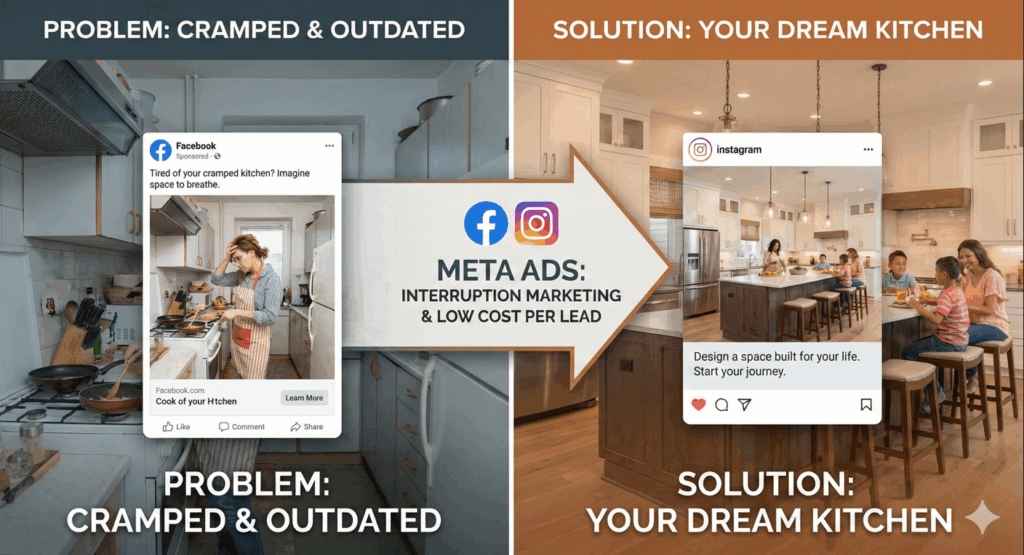
The advantage: This is your least expensive stage to capture leads. You’re getting in front of people before your competitors even know they exist. Cost per lead at this stage is typically the lowest because you’re casting a wider net and building brand awareness that will pay dividends later.
What’s happening in their head: “Okay, we’re doing this. We’re building a new home. Now, where do we even start? What’s the process? How long does it take? What do we need to know?”
The decision has been made to build them. Now they’re in research mode, hungry for information. They’re Googling everything: “how to build a custom home,” “custom home building process,” “best home builders in [location],” “custom home timeline.”
Why this matters: These are high-intent prospects. They’re not just dreaming anymore; they’re actively seeking solutions. They’re comparing their options (renovate vs. build new vs. buy existing), learning about the process, and starting to form preferences.
Best Marketing Channels for High-Intent Prospects: Google Ads & Organic SEO
This is where Google Ads and SEO for home builders become essential. When someone types “custom home builders in [your city]” into Google, you want to be there either at the top of the paid results or dominating the organic search rankings.
Your home builder SEO content strategy should include comprehensive guides to the building process, blog posts answering common questions, location-specific pages, case studies and project galleries, and educational resources about costs, timelines, and what to expect.
Your Google Ads should target high-intent keywords like “custom home builder [city],” “build custom home [area],” and “luxury home builder near me.”
The reality check: Here’s where your costs start climbing. Google Ads in the home building space can get expensive, think $10-50+ per click in competitive markets. Your organic SEO requires consistent investment in quality content, technical optimization, and link building. But the leads you get here are warmer and closer to making a decision.
What’s happening in their head: “I know what I want. I’ve got a vision for my home. Now, which builder is the right fit? Who has the best reputation? What’s the price difference? Who really understands my style?”
These prospects have done their homework. They understand the building process, they know roughly what they want, and now they’re in evaluation mode. They’re visiting websites, reading reviews, looking at portfolios, and probably reaching out to 3-5 builders for consultations.
Why this matters: This is the stage where your reputation, differentiation, and sales process become critical. They’re not just looking for any builder – they’re looking for the RIGHT builder.
Best Marketing Channels: This Is Where It Gets Expensive
At this stage, your marketing costs compound. You’re spending on retargeting ads to stay top-of-mind with people who’ve already visited your site. You’re investing in reputation management reviews, testimonials, and case studies. You need premium content like high-quality video tours, detailed portfolio pages, and client testimonials. And your most expensive resource comes into play: sales team time spent in consultations, site visits, and proposals.
The hard truth: Cost per lead increases dramatically here because competition is fierce for these prospects, they’re clicking on multiple ads from multiple builders, they require more touchpoints before converting, and the sales cycle lengthens as they deliberate.
But here’s the opportunity: If you’ve done your job in Stages 1 and 2, many of these comparing shoppers are already familiar with your brand. They saw your Meta ad months ago. They read your blog post about the building process. They’ve been on your email list. That familiarity gives you a massive advantage.
What’s happening in their head: “This is the one. This is our builder. Let’s do this.”
They’ve made their choice. Now it’s about getting the contract signed and the project started.
Why this matters: This is where everything comes together. All your earlier marketing, all your relationship building, all your reputation management it either pays off or it doesn’t.
Best Practice: The builders who win at this stage aren’t necessarily the cheapest or even the best. They’re the ones who’ve built trust throughout the entire journey. They’re the ones who showed up in the Problem Aware stage, educated in the Information Search stage, and differentiated themselves in the Comparing stage.
Here’s what most home builders get wrong: They spend 90% of their budget on Stage 2 and 3 (Google Ads and retargeting), fighting for scraps with every other builder in town, paying premium prices for prospects who are already shopping around.
The smarter approach:
Invest heavily in Stage 1 (Meta Ads) – Build a constant pipeline of problem-aware prospects. Yes, they won’t convert immediately, but you’re getting inexpensive leads who aren’t talking to your competitors yet.
Dominate Stage 2 (SEO + Google Ads) – Be the authority. When they start searching, you should be everywhere. This requires consistent content creation and a solid SEO strategy.
Optimize Stage 3 (Differentiation + Sales Process) – By this point, you can’t out-spend the competition, so you need to out-position them. What makes you different? Why should they choose you?
Nurture Between Stages – Use email marketing, retargeting, and content to stay relevant as prospects move down the funnel. Someone in Stage 1 today might be in Stage 3 in six months. Will they remember you?
Industry standards suggest 5-10% of gross revenue for established home builders, with new builders potentially investing 10-15% to build market presence. The key is allocating your budget across all funnel stages. We recommend 40% on top-of-funnel (Meta), 40% on middle-of-funnel (Google/SEO), and 20% on bottom-of-funnel (retargeting/reputation).
There’s no single best channel; it depends on where your prospects are in their buying journey. Meta ads (Facebook & Instagram) are best for reaching problem-aware prospects at the top of the funnel, while Google Ads and SEO are essential for capturing high-intent searches in the middle of the funnel.
Industry standards suggest 5-10% of gross revenue for established home builders, with new builders potentially investing 10-15% to build market presence. The key is allocating your budget across all funnel stages we recommend 40% on top-of-funnel (Meta), 40% on middle-of-funnel (Google/SEO), and 20% on bottom-of-funnel (retargeting/reputation).
Google Ads costs increase as you move down the funnel because competition intensifies. In Stage 2 (information search), prospects are actively researching and clicking on multiple ads. In competitive markets, cost-per-click can reach $10-50+ because every builder is competing for the same high-intent keywords like “custom home builder near me.”
The typical custom home buyer’s journey takes 6-18 months from initial problem awareness to signing a contract. This is why early-stage marketing (Meta ads) is so valuable you’re building relationships before prospects enter the expensive, competitive stages where every builder is fighting for attention.
Meta ads (Facebook/Instagram) excel at interruption marketing reaching people who aren’t actively searching but match your ideal customer profile. Google Ads capture intent-based searches when prospects are actively looking for builders. Meta is typically cheaper for lead generation but requires longer nurturing, while Google delivers warmer leads at a higher cost.
Focus on top-of-funnel marketing with Meta ads to capture problem-aware prospects before they start searching Google. These leads cost 60-80% less than Google Ads leads ($20-50 vs $100-300+). Combine this with strong SEO content to capture organic traffic, and implement email nurture sequences to convert early-stage leads over time.
Educational content that answers prospect questions performs best: comprehensive building process guides, cost breakdowns, timeline expectations, location-specific pages, and detailed case studies. Long-form content (2,000+ words) targeting specific search queries like “how long does it take to build a custom home” ranks well and establishes authority.
The home buyer’s journey isn’t linear, and it’s not quick. But understanding where your prospects are in their decision-making process and meeting them there with the right message and the right marketing channel is how you build a predictable, profitable home builder marketing system.
Stop fighting for scraps in Stage 3 with expensive bottom-of-funnel tactics. Start building your pipeline in Stage 1 with cost-effective Meta advertising. Your future self (and your bank account) will thank you.
Want to see how your current marketing efforts map to the buyer’s journey? Our team specializes in home builder marketing and lead generation strategies that reduce cost per acquisition while increasing lead quality.
We’ll show you where you’re overspending on late-stage prospects, how to capture early-stage leads at 60-80% lower cost, your complete customer journey optimization roadmap, and exactly where you’re leaving money on the table.
Schedule Your Free Marketing Funnel Audit | Download Our Complete Home Builder Marketing Guide
“Is digital marketing actually worth the investment for a home builder?” It’s the question we hear on nearly every initial consultation call, and it’s a completely fair one. Marketing budgets aren’t unlimited, and investing $3,000 to $8,000 per month on digital marketing requires confidence that the return will justify the expense.
The short answer: for most custom home builders, a well-executed digital marketing strategy is the single highest-ROI investment they can make – higher than trade shows, higher than print advertising, and often higher than referral programs. But the operative phrase is “well-executed.” Poorly structured campaigns can absolutely burn through budget with nothing to show for it. This guide breaks down the actual numbers, what they mean for your business, and how to build a system that generates a measurable, trackable return.
Let’s start with a simple math exercise. A custom home builder with an average project value of $600,000 and a gross margin of 15% generates $90,000 in gross profit per contract. If digital marketing costs $5,000 per month – $60,000 per year – and produces just one additional project per year that wouldn’t have happened through referrals or existing channels, the ROI is 50%. That’s before accounting for the second-order effects: referrals from those new clients, reviews that improve rankings, and case studies that close future clients faster.
In practice, a well-run digital marketing system for a custom home builder typically generates 3 to 8 qualified leads per month depending on the market, budget, and channels used. With a consultation-to-contract close rate of 15 to 25% (a realistic range for most builders), that’s 1 to 2 contracts per month from marketing – potentially adding $600,000 to $1.5 million in annual revenue from marketing-generated leads alone.
The challenge is that most builders have never had a system that properly tracks where their leads come from, what those leads cost to generate, and which channels are actually producing signed contracts rather than just form fills. Without that data, it’s impossible to optimize. The first step to proving ROI is building the tracking infrastructure to measure it.
Cost per lead (CPL) varies significantly by marketing channel, and understanding those differences helps you allocate budget wisely. Here’s how the major digital channels typically perform for custom home builders:
Google Search Ads typically produce the lowest CPL in terms of lead quality relative to cost. In most mid-size markets, expect $150 to $400 per qualified lead – meaning someone who fills out a form or calls from a search ad and is actually interested in building. In highly competitive markets (major metro areas), CPL can climb to $500 to $800 or more. The key metric here isn’t CPL in isolation – it’s cost per consultation and cost per contract signed.
Meta Ads (Facebook/Instagram) typically produce a higher volume of leads at a lower cost per lead – often $50 to $150 – but those leads are earlier in the funnel and require more nurturing. A Meta lead who came from a “Download Our Floor Plan Guide” campaign is not the same as a Google lead who searched “hire a custom home builder.” Plan for longer follow-up cycles with Meta leads and evaluate success at 90 to 120 days, not 30.
SEO and organic search have a near-zero cost per lead once the investment in content and optimization has been made. The true cost is the time investment upfront – typically 6 to 12 months of consistent effort – but once established, organic leads are some of the highest-quality traffic you’ll receive. Organic visitors have often done significant research before finding you, which translates to faster consultation-to-close timelines.
Local SEO and Google Business Profile optimization produces leads at an extremely low cost – typically just the time or agency fee – and these leads are among the highest converting because they come from people actively searching for a builder in your specific area. A builder ranking in the Map Pack can see 40 to 60% of all clicks on a search results page, compared to a paid ad that might capture 10 to 15%.
“The builders who see the highest ROI from digital marketing aren’t necessarily spending the most – they’re tracking the most. When you know exactly which channels are generating signed contracts, every dollar of marketing spend becomes a calculated investment, not a guess.”
Raw lead numbers are largely meaningless without understanding conversion rates at each stage of the pipeline. Most home builders have three to four key conversion points to track:
Improving conversion rates at any stage of this funnel has a multiplicative effect on overall ROI. Doubling your lead-to-consultation rate – often achievable simply by improving response speed and the consultation scheduling process – effectively doubles your revenue from the same marketing spend.
Custom home builders often make the mistake of evaluating marketing ROI on a single-transaction basis. But in reality, a satisfied custom home client is worth far more than the value of their initial project. Consider the full customer lifetime value (LTV) equation:
If a single marketing-generated client produces one referral – a conservative assumption – then the actual value of that marketing investment is double what a single-project calculation would suggest. A marketing system that generates $1.2 million in project revenue isn’t generating $1.2 million – it’s generating $2.4 million when you account for the referral chain. This is why top-performing builders invest aggressively in marketing and in the post-project client experience: because the compounding value of a satisfied client is enormous.
The implication for ROI calculations is significant. If you’re evaluating whether a $60,000/year marketing investment is worth it based on a single project at $600,000 and a 15% margin ($90,000 gross profit), the math works but it’s tight. When you factor in a 1.5x referral multiplier, the $90,000 becomes $135,000 in effective gross profit per acquired client – and suddenly the ROI picture looks dramatically different.
The most common reason builders underestimate their digital marketing ROI is inadequate tracking. Without proper attribution, you can’t tell which channel generated a lead, which leads became clients, or what a specific marketing investment is actually worth. Setting up proper tracking is not technically complex, but it does require attention to detail.
The core tracking stack for a home builder:
We’ll audit your current marketing setup, identify attribution gaps, and calculate what each of your channels is actually returning. No guesswork – just data.
After working with home builders across dozens of markets, certain patterns consistently separate the builders who see exceptional digital marketing ROI from those who see mediocre or negative returns. The differences are rarely about budget – they’re about systems, speed, and commitment to quality across the entire client journey.
They follow up within 5 minutes. Research on lead response time is unambiguous: the probability of qualifying a lead drops by 80% if you wait longer than 5 minutes to respond. Builders who have an automated text or call triggered the instant a lead submits a form book dramatically more consultations than those who respond the next morning. This single change can double or triple the ROI of an existing marketing budget without spending an additional dollar on ads.
They have a structured nurture sequence. Not every lead is ready to build today. A prospect who downloaded a floor plan guide may be 6 to 12 months from being ready to commit. Builders with a structured email and text nurture sequence – educational content, project showcases, seasonal check-ins – stay top of mind through that decision-making period. When that prospect is finally ready, they call the builder they’ve been hearing from consistently, not the one they googled once eight months ago.
They invest in the post-project experience. The highest-ROI marketing investment for many builders isn’t acquisition at all – it’s retention and referral. A systematic process for client communication during the build, a walkthrough experience that creates emotional high points at move-in, and a structured 60-day check-in post-move-in generates more referrals and reviews than any paid ad campaign. When these referrals are tracked properly, they dramatically improve the overall ROI calculation for every other marketing channel.
They test and optimize continuously. High-ROI builders treat their marketing like a laboratory. They test different ad headlines, landing page offers, and follow-up sequences. They track which changes improve conversion rates and double down on what works. Marketing ROI isn’t static – a campaign that returns 3x in year one can return 6x in year two with systematic optimization. Builders who set campaigns and forget them leave an enormous amount of money on the table.
The builders who feel digital marketing “doesn’t work” almost universally share one trait: they tried one channel for 60 to 90 days, didn’t see immediate results, and abandoned the effort before the compounding effects could accumulate. Digital marketing, done right, is a system that gets dramatically more effective over time. The builders who commit to it consistently and optimize relentlessly almost always look back at their marketing spend as the best investment decision they made for their business.
You know the sinking feeling. A lead arrives, radiating excitement about their future custom home. You invest hours of your life into preliminary drawings, meticulous budget estimates, and perhaps even a personal site visit to walk the land. Then total silence. A week passes, and you realize you’ve been ghosted. Or worse, the prospect resurfaces months later with a competitor, holding your concepts in their hands and asking for a cheaper bid.
This isn’t just a streak of bad luck; it is a fundamental process failure. Most custom builders are stuck in a cycle of reactions rather than a position of command. You are likely asking high-value buyers to navigate a complex, multi-million dollar decision while you provide free consulting and cross your fingers. In the elite tier of construction, hope is not a strategy. To build a legacy, you must stop being a “bidder” and start being the architect of the entire sales experience.
At Home Builder Marketers, we believe your craftsmanship deserves a sales engine that is just as precise as your framing. True custom home sales cycles are naturally long, often spanning 3 to 12 months before a contract is even signed. The goal is to install a system that manages this timeline, filters out those who seek “free quotes,” and keeps serious visionaries locked into your process until move-in day.
Schedule Your Free Growth Audit with Home Builder Marketers
Most builders struggle because they haven’t adapted to the new digital reality. Today’s high-end buyers are researching for months, sometimes years before they ever fill out your contact form. They are comparing your pricing, your reviews, and your transparency to every other builder in the city. If you aren’t providing the clear answers they crave, they will find them from an AI answer engine or a competitor who is more forthcoming.
When you follow a reactive “bid-and-chase” habit, you are essentially letting the buyer wander through a dark forest without a guide. They feel overwhelmed and afraid of making a devastating financial mistake. If your only response is to offer a “free quote,” you have signaled that your expertise is a commodity. You aren’t just giving away drawings; you are giving away your authority.
To secure a dominant market position, you must move from a “price bid” mentality to a professional partnership. This requires a radical shift in how you value your time. The builders who win are the ones who publish the hard truths about cost, problems, and timelines upfront, ensuring that when a lead finally calls, they are already pre-sold on your process.
In the StoryBrand framework, the homeowner is the hero of the story but every hero needs a guide with a plan. You are that guide. Your role is to show up with empathy (“We know this feels overwhelming”) and authority (“We have a proven system to protect your investment”). A well-designed sales protocol doesn’t just sell a house; it sells the confidence that the project will be completed on time and on budget.
This starts with a consistent, staged sales process. By breaking the journey into clear steps, you use content to answer the difficult questions before they are even asked. This is the essence of “Assignment Selling”. Instead of repeating the same explanations on every call, you assign your prospects specific articles or videos to consume before you meet. This ensures that your face-to-face meetings are focused on strategy and relationship-building, rather than basic education.
The cornerstone of this protocol is the transition from “free work” to “paid pre-construction.” Serious buyers understand that professional architectural and engineering work has real value. By charging for your Concept Design and Preliminary Building Agreements, you ensure that everyone at the table is fully committed. You stop chasing “tire-kickers” and start focusing your energy on the projects that will actually define your legacy.
Building a market monopoly requires a consistent, repeatable path. Here is how you guide your elite clients through the journey.
The process begins before the buyer ever contacts you. Your website must be a fortress of information, providing honest answers to the “Big 5”: cost, problems, comparisons, reviews, and “best of” rankings. When a lead raises their hand, speed is the only metric that matters. Respond within the hour, run a five-minute qualification script, and if they meet your criteria, assign them “homework” to read before the next step.
The discovery call is about understanding the buyer’s internal fears and external goals. Once you move to a face-to-face meeting, you must signal total professionalism. Send an agenda in advance. Review their shared history so they never have to repeat themselves. At the end of this meeting, your goal is to secure a Concept Design Agreement a fixed-fee product that produces initial plans and a preliminary budget range.
The Concept Design Agreement is the first transaction. It transforms a prospect into a client. Once the concept is refined, you move to the Preliminary Building Agreement. This stage is where the heavy lifting happens: engineering, soil tests, and detailed trade quotes. By the time this stage concludes, you have a fixed-price contract and a level of mutual trust that makes the final signing a mere formality.
When you present the final contract, you aren’t just selling a document; you are selling a construction slot. Because your capacity is limited, you create natural urgency by showing them exactly when their project can start. After the contract is signed, the “sales” process continues through a clear communication rhythm, keeping the client confident and excited as you move toward the groundbreaking ceremony.
Schedule a meet To see how this protocol functions in a real-world environment
When you implement this protocol, the “mysterious” and stressful custom home sales cycle becomes a predictable, visual roadmap. When you show a buyer that the journey from first click to move-in will take 18 to 24 months, they don’t get frustrated, they relax. They see that you are a builder who values process, transparency, and planning.
The ultimate result is that you stop being a “bidder” and start being a partner. You attract higher-caliber clients who value your time and your expertise. You no longer waste nights putting together free budgets for people who will never build. Instead, your schedule is full of high-margin projects with clients who respect your leadership. You have built an asset a sales engine that works 24/7 to educate, filter, and close your next masterpiece.
By choosing to be radically honest and structurally disciplined, you become the only logical choice in your market. You are no longer just a contractor; you are the Sovereign of your territory.
Your craft is your legacy. It is time your sales process reflected that. Stop giving away your expertise for free and start building a system that commands respect.
Schedule Your Free Growth Audit with Home Builder Marketers
How long does the custom home sales process actually take? For a serious custom build, it typically takes 3 to 12 months from the first inquiry to a signed building contract. The total journey from first design meeting to move-in can span 10 to 16 months depending on complexity.
Why should I charge for design and pre-construction? Detailed design, soil tests, and trade bidding require dozens of hours of professional work. A paid agreement protects your time, filters out tire-kickers, and ensures the client is invested in the partnership from the beginning.
What is “Assignment Selling”? Assignment selling is the practice of sending prospects educational content to consume before a sales meeting. This ensures they arrive pre-educated on your pricing and process, which dramatically increases close rates.
How do I respond to a lead who just wants a “ballpark price”? Refer them to your “Cost to Build” article on your website. Explain that while every home is custom, your process begins with a qualification call to see if their vision and budget align with your building standards.
What are the “Big 5” topics I should be writing about? To dominate search and build trust, you must publish content about Cost, Problems, Comparisons, Reviews, and “Best of” rankings for your local market.
How do I present a contract without being “pushy”? Instead of selling the contract, sell the construction slot. Let the client know which month their project can begin based on your current schedule. This creates urgency based on your actual availability rather than sales tactics.
The Home Builder Marketers Editorial Team We are a specialized agency dedicated exclusively to the growth of custom home builders and remodelers. Led by Seth VanDaele and Nicholas Cormier, our team has helped over 150 builders worldwide implement the “Sovereign Sales Protocol” to secure high-value contracts and protect their margins. We are official partners with JobTread and GoHighLevel, allowing us to build the automated systems that turn cold traffic into signed contracts. Whether you are based in North America, Australia, or the UK, we help you transition from a local secret to a market legend. Our offices are located in Miami, Kelowna, and Winnipeg, and we are committed to providing the radical transparency that the construction industry deserves.
+
There’s a pattern we see constantly in the custom home building industry: a builder with extraordinary craftsmanship, a wall of five-star reviews, and years of stunning completed projects – but a pipeline that runs dry every few months. The phones go quiet, the referrals slow down, and suddenly the owner is wondering where the next project is coming from.
The problem is never the quality of the work. The problem is visibility. Great craftsmanship alone does not generate leads. Marketing does. And the builders who figure this out – who build a systematic, full-funnel marketing engine – are the ones who transition from being the best-kept secret in their market to becoming the name everyone knows.
This is the strategy that makes that transition happen.
Referrals are wonderful – until they aren’t consistent. Most custom builders start their business on word-of-mouth, and for a while it works. You finish a home, the client tells their friends, and you get a call. But referrals are unpredictable. They peak and valley. They can’t be scaled. And when the market tightens, they disappear first.
The builders who dominate their local market have figured out something critical: you need to be visible at every stage of the buyer’s journey, not just when someone happens to mention your name at a dinner party. A homeowner considering a custom build will spend 6-18 months researching before they ever call a builder. During that entire research phase, your competitors are showing up in their Google searches, Instagram feed, and email inbox. Are you?
“The builder who wins isn’t always the one with the best craftsmanship. It’s the one who shows up first, builds trust consistently, and makes it easy for homeowners to say yes.”
A full-funnel marketing engine means you have systems in place to capture prospects at every stage – awareness, consideration, and decision. Most builders only focus on the bottom of the funnel (people ready to build right now). The market leaders invest in all three stages simultaneously.
At the awareness stage, your goal is to reach homeowners who are beginning to dream about building. They’re not ready to call you yet – but they’re researching, pinning inspiration boards, and browsing. Your content needs to meet them there:
These prospects know they want to build and are now comparing builders. This is where your credibility needs to be bulletproof:
These prospects are ready to talk. Your job is to intercept them before your competitors do and make the path to consultation frictionless:
When someone types “custom home builder in [your city]” into Google, they are not casually browsing. They are actively looking for someone to build their home. This is the highest-intent moment in the entire buyer’s journey – and Google Ads lets you put your business directly in front of that person.
For custom builders, Google Ads typically deliver a lower cost-per-lead than any other paid channel because the intent is so explicit. A well-structured campaign targeting 15-30 core keywords in your service area, with dedicated landing pages, can generate qualified consultation requests within days of launching.
Key components of a high-performing Google Ads campaign for builders:
We build full-funnel marketing engines exclusively for home builders. Book a free growth audit and we’ll map out exactly what your market needs.
Market legends aren’t just visible – they’re positioned. Positioning means being crystal clear about who you serve, what makes you different, and why that difference matters to your ideal client. Builders who position well command higher prices, attract better-fit clients, and rarely compete on price alone.
Your positioning should answer three questions for every prospect who visits your website or sees your ad:
Your positioning should be consistent everywhere – your website headline, your Google Ads copy, your social media bio, and your email signature. Every touchpoint reinforces the same message.
Most builders chase leads. Market leaders build pipelines. The difference is a system that continuously fills with prospects at various stages, so you always know what’s coming 60, 90, and 120 days from now.
A healthy pipeline for a custom builder typically looks like this:
Achieving this requires consistent top-of-funnel activity (content, ads, SEO) combined with disciplined follow-up at every stage. This is where a CRM becomes essential – it tracks every prospect, automates follow-up sequences, and ensures no lead falls through the cracks.
Custom home buyers take time. Some prospects will visit your website today and not be ready to break ground for 18 months. If you don’t have a nurture system, you’ll lose them to the competitor who stayed top of mind.
Effective lead nurturing for custom builders includes:
Builders who implement solid nurture systems often find that 30-40% of their eventual contracts come from leads who first inquired 6+ months ago. Without nurture, those leads simply go cold.
Becoming a market legend doesn’t happen overnight, but the foundation can be built in 90 days. Here’s where to focus:
The builders who commit to this system for 12 months rarely need to worry about where the next job is coming from. They’ve built the infrastructure that makes their phone ring consistently – and their reputation does the rest.
Imagine you are driving through the most prestigious neighborhood in your city the kind of place where every driveway holds a luxury SUV and every lot is a masterpiece of design. You see a massive custom home project underway, exactly the kind of project your team excels at. You know the builder on that sign. You also know your craftsmanship is better, your team is more professional, and your process is significantly cleaner.
So, why are they landing the multi-million dollar contracts while you’re still grinding for every lead? It is a frustrating reality: in today’s market, being a great builder is only half the battle. The “best builder” doesn’t always win; the most visible builder does. You are likely the best-kept secret in town, but the “best secret” doesn’t fill a three-year pipeline.
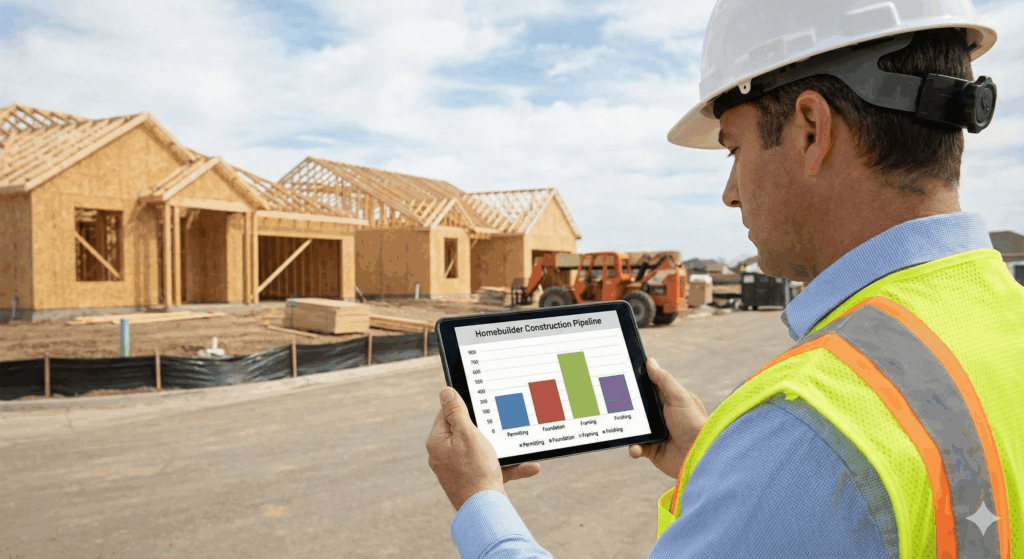
At Home Builder Marketers, we believe that high-quality craftsmanship deserves to be seen by homeowners who value it. If you are tired of being invisible and finished with the “lead-of-the-week” grind, it is time to stop “renting” your business growth and start building a marketing engine. Our Growth Marketing Package is a full-funnel system designed for builders ready to dominate their local market and become the obvious choice.
Most marketing agencies try to sell you on “more leads.” They promise to turn on a faucet of phone calls, but they don’t tell you that those leads often vanish the second you stop paying for ads. This is what we call “rental marketing.” You are essentially renting your business growth from Facebook or Google. If ad costs go up or an algorithm changes, your pipeline disappears overnight.
For a custom home builder, “good leads” are only one small slice of the pie. A custom home is likely the largest investment a client will ever make, and that decision requires a level of trust that a simple social media ad cannot provide on its own. Real growth requires a “full-funnel” system that meets homeowners wherever they are searching social feeds, Google search, and even the newest AI-powered tools.
The Growth Marketing Package is designed to move you off this “hamster wheel” by building assets you actually own. While the Essentials Package is focused on getting leads quickly through Meta ads, the Growth package is about building a marketing engine that compounds in value over time. You aren’t just buying clicks; you are building business equity.
Curious about how your current visibility compares to the competition? We break this down in detail during our Growth Audit.
Most agencies think in 30-day cycles. They want to show you “clicks” this month so you’ll pay their fee next month. At Home Builder Marketers, we take a different approach. Every Growth Marketing Package engagement begins with a complete marketing plan built as if we are working together for three years.
This long-range blueprint includes revenue and lead targets by year, a specific channel mix across Meta and Google, and a quarterly priority roadmap. Even if you decide on a shorter commitment, every tactic we implement plugs into this strategic foundation. This prevents the “random acts of marketing” that often plague construction companies.
While we plan for the long term, we act with urgency. Most of our clients have their new marketing engine live and running within 14 days. We don’t spend months in “discovery” without delivering results; we launch fast and optimize based on real-world data.
In the Growth Marketing Package, we don’t just bid on expensive, generic keywords like “custom home builder near me.” We work significantly smarter than that.
One of our most effective strategies involves researching your top 15-25 local competitors the builders that homeowners in your area already know by name. We run Google Ads campaigns that put your name directly above theirs when a homeowner searches for them specifically.
This allows you to “draft” off their brand recognition. When a prospect looks for a rival builder, they see your professional ad first, highlighting your unique process and craftsmanship. We then layer in cost-effective long-tail keywords that match your specific services and locations, sending that traffic to fast-loading, conversion-focused landing pages.
We handle all the Meta advertising from our Essentials tier, but on Growth, we take it a step further by handling the video editing for you. You film using our expert scripts and direction, and our team turns that footage into polished ad creatives. Where appropriate, we extend these videos to YouTube Ads to keep your message in front of homeowners as they research related content .
The world of search is changing rapidly. Homeowners are increasingly using AI tools like ChatGPT, Perplexity, or Google AI Overviews to ask complex questions like, “What is the average cost to remodel a whole home in Nashville?”.
Standard SEO is no longer enough to win those high-intent clients. You need Answer Engine Optimization (AEO). As part of the Growth package, we structure your website with clear, question-oriented headings and direct, conversational answers. This makes it easy for AI engines to extract and cite your brand as the authoritative source.
Our goal is to ensure that when a homeowner asks an AI tool for the “best custom builder near me,” your brand is the natural, cited answer. This compounds alongside our traditional technical SEO work, which includes fixing load times, crawl errors, and restructuring your schema markup.
A great website is your 24/7 salesperson. If your current site is just a generic theme that looks like every other contractor in town, you are losing money every day. The Growth Marketing Package includes a complete custom WordPress website build if you need one.
This isn’t a cookie-cutter template. It is a site with custom copy written specifically for your service areas and project types. We use the StoryBrand messaging framework created by Donald Miller to ensure your message is clear. In this framework, the homeowner is the “hero,” and your company is the “guide” with a clear plan to solve their problems.
If you already have a site you love, we don’t just leave it alone. We audit every page, fix technical errors, and implement “Local Business” and “Service” schema so search engines and AI engines understand exactly what you do and where you do it.
GIVE US A CALL and see the results of our high-converting site builds, check out our Case Studies.
The biggest challenge for most builders is that they are too busy building to manage a marketing team. With our Growth system, you aren’t just getting “a guy who runs ads.” You are assigned a dedicated account manager whose full-time job is to grow your account.
This person acts as your outsourced marketing director. They coordinate our specialists in SEO, Google Ads, and design, and they sit down with you every quarter to map out upcoming topics based on your goals and seasonal patterns. You get the expertise of a high-level marketing director without the six-figure salary.
Additionally, the Growth package includes two hours of professional graphic design every month. Whether you need new business cards, fresh ad creatives, or logo refinements, you have a professional designer at your fingertips.
In the construction industry, leads are only as valuable as your follow-up. Most builders have a “leaky bucket” where leads come in but go cold because of slow responses. Alongside our instant automation, the Growth package adds a customized 30-day follow-up system built inside GoHighLevel, leveraging email automation and CRM to keep every lead engaged.
This is a structured sequence of SMS and emails that continues the conversation with new leads for a full month. It uses logic that adjusts based on how the lead behaves – if they click a link or book a call, the messaging changes. This system educates the homeowner and builds trust automatically while you are busy on the job site. We even provide templates for follow-up after site visits and proposals to ensure you squeeze every bit of value from your marketing spend.
We believe transparency is the only way to do business. That is why we have a “You Own Everything” promise. Unlike other agencies that hold your data hostage, we build everything in your accounts. Your website, your ad campaigns, your CRM, and all your creative assets belong to you from day one. If you ever move on, you take every single asset we built with you.
We are so confident in this system that we back it with two industry-leading guarantees:
Your craftsmanship is your legacy. It is time to stop letting less-experienced builders win the projects you deserve. It is time to build a marketing engine that reflects the quality of your work.
Schedule Your Free Growth Audit with Home Builder Marketers
What’s the difference between Essentials and Growth?
The Essentials package focuses primarily on Meta ads and CRM automation. The Growth Marketing Package is a total market-dominance system that adds Google Ads, full-scale SEO, AI Search optimization (AEO), a custom website, monthly blog content, and a dedicated manager.
How much does the Growth Marketing Package cost?
The service fee is $750 USD per week. Your ad spend (the money you pay directly to Facebook and Google) is separate and is typically based on your specific market and goals.
Does this package include a new website?
Yes. If you don’t have a strong, conversion-focused site, Growth includes a custom WordPress website build. If you already have a site you love, we audit and optimize it for search engines and AI.
What is AEO and why do I need it?
AEO stands for Answer Engine Optimization. It is how we prepare your website to show up in AI tools like ChatGPT or Google AI Overviews. As more homeowners use AI to research builders, AEO ensures your brand is the one being cited and recommended.
Do I really own everything if we stop working together?
Absolutely. Your ad accounts, website, GoHighLevel setup, and all creative assets are built in your name. You keep full ownership of every asset we create.
The Home Builder Marketers Editorial Team We are a specialized digital marketing agency exclusively serving custom home builders, remodelers, and general contractors. With over six years of niche experience and 130+ active clients, we have managed more than 150 builder campaigns across the USA, Canada, Australia, and the UK. Led by founders Nicholas Cormier and Seth VanDaele, we focus on generating high-quality leads that turn into seven-figure contracts. We are proud official partners with JobTread and GoHighLevel, ensuring our marketing systems connect directly to your operations. Our team is based in Kelowna, Winnipeg, and Miami, and we are committed to helping builders move off the “hamster wheel” and into market leadership.
Introduction
You build incredible homes. The craftsmanship is there. The team is ready. But let’s be honest about the part of the business that usually keeps you up at night: the pipeline.
If the right homeowners never see your work, never trust your brand, and don’t get a fast reply when they finally reach out your pipeline stays empty.
We know the drill because we have seen it hundreds of times. You might rely heavily on referrals. Referrals are fantastic, they are high-trust and low-cost but they are also unpredictable. You cannot scale a construction business hoping the phone rings.
Or, maybe you have already tried digital marketing. You hired a local agency, spent thousands on generic “brand awareness,” and got nothing but a monthly report showing “clicks” and “impressions.” But you can’t pay your subcontractors with impressions.

Here is the reality check: Traffic isn’t your problem. There are plenty of people looking for custom homes. The problem is trust, filtration, and speed.
That’s where our Essentials Package comes in. It’s not just “running ads.” It is a proven system built from over 150 builder campaigns worldwide. We use video to build trust before you ever meet, smart forms to filter out the time-wasters, and automation to follow up faster than your competitors ever could.
Before we talk about what works, we have to look at why the standard approach fails. Most generalist marketing agencies treat custom home building like they’re selling sneakers or pizza. They don’t understand the high-stakes sales cycle of a custom home builder.
They usually make two fatal mistakes:
They slap up a stock photo of a modern farmhouse kitchen (that you didn’t build), write a generic caption like “Call us today for your dream home,” and hit publish.
This fails because of banner blindness. Your future clients scroll through Facebook and Instagram multiple times daily. They are bombarded with thousands of ads. They have learned to ignore anything that looks like a polished, impersonal ad. They don’t stop scrolling for a logo; they stop for a story.
The second mistake is focusing on volume over quality. Traffic and clicks are useless if your sales team gets buried in unqualified leads.
If you are paying for ads that generate calls about broken doorknobs, lightbulb changes, or unrealistic budgets, you aren’t investing; you’re losing money. You don’t just need leads. You need a bouncer at the door. You need a system that checks IDs and bank accounts (metaphorically) before letting anyone into your VIP section.
Curious how your current strategy stacks up against the competition? We analyze this in detail during our initial Growth Audit.
We don’t guess at what works. After analyzing data from 150+ builders, one thing is clear: the video makes or breaks the results.
Think about it. A custom home is likely the largest investment of a client’s life. They are terrified of budget blowouts, contractor horror stories, and half-finished jobs. They want to see the person responsible for that investment. They want to see you.
Homeowners want to trust the builder, not stock footage and logos.
“But I don’t know what to say on camera.” We hear this all the time. That’s why we don’t leave you guessing. In the Essentials package, we provide detailed scripts and frameworks covering exactly what to say, in what order, and how to deliver it.
This is a core part of our Content Creation services. Every winning video we script includes five specific elements:
We also don’t bank on one “miracle ad.” Marketing is about testing. We launch with 5-10 different video variations, each with a unique angle. Then, we refresh that with another 5-10 new videos monthly.
This variety helps Meta’s algorithm find the winners and keeps your ads fresh so your local market doesn’t get sick of seeing the same thing.
Once we have stopped the scroll with a great video, we need to convert that viewer into a lead. But not just any lead. We want the kind of clients we showcase in our Case Studies projects with real budgets and real timelines.
Basic “Name, Email, Phone” forms are dangerous. They invite everyone in. Our Essentials package uses Meta’s native lead forms with conditional logic. Think of this as a smart digital filter.
We design forms that ask qualifying questions tailored to your business:
Here is the magic of conditional logic: If someone selects options that don’t meet your criteria like a budget that is far too low or a timeline that doesn’t fit the form quietly routes them as lower-priority.
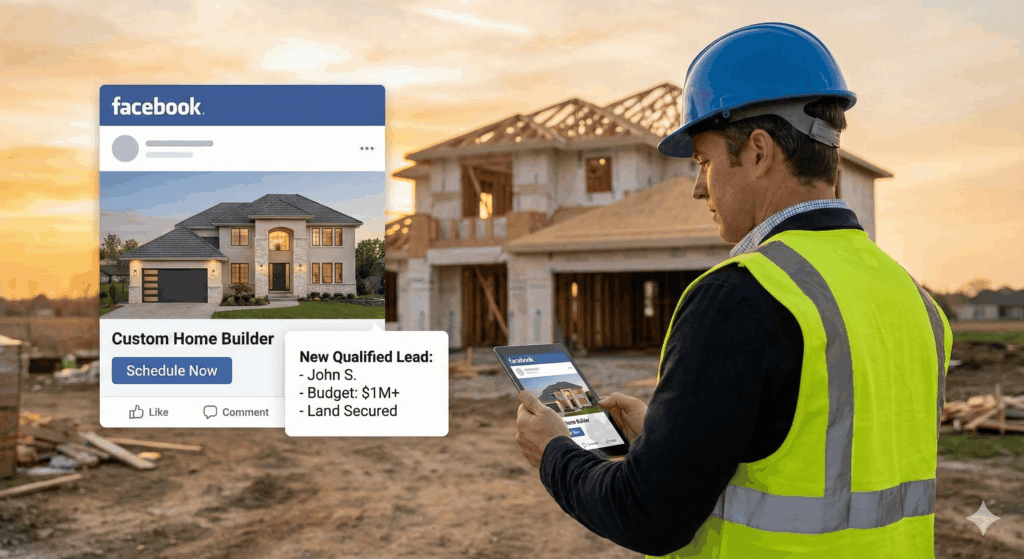
Your team focuses strictly on serious projects homeowners with land secured, realistic budgets, and actual timelines.
Here is a painful truth: if you wait 24 hours to call a lead back, they have likely already moved on to the next builder. The first ten minutes are critical yet most builders don’t have a system to respond that fast because they are on the job site.
That’s why the Essentials package includes a full CRM and automation setup inside GoHighLevel. We configure this for you, so you don’t have to be a tech wizard.
When a new lead comes in, the system takes over:
We also set up a Unified Inbox, so every Facebook message, text, and email flows into one place. You get a Visual Sales Pipeline to track exactly where every deal stands, from “New Lead” to “Proposal Sent” to “Closed Won.”
We are also official partners with JobTread, ensuring your marketing data flows seamlessly into your construction management software.
We hate how some agencies operate. They try to trap you. They build the ad accounts in their name and the landing pages on their servers. If you ever try to leave, they hold your data hostage. You lose your history, your leads, and your assets.
We do the complete opposite. You own everything we build.
If you move on, you take everything with you. We want you to stay because we are getting results, not because you are trapped. This philosophy is at the core of our company mission.
We are confident this works. To prove it, we offer two levels of security for you:
This isn’t for everyone.
The Essentials package is designed specifically for builders who focus on custom homes, large renovations, or major additions. It is for the builder who wants a steady flow of qualified inquiries and is tired of wasting time on price shoppers.
It is not a fit if you only want small service calls, aren’t prepared to invest consistently in ads, or can’t follow up with serious homeowners who raise their hand.
If you are ready to become the obvious choice in your local market, we are ready to help you build the system to do it.
Schedule Your Free Consultation with Home Builder Marketers
How much does the Essentials package cost?
The service fee is $450 USD per week. This covers everything listed above ad strategy, creative direction, campaign builds, CRM setup, and ongoing optimization.
What is the recommended ad spend?
In addition to the service fee, we recommend $1,500-$2,500 USD per month in ad spend. This is paid directly to Meta (Facebook). This budget ensures the algorithm has enough data to test creatives and find your best audiences.
Do I have to film the videos myself?
Ideally, yes. Homeowners trust owners. But you aren’t alone. Most clients record in-house using our scripts and coaching, or have their video team shoot using our direction. In select cases, we can even coordinate on-site filming.
Will I get flooded with low-quality leads?
No. We design forms with qualifying questions and conditional logic specifically to filter out low-value inquiries. You’ll see serious projects with realistic budgets and timelines, not tire kickers.
Do I have to learn GoHighLevel to use this?
No. We configure everything for you. Your team primarily uses it to view leads, track pipeline stages, respond to messages, and see appointments. It’s designed to be simple for busy builders.
Do I really own everything if we stop working together?
Yes. The ad account, GoHighLevel setup, creatives, and automations are all built in your accounts. You keep full ownership of everything.
The Home Builder Marketers Editorial Team We are a specialized digital marketing agency exclusively serving custom home builders, remodelers, and general contractors. With a physical presence in Kelowna, Winnipeg, and Miami, our team has managed over 150 builder campaigns worldwide, generating significant revenue for our clients.
Led by Nicholas Cormier and Seth VanDaele, we combine deep construction industry knowledge with advanced “StoryBrand” marketing strategies. We are official partners with JobTread and GoHighLevel, ensuring your marketing integrates seamlessly with your operations. Whether you are in North America, the UK, or Australia, we help you dominate your local market.
Learn more about our team and mission here.
Every builder has lost a deal they should have won. Maybe a prospect went quiet after the first call and nobody followed up. Maybe a lead submitted a form at 10pm and didn’t get a response until the next afternoon – by which point they’d already booked a consultation with a competitor. Maybe a promising client came back six months later, only to find out the sale fell to someone who stayed in touch.
These aren’t failures of craftsmanship. They’re failures of systems. A CRM (Customer Relationship Management) platform is the system that prevents them – and for home builders who are serious about growth, it’s no longer optional.
A CRM is software that centralizes all your prospect and client information, tracks where each lead is in your sales process, and automates the follow-up actions that keep them engaged. Instead of relying on spreadsheets, sticky notes, and memory, a CRM creates a structured, automated pipeline that ensures every lead gets the attention it deserves.
For home builders specifically, a CRM solves several critical problems:
“Builders who implement a CRM consistently report that they stop losing deals they should have won. The leads were always there – they just weren’t being followed up with consistently enough to close.”
A CRM automatically captures leads from every source – your website contact form, Google Ads landing pages, Facebook Lead Ads, phone calls, and even direct messages. Every new contact is added to your database with their name, contact information, lead source, and the date they came in.
This matters because most builders have no idea where their leads actually come from. With a CRM tracking lead sources, you can see that 40% of your leads come from Google Ads, 30% from referrals, and 30% from organic search – and allocate your marketing budget accordingly. You also have a complete history of every interaction with every prospect, so no context is lost when a lead comes back after a few months.
Automated follow-up is the single most valuable feature of a CRM for home builders. When a new lead comes in, the CRM immediately sends a personalized response – typically within minutes – thanking them for reaching out, setting expectations for next steps, and providing useful information about your process.
Over the following days and weeks, the CRM continues to send pre-written emails and SMS messages that nurture the lead without requiring manual effort from your team. A typical automated sequence for a new builder lead might look like:
A CRM organizes all your prospects into pipeline stages – typically something like: New Lead, Contacted, Consultation Booked, Consultation Complete, Proposal Sent, Contract Signed, and Closed. At any given moment, you can see exactly how many prospects are in each stage and what action is needed to move them forward.
This visibility transforms how you run your sales process. Instead of reacting to whoever happens to call, you can proactively work your pipeline – following up with proposals that have been out for more than a week, checking in with prospects who went quiet after a consultation, and ensuring high-value leads receive appropriate attention.
We set up and manage CRM systems for home builders – including automation, pipelines, and integration with your marketing channels. Let’s talk.
Getting a prospect to book a consultation is only half the battle – you also need them to show up. CRM platforms with integrated scheduling allow prospects to book directly from your website or a link in your emails. Automated reminder sequences – typically 24 hours and 1 hour before the appointment – dramatically reduce no-show rates. Some builders report cutting their no-show rate from 40% to under 10% simply by implementing automated reminders.
While there are many CRM options (HubSpot, Salesforce, Zoho, Pipedrive), GoHighLevel (GHL) has emerged as the preferred platform for home builders and contractors. GHL was designed specifically for local service businesses and includes everything a builder needs in one platform: CRM and pipeline management, email and SMS automation, website and landing page builder, review request automation, appointment scheduling, and reporting dashboards.
The all-in-one nature of GHL eliminates the cost and complexity of stitching together multiple tools. We set up and manage GHL for the home builders we work with, including custom pipelines, automation sequences, and integrations with Google Ads and Facebook.
The ROI of a well-implemented CRM is substantial. Consider what happens when you stop losing leads that should have converted:
CRM software typically costs $100-$300 per month. The ROI in a single recovered deal is worth years of subscription fees. For serious builders, it’s one of the most impactful investments in their business.
Digital marketing for home builders in 2025 looks fundamentally different than it did just three years ago. AI-generated content has flooded search results, making authentic expertise more valuable than ever. Homeowners are doing more research online before they ever reach out – often spending months consuming content, comparing builders, and building trust digitally before making a single phone call.
If you’re a home builder trying to make sense of digital marketing – which channels matter, what to prioritize, and how to measure whether it’s actually working – this guide is for you. We’ll walk through every major channel, what it does, and how it fits into a system that generates consistent, qualified leads.
Every digital marketing channel you invest in – SEO, ads, social, email – ultimately sends traffic to your website. If your website doesn’t convert visitors into leads, every other channel underperforms. Your website is your most important marketing asset.
A high-performing builder website in 2025 needs:
“Your website is the only marketing asset you fully own and control. Everything else – social media algorithms, ad platforms, search rankings – can change overnight. Invest in your website first.”
Search engine optimization gets your website ranking in Google for the searches your ideal clients are making. Unlike paid ads, organic rankings keep delivering traffic without a cost-per-click. Done right, SEO becomes one of the highest-ROI channels in your entire marketing mix.
For home builders in 2025, the SEO fundamentals that matter most are:
SEO typically takes 4-9 months to show significant results, but those results compound over time. Builders who invest in SEO consistently for 18-24 months often become nearly impossible to displace from the top of local search.
While SEO builds long-term visibility, Google Ads give you immediate placement at the top of search results. For home builders, the most valuable campaigns target bottom-of-funnel keywords – people who are actively looking to hire a builder right now.
A well-structured Google Ads campaign for builders typically includes:
Monthly budgets between $2,000 and $5,000 are typically sufficient for a single market. Expect a cost-per-lead between $80 and $200 depending on competition and market size.
Social media for home builders is less about generating immediate leads and more about building the trust and brand recognition that closes deals later. When a prospect who found you through Google also sees your Instagram feed filled with stunning completed homes and happy clients, your conversion rate improves dramatically.
The platforms that matter most for home builders:
We audit builder marketing strategies and build comprehensive plans for each client. Let’s look at what’s working and what’s missing in your current approach.
Custom home buyers often take 12-24 months from first inquiry to signed contract. Email marketing is the most cost-effective way to stay top of mind throughout that entire research period. Builders with active email lists consistently report that 20-30% of their signed contracts come from leads who first inquired 6+ months ago.
Your email strategy should include a welcome sequence for new leads, a monthly newsletter with project updates and tips, and periodic promotional emails for new design packages or builder incentives. Keep content valuable – design inspiration, cost guides, process explainers – not just promotional.
A CRM (Customer Relationship Management) system is the operational backbone of your marketing. It tracks every lead, automates follow-up, and ensures no prospect falls through the cracks. For home builders, the CRM is where leads from all your marketing channels are collected, nurtured, and managed through the pipeline.
Key CRM functions for builders:
Your online reputation is one of your most powerful conversion tools. Builders with 50+ Google reviews and a 4.8+ rating consistently outperform competitors with fewer reviews – both in search rankings and in closing rates. Implement a systematic review request process: ask every satisfied client, send a direct link, and respond to every review within 48 hours.
The biggest mistake builders make with digital marketing is not tracking where their leads come from. Without proper tracking, you can’t know which channels are generating ROI and which are wasting your budget.
Essential tracking setup for home builders:
Once you know your cost-per-lead and close rate by channel, you can invest more in what works and cut what doesn’t. That’s how good marketing becomes great marketing.
Building a custom home is one of the largest financial decisions a family will ever make. The sales cycle is long – often 12 to 24 months from first inquiry to breaking ground. During that entire period, your prospects are researching, comparing builders, dreaming, second-guessing, and looking for a builder they can trust.
Email marketing is the most cost-effective tool you have to stay present, build trust, and be the builder they call when they’re finally ready to move forward. Builders who treat email as a core strategy – not an afterthought – consistently close more deals from the leads they already have.
Unlike social media – where algorithm changes can tank your reach overnight – your email list is an asset you own and control. A subscriber who has given you their email address has explicitly said they want to hear from you. That’s a level of permission and intent no social platform can match.
The numbers tell the story: email marketing delivers an average return of $36 for every $1 spent across industries. For home builders, where a single signed contract is worth hundreds of thousands of dollars, the economics are even more compelling. One email that re-engages a prospect who was “not quite ready” can be worth an entire year of email marketing costs.
“Social platforms change their algorithms. Ad costs go up. SEO rankings fluctuate. But your email list is yours. A builder with 500 warm email subscribers has a direct line to their best future clients – and that relationship compounds over time.”
Your email list grows when you give people a reason to join it. For home builders, effective lead magnets that attract serious prospects include:
Place opt-in forms on your website’s homepage, blog posts, and a dedicated landing page. Every lead who contacts you through your website should also be added to your email list with their permission noted.
When someone joins your list or submits a contact form, the welcome sequence is your first automated email experience. This is your opportunity to make a strong first impression, establish credibility, and set expectations for what they’ll receive from you.
A high-converting welcome sequence for home builders typically consists of 4-6 emails sent over the first 2 weeks:
After the welcome sequence, prospects should flow into your ongoing nurture program. This is where the long game is won. Regular, valuable emails keep you top of mind through the 6-18 months prospects may take before they’re ready to commit.
Content ideas for ongoing nurture emails:
Send nurture emails at least monthly – bi-weekly is better for keeping prospects engaged. Keep emails visually clean, mobile-friendly, and focused on delivering value rather than just selling.
We set up complete email marketing and CRM systems for home builders. Book a free consultation and let’s talk through your lead nurture strategy.
Your past clients are your best marketing asset – if you stay in touch with them. An email list that includes past clients, periodically receiving updates and check-ins from you, generates referrals at a dramatically higher rate than builders who go silent after the project is done.
Include past clients in your newsletter. Send them a personal anniversary email when their home turns one year old. Ask for referrals directly: “We’re currently taking on 2-3 new projects for next year. If you know anyone who’s thinking about building, we’d love an introduction.”
Some of the best referrals don’t happen immediately – they happen 3 years after a project when a past client’s friend mentions they’re thinking about building and the client remembers the builder who’s been sending them valuable content all along.
Not everyone on your list is in the same stage. A prospect who just downloaded your cost guide is different from someone who had a consultation 6 months ago and went quiet. Segmentation lets you send different messages to different groups:
The power of email marketing for builders isn’t just in what you send – it’s in the fact that it runs automatically. A properly configured email automation system in your CRM means every new lead receives a thoughtful welcome sequence, every prospect stays nurtured, and every past client gets a check-in – without anyone on your team doing it manually.
Platforms like GoHighLevel, ActiveCampaign, or Klaviyo allow you to build these automated sequences once and let them run indefinitely. The upfront time investment to build a solid email automation system pays dividends for years.
Track these metrics monthly to understand how your email program is performing:
Email marketing is not a quick-win channel. It’s a relationship-building channel that compounds over time. Builders who commit to it for 12-18 months consistently find it becomes one of their most reliable sources of warm, qualified leads.
The digital marketing landscape for home builders has matured significantly. Buyers are more sophisticated, competition for online visibility is higher, and the builders who are growing most aggressively are the ones who have committed to digital as their primary growth channel. This playbook covers the digital strategies that are delivering the best results right now – and how to implement each one.
In 2025, your website is where sales conversations begin. Buyers form a first impression within seconds, and if that impression isn’t immediately credible and compelling, they move on to the next builder in their search results. A high-performance builder website in 2025 must accomplish three things simultaneously: communicate your quality, build trust, and make it frictionless to take the next step.
Non-negotiable website elements:
Over 60% of home builder website traffic now comes from mobile devices. Google uses mobile-first indexing, meaning it evaluates your mobile experience when determining your search rankings. If your website isn’t fully optimized for mobile – fast loading, easy to navigate with a thumb, with tap-friendly CTAs – you’re losing rankings and losing leads.
Mobile SEO priorities for builders:
Your Google Business Profile (GBP) is arguably the highest-ROI digital asset a home builder has. When optimized correctly, it drives calls, website visits, and direction requests from buyers who are actively looking for a builder in your area – for free.
Maximizing your GBP in 2025:
“Digital marketing for home builders is not about being everywhere online. It’s about being in the right places, with the right message, in front of the right buyers – and making it as easy as possible for them to take the next step with you.”
Google Search Ads remain the most reliable way for home builders to generate qualified consultation requests quickly. When someone searches “custom home builder [your city]” and clicks your ad, they have a specific intent and are ready to evaluate options. That’s a high-value moment.
Keys to profitable paid search for builders:
We create and execute digital marketing strategies exclusively for home builders. Book a free audit and we’ll show you exactly what your digital presence is missing.
Video content is the most powerful trust-building format available to a home builder in 2025. A two-minute walkthrough of a completed project communicates craftsmanship, scale, and style in a way that ten static photos cannot. A 90-second client testimonial is more persuasive than any amount of copywriting.
Video distribution strategy for builders:
Social proof in the digital context goes beyond simple star ratings. In 2025, buyers expect to see evidence across multiple touchpoints before they’ll contact a builder. Your digital social proof strategy should include a live review widget on your homepage showing current ratings, a dedicated testimonials page with video and written reviews, project case studies with real data (timeline, square footage, client name if permitted), and awards and certifications displayed throughout your site.
The gap between builders who grow and those who plateau is often automation. A builder without automation is manually responding to every lead, manually following up, manually sending emails, manually posting to social media. Every one of those tasks can be automated, freeing up your time and ensuring no lead falls through the cracks.
Core automation every builder needs in 2025:
Every digital marketing decision should be grounded in data. Builders who know their numbers – which channels generate leads, which campaigns produce the best cost-per-lead, which pages drive conversions – make better decisions with their marketing budget.
Set up and monitor:
The builders who will dominate their local markets heading into 2026 are the ones making systematic digital marketing investments today. None of these strategies require a massive budget – they require consistency, quality execution, and a willingness to measure and iterate. Start with your website and your Google presence, then layer in paid search, video, and automation as your system matures.