It’s 5 PM on a Thursday. A homeowner sits at their kitchen table, with blueprints spread out and coffee getting cold. They pull out their phone, type “custom home builders near me,” and hit search. Three businesses appear at the top of Google Maps in a sleek 3-pack. Your competitor is there. You’re not. That homeowner never scrolls down. They call one of the three. You never get the chance.
This is the Google Maps 3-pack. It’s the most valuable real estate in local search for home builders, yet most builders either ignore it entirely or wonder why their profile gets zero traction. The builders winning in their markets aren’t just better at construction. They’ve mastered the visibility game. They understand that in the age of mobile search, prominence matters more than proximity. And prominence comes from knowing exactly what Google Maps rewards.
The good news: you don’t need a massive marketing budget to win here. You need a strategy. If you’re ready to stop being invisible and start dominating your territory, our Google Maps and local SEO strategy for home builders shows you exactly how.
You’ve noticed it. Fewer inquiries. Longer sales cycles. Losing jobs to builders you’ve never heard of, who aren’t even based in your area. When you check Google, they’re right there in the 3-pack. Sometimes they’re not even local. But Google put them there, and that’s where the leads flow.
Here’s what’s happening. Google Maps doesn’t rank the way regular Google Search does. The algorithm is different. It cares less about how many backlinks you have and more about five specific signals Google watches every single day. Most builders don’t optimize for these signals. They think Google Maps is just free real estate. It’s not. It’s a searchable business directory with rules, and those rules heavily favor builders who’ve studied them.
The builders showing up in your territory? They have. They might not even be better builders than you. They’re just more visible where customers are actually searching. That’s a fixable problem.
Proximity is how close your listed location is to where someone is searching. If a homeowner is in the northeast suburbs and you’re downtown, proximity works against you. That’s why service area setup matters, not just your physical address.
Relevance asks whether your profile clearly matches what someone is searching for. If you build custom homes but your business is categorized only as a “general contractor,” Google gets confused. Every section of your profile sends relevance signals. Get these wrong, and Google deprioritizes you, no matter how experienced you are.
Prominence is reputation. It includes review volume, review velocity (how fast you get new reviews), and review recency. A builder with 47 reviews from the last two years ranks higher than one with 12 reviews from three years ago. Period.
Reviews count in volume, but Google also reads the text. A five-star review that says “great builders” helps. A five-star review that says “custom home builders who specialize in sustainable design on 1-acre lots” helps more because it’s relevant to specific searches.
Consistency means every variation of your business name, address, and phone number across the web sends signals to Google. If you’re listed as “Smith Home Builders” in one place and “Smith Homes” in another, Google gets confused about whether you’re one business or multiple. This tanks your visibility.
These five signals work together. You can’t dominate with just one. You need all five firing simultaneously.
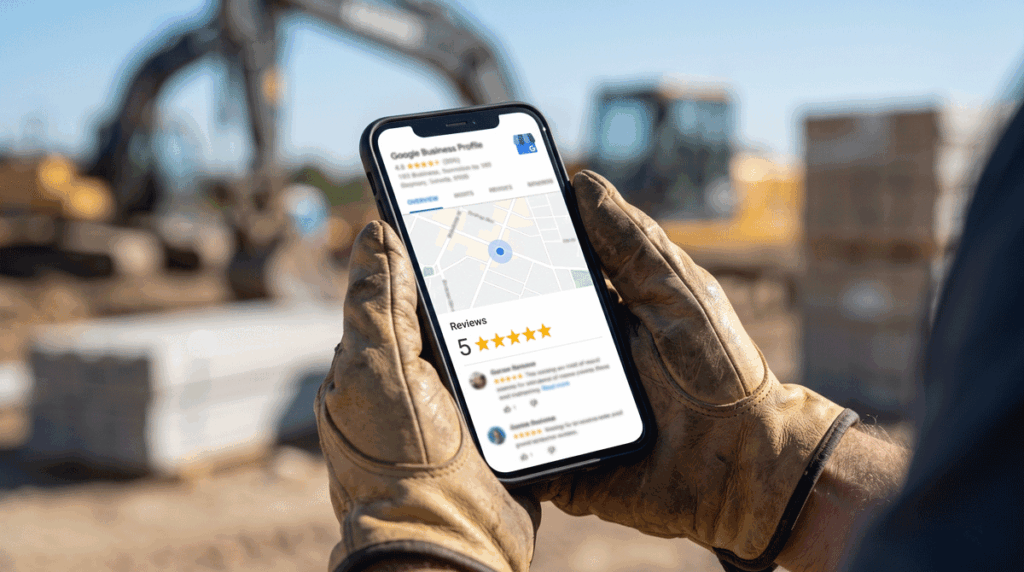
Walk into your Google Business Profile right now and count how many sections you’ve actually filled out. Many builders stop after name, address, and phone number. That’s a missed opportunity on every level.
Your profile should include: business hours, including holidays; a detailed description; all relevant categories; at least 10 interior and exterior photos; a video, if possible; all service areas listed explicitly; and a services section with descriptions. Google is asking you to tell it about your business. When you don’t, it makes assumptions. When you do, it gets smarter about showing your profile to qualified leads.
The description is where you talk to both Google and customers. You’ve got 750 characters. Use them to naturally include your primary keyword. “We’re a custom home builder serving [County] with 25 years of experience building high-end homes on 1-plus-acre lots” is stronger than “We build homes.” Google reads this. Customers read this. Make every word count.
Builders who post fresh photos to their Google Business Profile every week outrank those who don’t. It signals activity and freshness. But most builders post their initial ten photos and never touch the profile again.
You don’t need professional photoshoots every week. You need consistent content. Take photos of active job sites. Post them regularly. Showcase different phases of construction, architectural details, landscaping, and interior finishing work. Not every photo needs to be a finished home. In-progress photos prove you’re actively building right now, and Google rewards that signal.
A profile that’s regularly updated gets boosted over an inactive one. And customers trust a builder whose profile shows recent work. If your newest photo is two years old, every customer who checks assumes you haven’t taken a job recently.
You can’t manufacture reviews. But you can build a system that makes asking natural. Every happy customer is a review waiting to happen. You have to ask at the right moment.
The right moment is when they’ve experienced success. Not halfway through construction. Not six months after. It’s after the final walkthrough, after they’ve had their housewarming party, after they’ve lived in the home for two months, and the reality has set in that they made the right choice.
That’s when you reach out with a direct link to your Google review request. Make it easy. One link. One message. No friction. And tie it to something specific. “We’d love to hear how the kitchen is working for your family” works better than “please leave us a review.”
You should be getting new reviews monthly. If you’re getting one review every six months, your system is broken. Builders with a strong Google Maps presence get six to twelve new reviews monthly. That velocity tells Google that customers are consistently happy, which compounds your ranking advantage over time.

Citations are mentions of your business name, address, and phone number across the web. Local directories, industry listings, chamber databases, Google, Yelp, Houzz, everywhere you appear sends signals to Google about your authority and legitimacy.
But here’s the problem. Most builders appear in dozens of places, and almost none of them match exactly. You’re “Smith Custom Homes” on your website, “Smith Homes Inc.” on Yelp, “Smith’s Custom Home Building” on Houzz, and your phone number is formatted differently in each place. Google sees these as possibly four different businesses. This confuses the algorithm and tanks your ranking.
Spend an afternoon auditing your citations. Search every variation of your business name document where you appear. Then systematically correct the inconsistencies. Your name, address, and phone number should be identical everywhere. This is foundational work that pays compounding dividends.
You don’t have multiple physical locations, but you do serve multiple neighborhoods. Google Maps treats service-area businesses differently from location-based businesses. If you set this up wrong, you’ll rank poorly everywhere except your front door.
In your Google Business Profile, explicitly list every neighborhood, city, and zip code you serve. Be specific. This tells Google that when someone searches for Oakville, Riverside, or Harbor Heights, they should see your listing. Without this, Google assumes you only serve your physical address location.
Then, build location-specific content on your website. Service area pages that target neighborhoods by name. This content signals to Google that you have expertise in specific areas, which boosts your Maps ranking in those areas as well.
Fast forward three months. You’re getting notifications daily that a new review has been posted. Someone found your profile on Google Maps. Your phone is ringing with leads from neighborhoods where you’ve built for years but were never digitally visible.
Now, when that homeowner sits at their kitchen table and searches “custom home builders near me,” you’re there. Top three. They click your profile, see recent photos, and read reviews mentioning specific strengths. They call you. You’re choosing which projects to take on, not chasing every lead. Your pipeline is full. The leads are qualified. You’re working with people who sought you out specifically because Google showed them you were the best option in their area.
This isn’t theoretical. This is what happens when you optimize for the five signals. You stop competing on price because you’re the visible choice. You stop explaining who you are because your profile already does. You stop prospecting because the leads come to you, pre-sold.
Audit your Google Business Profile against the five ranking signals today. Check your NAP consistency across directories. Count your reviews from the last 30 days. Look at when you last uploaded a photo. One of these is broken. Find it, fix it, and watch your visibility soar.
If you want to go deeper and avoid months of trial and error, our Google Maps SEO strategy for home builders includes a full competitive audit, citation cleanup, and a 90-day optimization roadmap. Let’s talk about your territory.
Home Builder Marketers is a full-service digital marketing agency serving residential construction companies across North America. We specialize in local SEO for home builders, custom website design, and lead generation strategies that fill pipelines with qualified prospects. If you’re tired of being invisible while out-of-town competitors take your leads, our team has helped hundreds of builders dominate their local markets.
When a homeowner in your city searches “custom home builders near me” or “best home builder in [your city]”, who shows up? If it’s not you, you’re losing leads to competitors – often before they’ve even seen your work. Local SEO is the single most cost-effective way to change that.
In this guide, we’ll break down exactly how local search works, what Google looks for, and the specific tactics that help home builders dominate their local market.
Local SEO is the process of optimizing your online presence so your business appears prominently when people search for services in your geographic area. Unlike regular SEO, which targets broad audiences, local SEO focuses on searchers who are physically near your business and looking to take action soon.
For home builders, this means appearing in the Google Map Pack – those three listings that appear at the top of search results with a map – as well as in the organic results below it.
“Builders who show up in the Google Map Pack get 3-5x more qualified leads than those buried on page two. Most of your competitors aren’t doing local SEO properly – that’s your opportunity.”
Your Google Business Profile (GBP) is the most important piece of your local SEO. It’s what appears in the Map Pack and on Google Maps. Here’s how to optimize it:
NAP stands for Name, Address, Phone Number. Google cross-references your business information across hundreds of directories and websites. Inconsistencies – even small ones like “St.” vs. “Street” – can hurt your rankings.
Audit your listings on Yelp, Houzz, HomeAdvisor, Angi, the Better Business Bureau, local chambers of commerce, and your state contractor licensing board. Make sure your information is identical everywhere.
Citations are any online mention of your business name, address, and phone number – even without a link. Getting listed on authoritative local and industry directories sends trust signals to Google.
Priority directories for home builders:
Our team specializes in getting home builders to the top of local search. We handle everything – GBP optimization, citations, reviews, and content.
Reviews are one of the top local ranking factors. Builders with more high-quality, recent reviews consistently outrank competitors. Here’s a simple system:
Aim for at least 2-3 new reviews per month. Consistency matters more than a burst of reviews all at once.
Publish blog posts and landing pages targeting the specific cities and neighborhoods you serve. A page titled “Custom Home Builder in [City Name]” with 800+ words of relevant content can rank well for that location and attract exactly the type of leads you want.
Good local content topics for builders:
Make sure your website reinforces your local presence:
Use tools like Google Search Console, BrightLocal, or Semrush to monitor your local rankings. Track keywords like “[service] in [city]” and “[city] home builder” monthly. Local rankings fluctuate, so consistency in your efforts is key.
Local SEO is not a one-time project – it’s an ongoing system. Builders who commit to it consistently see compounding results over time. If you want help building that system, our team works exclusively with home builders and understands your market better than any generalist agency.
Local homeowners search with intent, and if you are not visible you are losing high-value leads. In this article you will find a step-by-step playbook home builders and remodelers can use today to win more local leads, bookings, and estimates.
Bold Quick Win: Start by claiming and optimizing your Google Business Profile, it is the single most impactful local signal and should be prioritized first.
“When someone searches ‘home builder near me’ they are close to hiring. Show them your best work and your contact info up front.”
Local search is not optional for home builders and remodelers. Start with a verified Google Business Profile, build location pages designed to convert, collect and respond to reviews, and connect everything through a CRM to turn searchers into paid projects.
Action plan for the next 30 days:
Local SEO strategies home builders are the difference between empty model homes and a steady pipeline of nearby buyers. If you build homes in North America and you are at the MVP_BUILT stage, this guide gives practical, high-impact tactics that tie SEO, paid ads, CRM, graphic design, and video editing into a single local growth plan.
Resources: Google Business Profile, Bing Places.
Resource: Schema.org LocalBusiness.
For best practices, consult industry guides like the local SEO section at Search Engine Journal.
Helpful reading: Moz Local SEO Guide.
See Google Small Business videos for creative ideas: Google Small Business YouTube Channel.
If you are following the MVP_BUILT playbook, Day 4 should focus on consolidation and measurement:
This short sprint centers immediate lead capture and measurement so you can iterate quickly.
“We launched three community pages and a small ad test, then routed leads into our CRM. Within 30 days we had data to scale the exact ad copy and pages that worked.”
This example shows the kind of fast feedback loop every builder needs to scale.
When a homeowner in your city searches “custom home builder near me” or “home construction company [city],” the builders who appear at the top of those results have a massive advantage. They’re capturing the highest-intent leads at the exact moment those prospects are ready to act. That visibility doesn’t happen by accident – it’s the result of consistent, strategic SEO.
The good news: most home builders do almost no SEO at all. That means committing to even a handful of these nine strategies can push you significantly ahead of local competitors within six to twelve months.
Before you optimize anything, you need to know what your ideal clients are actually searching for. Generic terms like “home builder” are too broad and too competitive. The keywords that drive real leads are specific: location-based, service-specific, and intent-driven.
High-value keyword categories for home builders:
Use tools like Google Keyword Planner, Semrush, or even Google’s autocomplete to discover what your prospects are searching. Then build your website content and blog strategy around those terms.
On-page SEO means structuring your website pages so Google can understand what they’re about and who they’re for. For each core page on your site, optimize:
“The builders who dominate local search aren’t doing anything magical. They’re consistently covering the fundamentals – great content, optimized pages, active Google Business Profile, and a steady stream of reviews.”
Your Google Business Profile (GBP) is the single most important piece of local SEO. It’s what appears in the Map Pack – the three listings with a map that show at the top of local search results. Builders who appear there get significantly more calls than those below them.
Complete GBP optimization checklist:
Citations are any online mention of your business name, address, and phone number. Google uses citations across the web to verify your business’s legitimacy and geographic relevance. The more consistent and widespread your citations are, the better your local rankings.
Start with the essentials: Yelp, Houzz, HomeAdvisor, Angi, BBB, your state’s Home Builders Association, NAHB, and your local chamber of commerce. Then expand to general directories like Apple Maps, Bing Places, and Foursquare. Critically, ensure your NAP (name, address, phone) is identical across every listing – even small discrepancies hurt your rankings.
Backlinks – links from other websites to yours – are one of Google’s strongest ranking signals. For home builders, the most valuable backlinks come from:
Our team handles SEO exclusively for home builders. We know your market, your keywords, and exactly what it takes to rank. Let’s talk.
Content marketing is your long-term SEO engine. By publishing informative blog posts, guides, and local landing pages that answer your prospects’ questions, you attract organic traffic and establish authority in your market. Aim for at least two new pieces of content per month. Effective content types for home builders include cost guides, process walkthroughs, neighborhood guides, and project case studies.
Technical SEO ensures Google can crawl, index, and rank your pages properly. Key technical factors to address:
Google reviews are a direct local ranking factor – and they influence conversion rates too. Builders with 50+ reviews and a 4.8+ rating consistently outrank and out-convert competitors. Build a systematic process: ask every client for a review after project completion, send a direct link to your Google review page, offer 2-3 response prompts to make it easy, and respond to every review publicly within 48 hours. Consistent, recent reviews signal to Google that your business is active and trusted.
Schema markup is structured data code added to your website that helps Google understand your business information more precisely. For local businesses, LocalBusiness schema tells Google your name, address, phone, hours, service areas, and rating. This can improve how your listing appears in search results – sometimes with rich snippets showing star ratings or hours directly in the results – and gives you an edge over competitors who haven’t implemented it.
At a minimum, implement LocalBusiness schema on your homepage and contact page. Use Google’s Rich Results Test to validate your implementation after adding it.
Introduction: The SEO Challenge Facing Local Contractors Today
If you’re a builder or contractor struggling to rank on Google, hiring a Brandon SEO expert could be the smartest move you make in 2025. Many contractors rely on referrals and word of mouth but in today’s market, that’s not enough. Homeowners are searching online first, and if your website isn’t showing up, you’re missing out on jobs.
In this blog, we’ll explain why working with an SEO expert in Brandon gives you a local edge. We’ll cover what SEO experts actually do, the top benefits of hiring one who understands your market, and the key strategies they use to help your site rank higher and generate consistent leads. You’ll also learn how professional SEO services can prevent common mistakes contractors make, the signs that it’s time to get expert help, and how to choose the right SEO partner for your business.
This isn’t about buzzwords or empty promises, it’s about real results that grow your business. If you’re tired of being buried in search results and ready to show up where it counts, this guide is for you.
What Does an SEO Expert Actually Do?
Before hiring one, it’s important to understand what an SEO expert really brings to the table, especially someone who knows the local market. SEO, or Search Engine Optimization, is all about helping your website rank higher when potential clients search online for services like home building, renovations, or remodeling.
Here’s what an SEO expert typically handles for contractors:
The goal is simple: more visibility, more traffic, and more leads from local homeowners. Next, we’ll explore why hiring someone local makes that process even more effective.

Working with someone who understands your market can be a game-changer. A local SEO specialist brings more than just technical skills, they bring local insight, faster communication, and tailored strategies that fit your service area. Let’s break it down.
A local expert knows how people in Brandon search for contractors. They understand the difference between someone looking for a quick fix versus a full renovation. That means more accurate keyword targeting, better content recommendations, and stronger Google visibility in the areas you serve.
Instead of waiting days for a response from a national agency, you can talk to someone who knows your business and your neighborhood. That kind of access builds trust and leads to quicker turnarounds.
Instead of one-size-fits-all SEO, an SEO expert can apply region-specific strategies and tools. They may also reference resources like our popular post, “Master SEO: Guide to Home Builder Website Optimization,” to help ensure your site is optimized from every angle.
Tips to Climb Local Search Rankings
Getting your business to show up on the first page of Google requires more than just adding a few keywords to your website. It takes a strategic mix of content, consistency, and local signals that search engines trust. Here are key steps contractors can take to improve their local rankings.
Your business information should be accurate and consistent across every platform. Mismatches can hurt your credibility.
Adding helpful, location-based content to your website shows Google you’re an authority in your area. You can create:
Search engines use reviews as a trust signal. Ask satisfied clients to leave a review and always reply to them. Even a short “Thanks for your feedback!” makes a difference.
Next, we’ll look at common SEO mistakes contractors make and how to avoid them.
Common SEO Mistakes Contractors Make (And How Experts Fix Them)
Many contractor websites look great but still struggle to rank and that usually comes down to a few simple SEO missteps. These mistakes can hold your business back, but the good news is they’re fixable with the right strategy.
Contractors often write web content without thinking about how search engines read it. Missing title tags, unclear headlines, or no meta descriptions make it hard for Google to understand your pages.
The fix: Structure every page with a clear headline, include location-based keywords, and write unique meta tags that describe what the page is about.
If your site isn’t easy to use on a phone, you’re likely losing traffic and rankings.
The fix: Optimize for mobile speed, layout, and tap-friendly navigation so your site works smoothly on all devices.
Many contractors don’t mention their service area clearly enough.
The fix: Include your city or neighborhood names throughout your content, image tags, and URLs where it makes sense.

If you’ve been handling your Website’s SEO on your own or not at all there comes a point when results stall or mistakes pile up. That’s when bringing in a professional can make all the difference. An SEO expert doesn’t just fix issues, they create a roadmap for long-term growth.
Here are key signs it’s time to bring in help:
An expert can run a full audit, uncover what’s holding your site back, and build a strategy tailored to your goals and local market.
In the next chapter, we’ll explore how these experts create a personalized strategy that gets real results.
From understanding what SEO actually means for home builders to identifying when it’s time to bring in a specialist, this blog has outlined everything you need to make an informed decision. A Brandon SEO expert can help your business climb search rankings, get seen by more local clients, and book more high-quality projects. Whether it’s optimizing your site, refining your local listings, or improving your content strategy, having an expert on your side takes the guesswork out of growth.
In a competitive market like Brandon, showing up online isn’t optional, it’s essential. SEO done right brings long-term value, and the earlier you start, the sooner you’ll see results.
Ready to rank higher and grow faster? Let Home Builder Marketers help you unlock the full potential of your website with tailored SEO solutions built just for home builders.
FAQs
1. What does a Brandon SEO expert do for home builders?
A Brandon SEO expert helps improve your website’s visibility in local search, bringing more potential clients to your business and increasing leads.
2. How long does it take to see results from SEO?
It typically takes 3-6 months to see consistent SEO results, but that can vary based on your website’s current state and competition.
3. Is SEO still important if I’m running paid ads?
Yes, SEO brings long-term organic traffic, while paid ads offer short-term visibility. The most successful builders use both.
4. How can I tell if my SEO strategy is working?
Look for improvements in keyword rankings, organic traffic, and qualified leads from your website. Tools like Google Analytics and Search Console can help.
About the Author
This blog was written by the team at Home Builder Marketers, a specialized marketing agency dedicated exclusively to helping custom home builders and residential contractors grow their businesses. With years of industry experience and a results-driven approach, Home Builder Marketers delivers tailored digital strategies that attract high-quality leads, increase brand visibility, and convert prospects into loyal clients. From SEO and web design to full-scale lead generation campaigns, their mission is simple: help builders build their business.
Website- https://homebuildermarketers.com/
Phone- +1 (888) 778-9917
Email- info@homebuildermarketers.com
Office- Kelowna, Winnipeg, Miami
If you want a steady stream of qualified leads without paying for every click, search engine optimization is the most powerful long-term investment you can make. Unlike Google Ads that stop the moment your budget runs out, SEO builds compounding visibility that works for you around the clock. When a prospective buyer types “custom home builder in [your city]” into Google, you either show up or you don’t. This guide walks you through every layer of SEO that matters for home builders, from keyword research to technical foundations.
Before diving into tactics, understand the core reality: SEO for home builders is a local discipline. You are not trying to rank nationally. You are trying to dominate a geographic market, own the search results for your specific area, and make sure that every buyer in your region sees your name first.
Paid advertising gives you instant visibility, but it has a fundamental flaw: the moment you stop paying, you disappear. For home builders, whose average sales cycle stretches six to eighteen months, that volatility is a serious problem. A buyer who starts researching in January may not sign a contract until September. If your ads aren’t running in May, you lose a touchpoint that could have mattered.
SEO solves this by building sustainable visibility. A well-optimized page that ranks on page one of Google will continue generating traffic and leads for years with only modest maintenance. The cost per lead from organic search is typically three to five times lower than paid traffic for home builders, and the quality of leads is higher because buyers who find you through organic search are further along in their research and more intentional about reaching out.
There is also a trust factor. Buyers inherently trust organic results more than ads. Appearing at the top of Google without the “Sponsored” label signals authority. Combined with strong reviews and a professional website, organic rankings turn your digital presence into a credibility asset that no ad budget can fully replicate.
The foundation of any effective SEO strategy is understanding exactly what your buyers type into Google. For home builders, keyword research divides into three categories: high-intent buyer keywords, informational keywords, and local modifiers.
These are the searches made by people who are ready to talk to a builder. Examples include:
These keywords should be your top priority for your homepage, service pages, and location pages. The search volume may be modest (50 to 300 searches per month in a mid-sized market), but the conversion rate is extremely high because searchers are actively looking to hire.
These are the questions buyers ask while they’re still in research mode. Examples include “how much does it cost to build a custom home,” “what to look for in a home builder,” and “custom vs. production home: which is better?” These keywords are ideal for blog content. They bring buyers into your orbit early, give you a chance to demonstrate expertise, and keep your name top of mind throughout a long decision process.
Tools like Google Keyword Planner, Ahrefs, Semrush, and even the free “People Also Ask” section in Google search results will reveal exactly what your buyers are searching. Start by entering your primary services and location, then build a master keyword list organized by intent and priority.
On-page SEO refers to the elements within each page that signal to Google what the page is about and how relevant it is to specific searches. Getting this right on every key page is one of the highest-leverage moves you can make.
For each target page, optimize the following elements:
“The builders who dominate Google in their markets aren’t necessarily the best builders in town. They’re the ones who treated their website like a living marketing asset and invested in making it genuinely useful for buyers.”
For home builders, local SEO is where the real revenue lives. Local SEO determines whether you appear in the Google Map Pack (the three business listings that appear at the top of local search results) and in geographically filtered search results.
Your Google Business Profile (GBP) is the single most important local SEO asset you have. A fully optimized GBP should include:
Citations are any online mention of your business name, address, and phone number. Google cross-references these across directories like Yelp, Houzz, HomeAdvisor, Angi, and the BBB to confirm your business is legitimate and located where you say it is. Inconsistencies (different phone numbers, old addresses) hurt your rankings. Audit your citations regularly and correct any discrepancies.
Reviews are a direct local ranking factor and the single most powerful trust signal for prospective buyers. Build a systematic review request process: at project completion, send every client a personalized email with a direct link to your Google review page. Follow up with a handwritten card. The goal is to reach 50 or more reviews faster than your competitors, then maintain that lead through a consistent process on every project.
Your blog is not a vanity project. When executed correctly, it’s a lead generation engine. Every piece of content you publish is a new entry point into your website for buyers at different stages of the decision process.
The most effective content categories for home builders include:
Publish consistently. One well-researched, genuinely useful article per month is far more valuable than four short, generic posts. Google rewards depth, specificity, and content that fully answers the searcher’s question.
Links from other websites to yours are one of Google’s most powerful ranking signals. They function as votes of confidence: when a reputable website links to your page, it signals to Google that your content is credible and worth ranking.
For home builders, the most attainable and effective link-building strategies include:
We build complete SEO systems for home builders – keyword research, on-page optimization, local SEO, and content that attracts buyers ready to build. Let’s map out what it takes to rank in your market.
Technical SEO refers to the behind-the-scenes factors that determine whether Google can properly crawl, index, and rank your pages. Even the best content won’t rank if your site has foundational technical problems.
Key technical SEO factors to address:
SEO is a long-term investment, but that doesn’t mean you fly blind. Proper tracking tells you what’s working, where you’re gaining ground, and where to focus next.
Set up the following tracking infrastructure:
Review your SEO metrics monthly. Look for upward trends in impressions, clicks, and organic conversions. SEO typically shows meaningful results in three to six months, with compounding gains over twelve to twenty-four months. Builders who stay consistent through that initial period are the ones who own their markets.
SEO is not a one-time project. It’s an ongoing commitment to being the most visible, most trustworthy, and most useful resource for buyers in your market. The builders who treat it that way consistently out-earn and outgrow competitors who rely entirely on referrals and paid ads.